Why Organization Myths Do Real Damage
Most people who struggle to keep their homes organized aren't failing at tidying - they're following bad advice. Widespread myths about how organization works set unrealistic expectations, encourage unnecessary spending, and make people feel like the problem is with them rather than their approach.
The good news: once you see these misconceptions clearly, the path to a calmer, more functional home becomes a lot shorter. If you've ever wondered why clutter feels so emotionally heavy, the psychology behind why clutter feels so overwhelming is worth understanding alongside these practical myth-busters.
Myth
You need the right bins, labels, and containers before you can get organized.
Fact
Storage products should come last, not first - after you've decided what to keep.
Buying matching baskets before decluttering is one of the most common and costly organizing mistakes. You end up with containers sized for items you later discard, or too few bins for what remains. The correct sequence is always: sort and reduce first, then measure what's left, then shop for storage that fits. A repurposed shoebox that holds your cables is more effective than a decorative bin that doesn't.
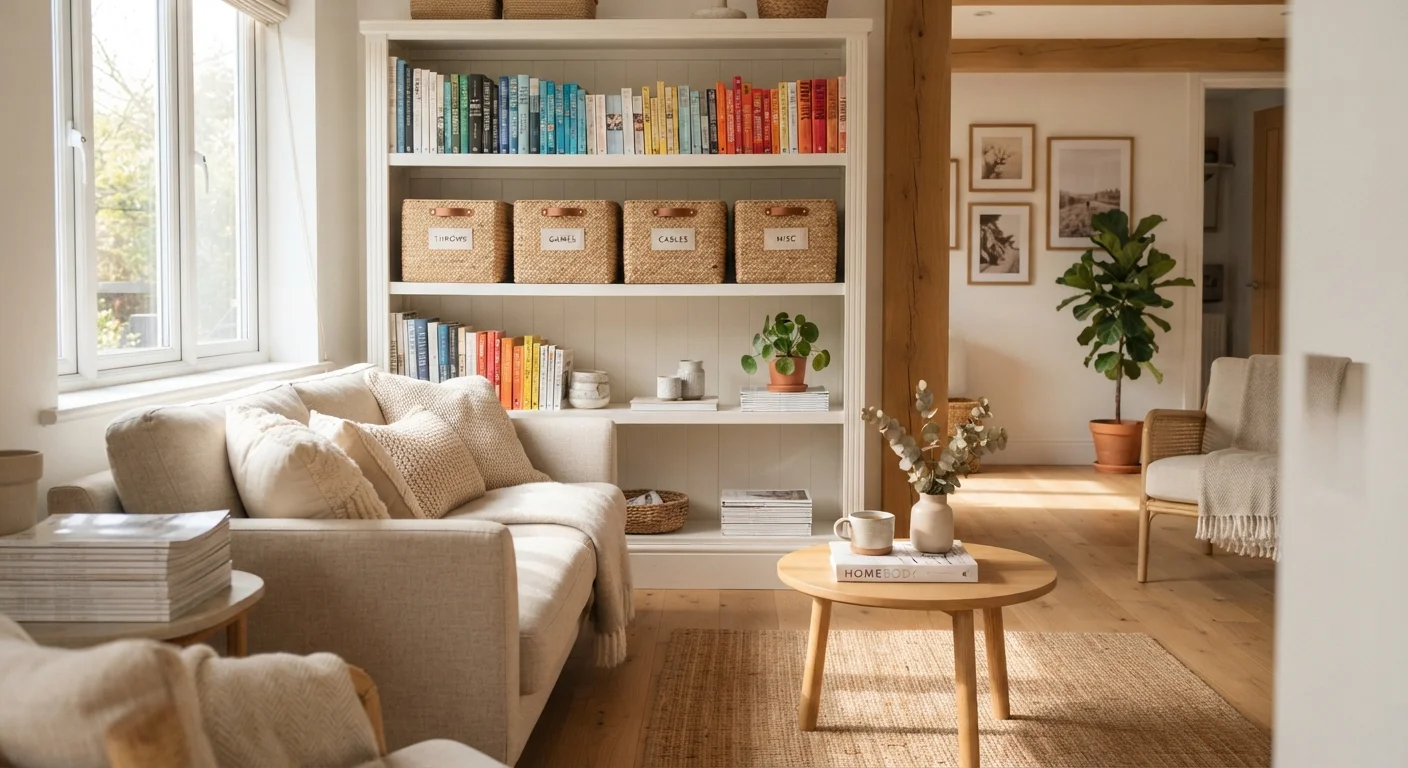
If labelling is on your mind, it's worth reading about labelling systems for home storage before committing to a rigid approach.
Myth
Tidy people are just naturally organized - some people have it and some don't.
Fact
Organized homes are the result of practiced habits, not personality type or innate ability.
Research on habit formation consistently shows that tidiness is a behavior, not a fixed trait. People who appear naturally organized have usually built small routines - a place for keys, a weekly reset of surfaces - that run on autopilot. These routines can be learned at any age. Framing yourself as "just not an organized person" makes the problem feel permanent when it isn't.
Myth
A big weekend organizing session will fix the problem for good.
Fact
One-time overhauls are useful starting points, but regular small maintenance is what keeps spaces functional.
A deep-sort session clears the backlog, but without upkeep habits, clutter returns within weeks. Think of organizing like cleaning - you wouldn't mop once and expect the floor to stay clean indefinitely. Short, frequent resets (10-15 minutes a few times a week) are far more effective than waiting until disorder becomes overwhelming. The pattern of delay and its real causes are explored in why 'I'll organize it later' rarely works.
Myth
Everything needs a perfectly labeled, designated spot or the system will fail.
Fact
Flexible, loosely defined zones often work better for most households than rigid item-by-item systems.
Hyper-specific labeling - a separate bin for each sub-category of every item - creates a system that's brittle. When life changes (a new hobby, kids aging out of toys, a move), rigid systems collapse and people abandon them entirely. Broader zones like "craft supplies," "cables and chargers," or "guest essentials" are easier to maintain because they tolerate some variation. The goal is being able to find what you need, not a system that looks perfect in photos.
Myth
Small homes are impossible to keep organized because there's simply not enough space.
Fact
Small spaces benefit from better organization precisely because they leave less room for clutter to hide.
A limited footprint forces clearer decisions about what's worth keeping. The real challenge in small homes is usually owning more than the space can reasonably hold - a volume problem, not a layout problem. Vertical storage, multi-use furniture, and a stricter "one-in, one-out" approach close most of that gap. Shared spaces add complexity; organizing a home when not everyone agrees addresses how to navigate different tidiness standards among housemates.
Building Habits That Actually Stick
Debunking myths is only half the work. The other half is replacing them with realistic expectations and sustainable practices. Organization isn't a destination you arrive at once - it's a set of small, repeatable decisions made over time.
Don't Let the 'All or Nothing' Trap Stall You
One of the most paralyzing myths is believing you need a full day - or a perfectly cleared schedule - before you can start. Waiting for ideal conditions almost always means not starting at all. A single drawer sorted in 10 minutes is a real, meaningful step. Progress doesn't require perfection; it just requires beginning.
Start by picking one area, not the whole house. Spend 15-20 minutes sorting what's already there before touching a single storage product. Ask what each item needs to be accessible, and build storage around that answer rather than around what looks neat in photos.
For a concrete set of habits that prevent clutter from returning after an organizing session, see the one-in, one-out rule and other long-term tidying habits. And if you're not sure where to start at all, getting started with home organization lays out a plain-language foundation.
~$1,200
Average annual US spending on storage and organization products
According to self-storage and home goods industry estimates, American households spend significantly on organization products - much of it before decluttering first.
25%
Of garage space used for storage, not vehicles
A U.S. Department of Energy study found that roughly a quarter of homeowners with two-car garages can't park a car in them due to accumulated belongings.
Different decluttering methods suit different personalities, too. If you've heard of the KonMari method but aren't sure it fits your pace or goals, comparing popular decluttering methods can help you find your match.