What Gutters Actually Do
Most homeowners think of gutters as a minor cosmetic feature - something to match the trim color. In reality, a properly functioning gutter system is one of your home's most important moisture-management tools.
When rain falls on your roof, it needs to go somewhere. Without gutters, that water cascades off the edge in sheets, saturating the soil directly against your foundation, splashing back onto siding, and eroding the landscaping below. Gutters collect that runoff and channel it to downspouts, which carry it several feet away from the structure before releasing it.
That controlled path makes an enormous difference. Foundations are designed to bear load - not to sit in water-saturated soil indefinitely. Siding materials, whether wood, fiber cement, or vinyl, are not built to absorb constant splash-back. The gutter system, humble as it looks, is the bridge between a rain event and a dry, stable home. See how neglected maintenance compounds over time in our overview of the real cost of deferred home maintenance.
$10,000+
Average cost of foundation repair from water damage
According to home repair industry estimates, foundation repairs driven by chronic water intrusion frequently exceed this threshold - far more than the cost of routine gutter maintenance.
2x per year
Recommended minimum gutter cleaning frequency
Building maintenance professionals generally recommend cleaning gutters at least twice annually, with additional cleanings for heavily tree-covered properties.
4-6 feet
Minimum downspout discharge distance from foundation
Most residential building guidelines recommend downspouts direct water at least this far from the foundation to prevent soil saturation and water intrusion.
The Damage a Failing Gutter System Causes
When gutters clog, sag, or pull away from the fascia, problems don't announce themselves immediately. They build quietly behind walls and under soil for months before becoming visible - and by the time you notice, repair bills can be significant.
Foundation Erosion and Water Intrusion
Water overflowing from clogged gutters falls directly against the foundation perimeter. Repeated saturation softens soil, can cause settling, and drives moisture into any existing cracks. In climates with freezing winters, that moisture expands when it freezes, widening cracks further. Basement dampness and wall staining are often traceable back to gutters, not faulty waterproofing.
Fascia and Soffit Rot
The fascia board - the flat board running behind your gutters - is typically wood or engineered wood. When a gutter holds standing water due to blockage or poor slope, that moisture wicks into the fascia, causing rot that spreads to the soffit above. Replacing rotted fascia requires removing the gutters themselves, making what started as a $20 cleaning a several-hundred-dollar repair.
Roof and Interior Damage
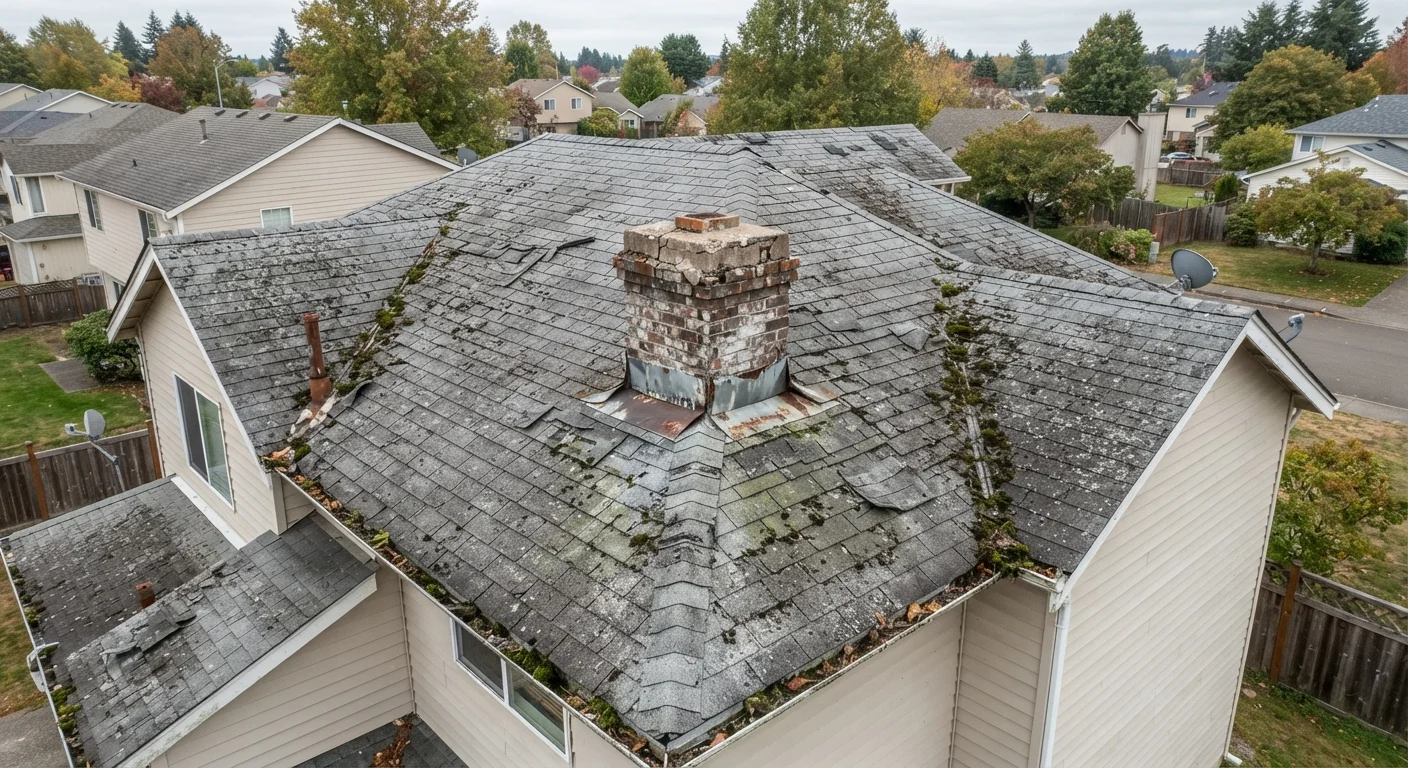
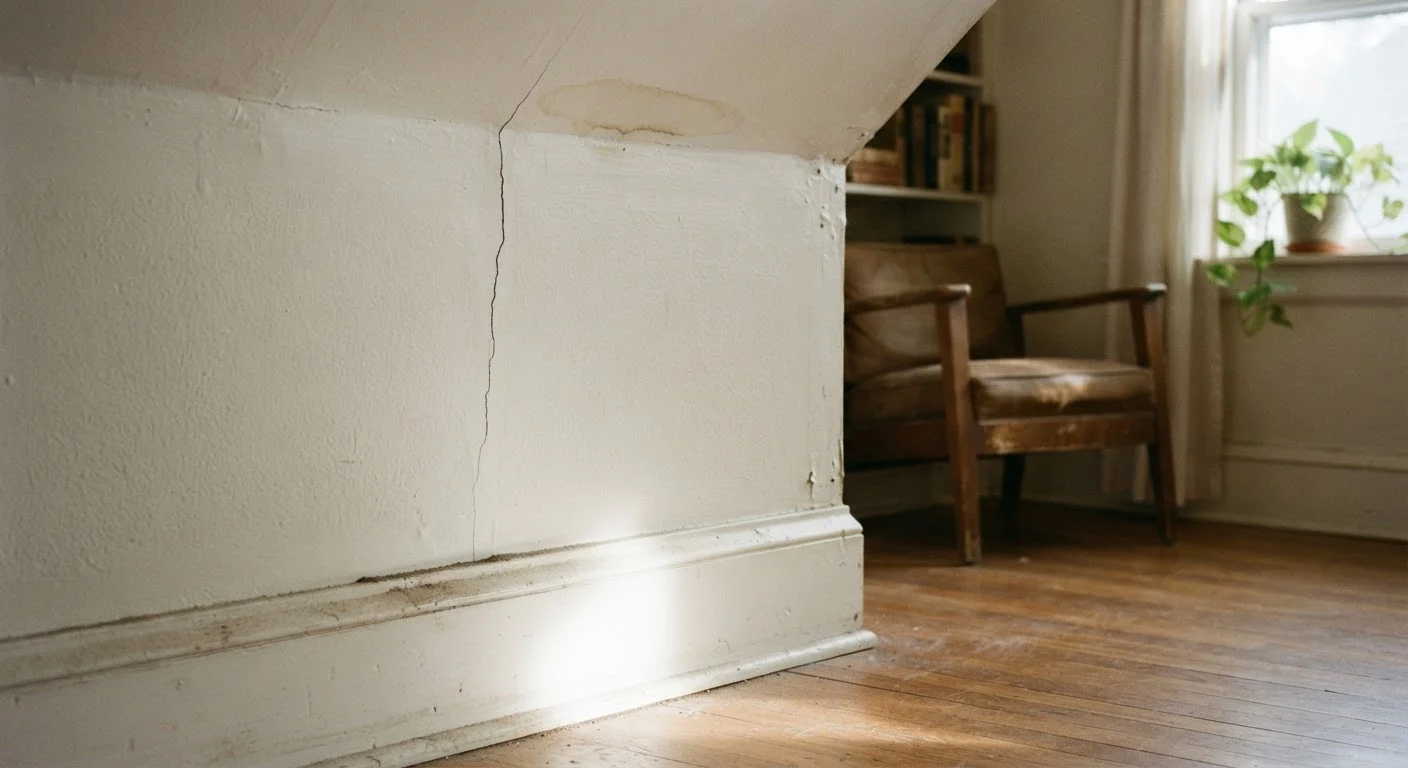
In winter, clogged gutters contribute to ice dams - ridges of ice that form when meltwater cannot drain and refreezes at the roof edge. Ice dams can lift shingles, allow water under the roof deck, and lead to ceiling stains and insulation damage inside the home. Learn more about how overlooked habits affect roofing in our guide to common roof maintenance missteps.
Check Gutters After Every Major Storm
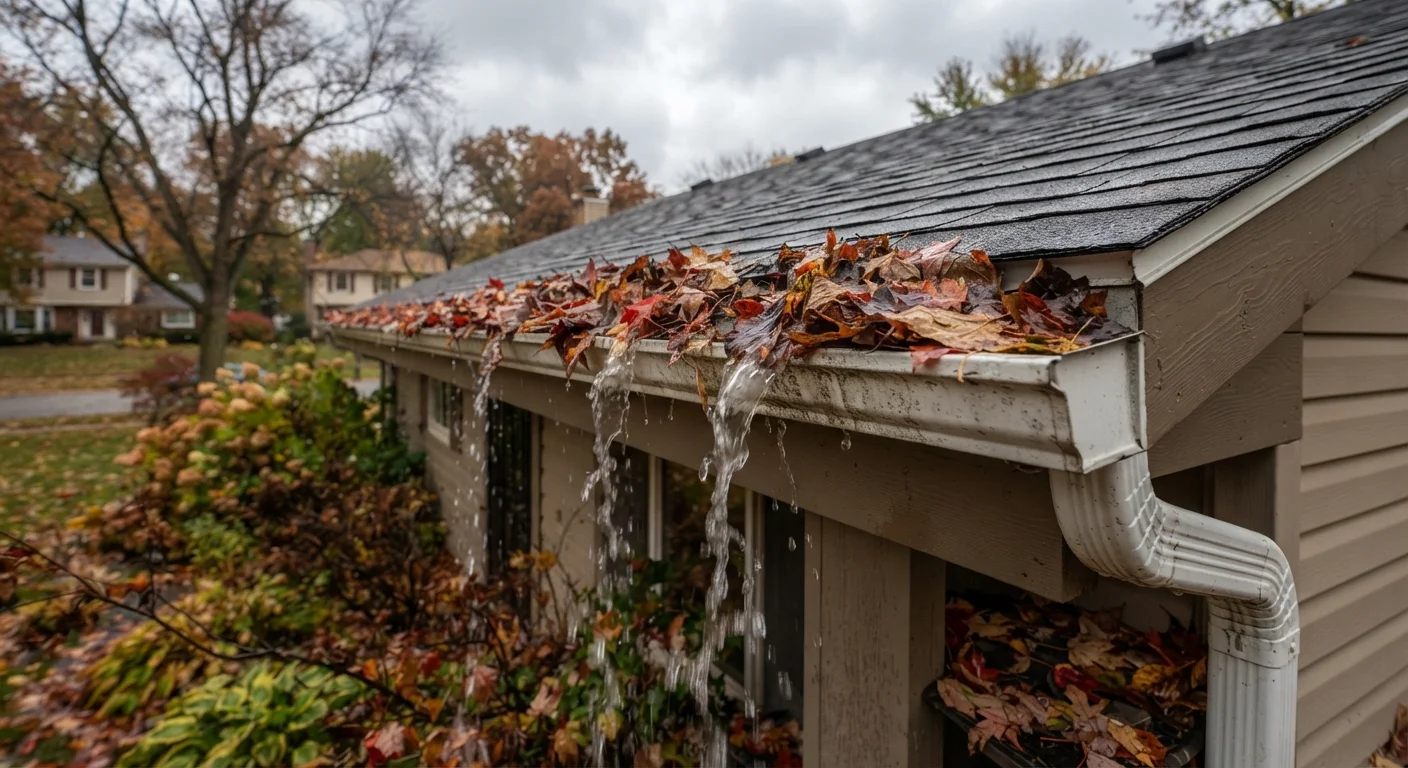
Don't wait for your scheduled cleaning - a single heavy storm can deposit enough debris to block a downspout and cause immediate overflow. A quick visual check from the ground after significant rain takes two minutes and can catch problems before they worsen. If you see water spilling over the edge during the storm itself, that's a reliable sign of a blockage that needs clearing as soon as conditions are safe.
How to Spot Gutter Problems Early
You don't need to climb a ladder to catch most gutter warning signs. Walk the perimeter of your home after a heavy rain and look for these indicators:
- Water spilling over the sides during rainfall suggests a clog or inadequate slope toward the downspout.
- Sagging sections mean the hangers (the hardware attaching the gutter to the fascia) are pulling out - often because the gutter is holding too much weight from standing water and debris.
- Peeling paint or staining on exterior siding below the gutter line points to chronic overflow.
- Pooling water at the foundation after rain, especially near a downspout, indicates poor discharge distance or a blocked downspout.
- Mud streaks or erosion in landscaping beds below the roofline suggest water is falling freely off the edge.
Inside the home, water stains along ceiling edges near exterior walls or dampness in the basement after rain can also be traced to gutter failure. Our article on reading your home's early warning signs covers how to interpret these signals before they escalate.
Ladder Safety Is Non-Negotiable
Gutter cleaning involves working at height on a ladder, which carries real fall risk. Always use a four-legged stepladder or an extension ladder rated for your weight plus equipment, placed on firm, level ground. Never lean a ladder against the gutter itself - it can buckle or pull the gutter away from the fascia. If roofline height, steep terrain, or physical limitations make the task feel unsafe, hiring a professional is the right call.
Practical Maintenance Every Homeowner Can Do
Gutter maintenance is one of the more DIY-friendly tasks in home upkeep, provided you work safely on a stable ladder and avoid overreaching. The core routine is straightforward:
- Clean twice a year minimum. Remove leaves, twigs, and sediment by hand or with a garden trowel, working toward the downspout. Flush the channel with a garden hose to check flow.
- Check the slope. Gutters should slope approximately 1/4 inch for every 10 feet toward the downspout. If water pools in sections, the hanger spacing or pitch may need adjustment.
- Inspect and tighten hangers. Hangers should hold the gutter flush against the fascia with no visible gaps. Loose hangers can often be re-secured with new screws.
- Extend downspout discharge. Ensure downspouts empty at least 4-6 feet from the foundation using extensions or splash blocks angled away from the home.
- Look for joint leaks. At the seams between gutter sections, sealant degrades over time. Re-sealing open joints with gutter sealant is a straightforward repair that prevents dripping behind the fascia.
For any work at roofline height, use a sturdy, properly rated ladder and have a second person present as a spotter. If gutters are pulling significantly from the fascia, sections are visibly buckled, or you suspect fascia rot, contact a licensed contractor rather than attempting the repair yourself.