Why Dashboard Warning Lights Exist
Modern vehicles monitor dozens of systems simultaneously - from engine performance and emissions to tyre pressure and battery charge. When a sensor detects something outside its normal range, the vehicle logs a fault code and illuminates the corresponding warning light on your instrument cluster. Think of these lights as your car's way of flagging a conversation it needs to have with you.
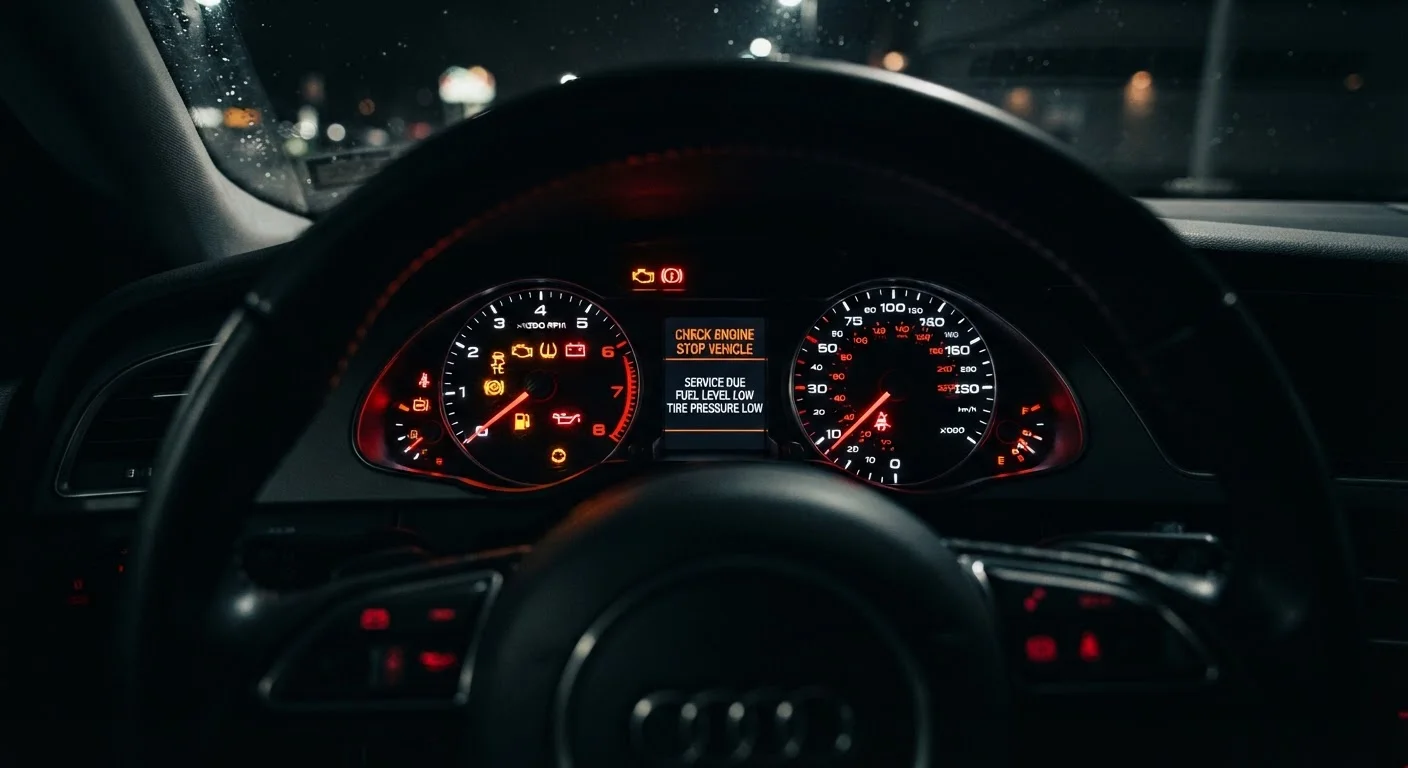
The color of the light is your first clue about urgency. Red signals require immediate attention and often mean you should pull over safely as soon as possible. Amber or orange lights indicate a problem that needs attention soon but isn't necessarily a stop-now emergency. Green or blue lights are informational - confirming that a system, like high beams or cruise control, is active.
| Color: Red | Stop or act immediately |
| Color: Amber/Orange | Attention needed soon |
| Color: Green/Blue | System active (informational) |
| OBD-II standard adopted | Required on all US vehicles from 1996 (US EPA / CARB regulatory requirement) |
| TPMS legally required | Mandatory on all new US passenger vehicles from 2008 (NHTSA FMVSS No. 138) |
| Flashing check engine light | Indicates active misfire - reduce speed, seek service promptly |
Understanding this color hierarchy alone can help you make better decisions in the moment, rather than either ignoring every light or panicking at every flicker.
The Warning Lights You're Most Likely to See
While your owner's manual covers every symbol specific to your vehicle, several warning lights appear across almost all makes and models.
MIL (Malfunction Indicator Lamp)
The formal name for the check engine light. It illuminates when the engine control unit detects a fault code outside normal operating parameters. A steady light suggests a non-urgent fault; a flashing light signals an active, potentially damaging misfire.
OBD-II
On-Board Diagnostics, second generation - a standardized system fitted to most vehicles sold in the US after 1996. It stores fault codes that a scan tool can read, giving precise information about which system triggered a warning light.
TPMS
Tyre Pressure Monitoring System. A sensor network that measures air pressure in each tyre and alerts the driver via a dashboard light when pressure falls below a safe threshold set by the manufacturer.
Catalytic Converter
An emissions control device in the exhaust system that converts harmful combustion gases into less harmful outputs. It can be damaged by engine misfires, which is why a flashing check engine light warrants urgent attention.
Alternator
A generator driven by the engine that keeps the battery charged and powers the vehicle's electrical systems while the engine is running. A failed alternator causes the battery warning light to illuminate.
Check Engine (MIL): The Malfunction Indicator Lamp is one of the most misunderstood warnings. A steady amber check engine light means the engine management system has logged a fault - anything from a loose fuel cap to a failing oxygen sensor. A flashing check engine light is more serious, often indicating a misfire that could damage the catalytic converter; reduce speed and seek service promptly.
Oil Pressure Warning: A red oil can symbol means oil pressure has dropped critically low - not simply that you're due for an oil change. If this appears while driving, stop the engine as soon as it's safe to do so. Continuing to drive can cause severe, irreversible engine damage within minutes.
Battery / Charging System: A red battery icon indicates the vehicle is running on battery power alone because the alternator isn't charging the system. You may have limited time before the engine cuts out entirely. Minimise electrical load (turn off AC, heated seats, radio) and head directly to a workshop.
Temperature Warning: A red thermometer in coolant fluid means the engine is overheating. Pull over safely, switch off the engine, and wait for it to cool before checking coolant levels. Never open a hot radiator cap. See our guide on checking your car's fluid levels for safe procedures.
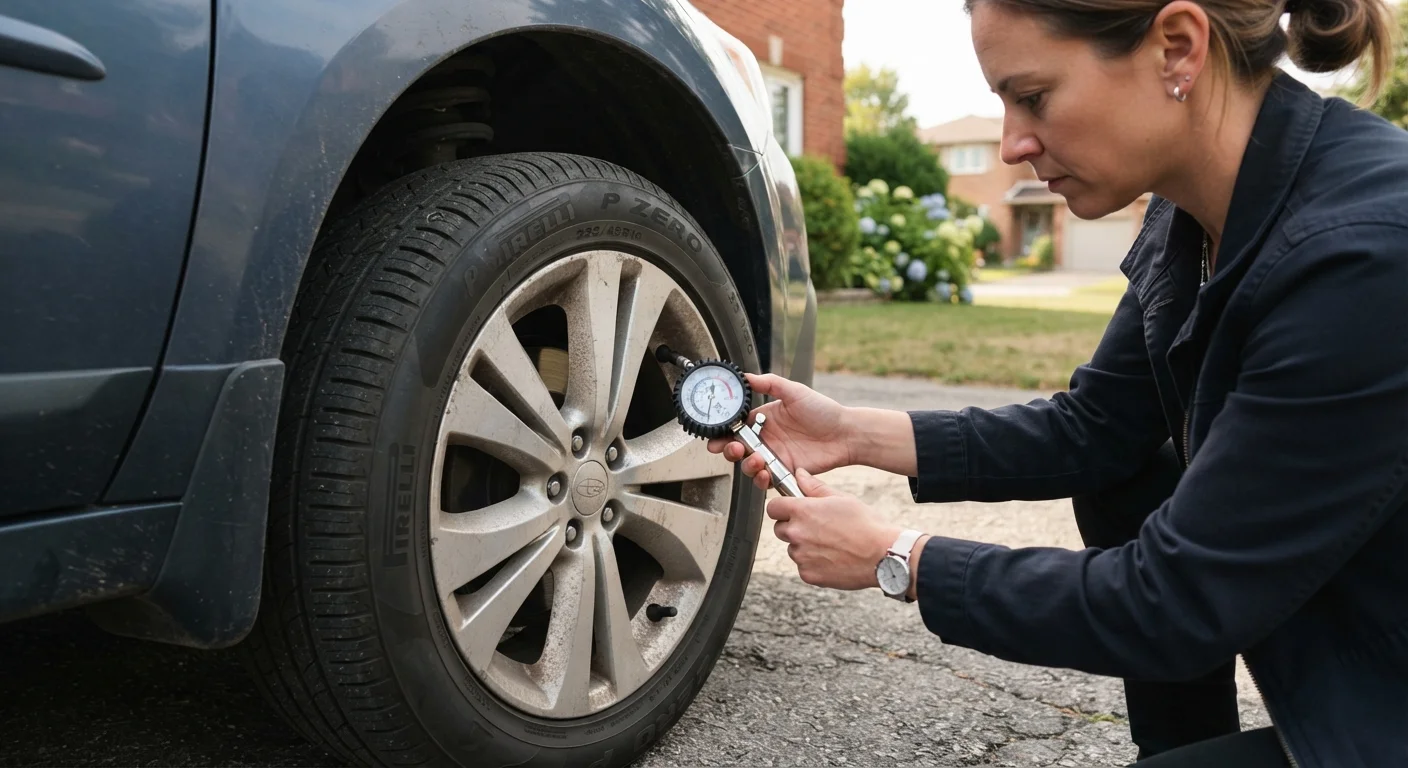
Tyre Pressure Monitoring System (TPMS): An amber symbol showing a flat tyre cross-section means one or more tyres have dropped below the recommended pressure. This affects handling, braking, and fuel economy. Check all four tyres promptly - and the spare if your vehicle monitors it. For a deeper dive, see tyre pressure and tread depth checks.
Brake System Warning: A red circle with an exclamation mark (sometimes labelled BRAKE) can mean the handbrake is applied, brake fluid is low, or there's a fault in the braking system itself. If it appears while driving with the handbrake fully released, treat it seriously and avoid hard braking while seeking immediate professional assessment.
Your Owner's Manual Is the Definitive Reference
Warning light symbols are not fully standardized across all manufacturers. While many follow ISO conventions, some automakers use proprietary icons or combine multiple alerts into a single light. Your vehicle's owner's manual - usually stored in the glovebox - contains the exact legend for every symbol on your specific dashboard. When in doubt, consult it first before drawing conclusions from general guides.
What to Do When a Light Comes On
The right response depends on the color and context. As a practical framework:
- Red light while driving: Reduce speed, find a safe place to stop, and assess. Do not continue driving until you understand the cause.
- Amber light while driving: Note any changes in vehicle behavior, check your owner's manual as soon as possible, and book a diagnostic check within a few days.
- Recurring or multiple lights: Multiple simultaneous warnings often point to an electrical or sensor issue rather than multiple simultaneous failures - but a diagnostic scan is still essential.
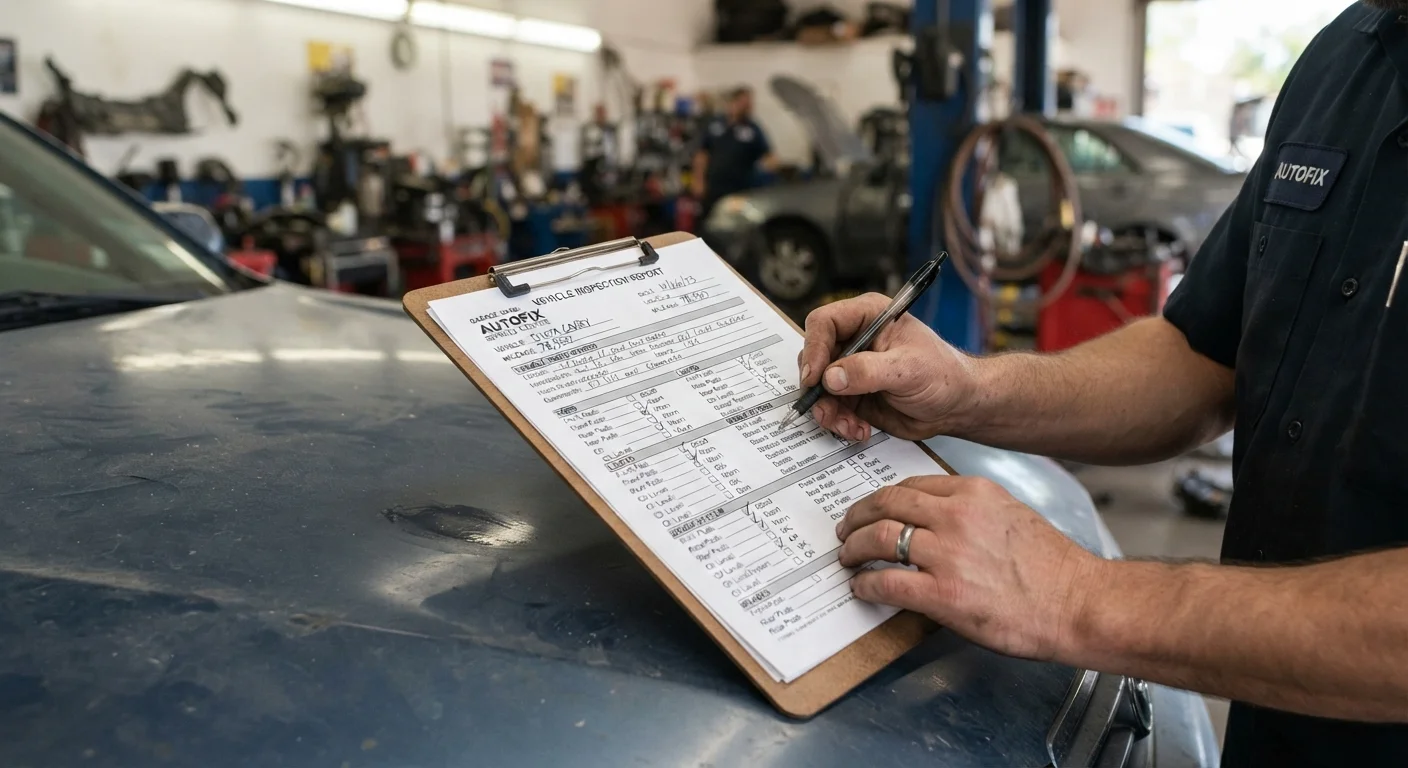
A professional OBD-II diagnostic scan reads the fault codes stored by your vehicle's computer and provides far more detail than the warning light alone. Many workshops and auto parts retailers offer this scan for little or no charge. If your car has recently passed its inspection and a warning light appears, it's worth cross-referencing: understanding your vehicle inspection report can help you connect advisory items to emerging faults.
Staying informed about your car's health is part of responsible ownership. For the broader picture, explore the Car Ownership hub and Safe Driving guidance for practical, road-tested advice.
~80%
Check engine lights linked to non-critical faults
Industry estimates suggest the majority of check engine activations stem from emissions or sensor faults rather than immediate mechanical failures, though all should be diagnosed.
1 in 4
US vehicles driven with underinflated tyres
According to NHTSA research, approximately one in four passenger vehicles on US roads operates with at least one significantly underinflated tyre.