
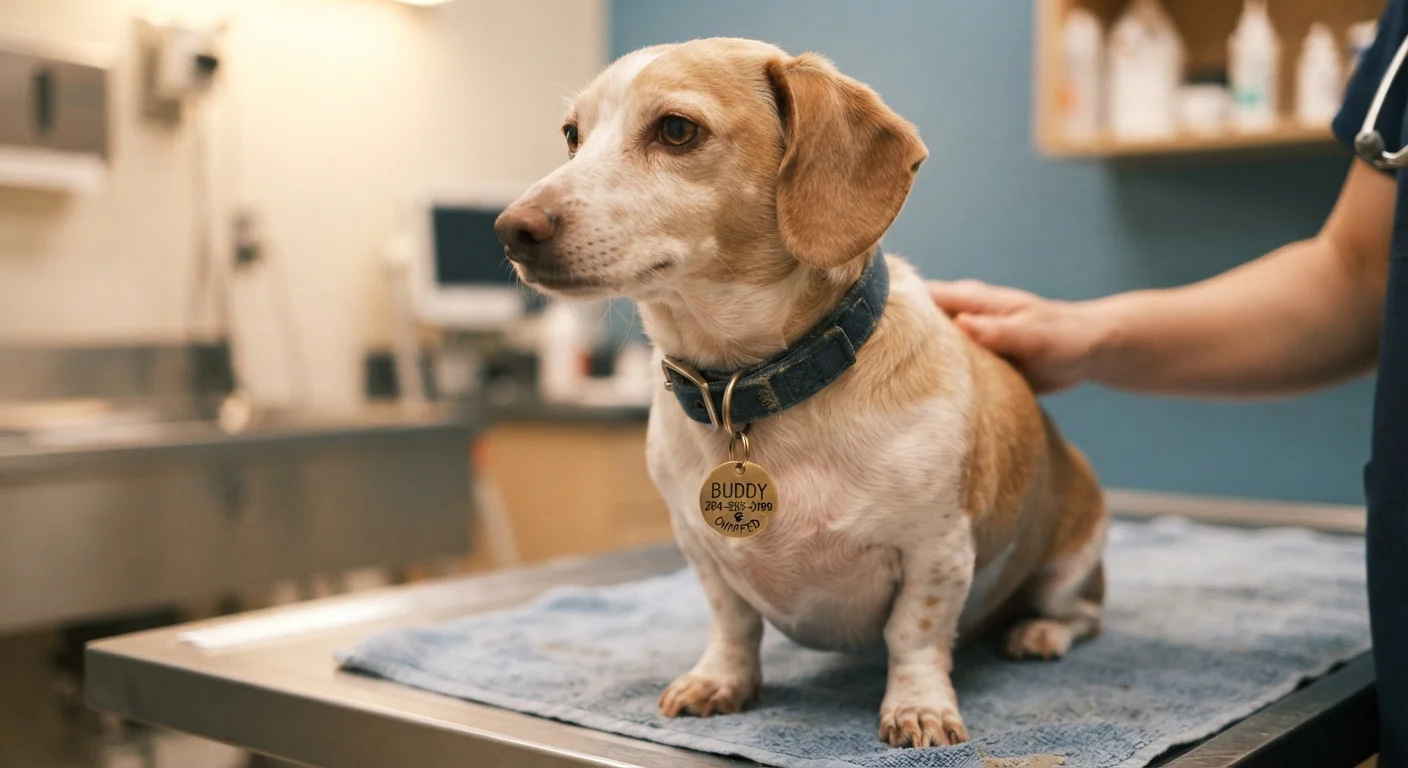
Why Identification Is a Basic Pet Safety Responsibility
No matter how careful a pet owner you are, the unexpected happens. Doors are left open, fences fail, and animals bolt during thunderstorms or fireworks. Without identification, a lost pet that ends up at a shelter faces a much harder road home - and the window for reunification narrows quickly.
Proper identification isn't just for outdoor animals. Even pets kept primarily inside can escape in an instant. If you're thinking through the broader question of environment and risk, our guide on indoor vs. outdoor pets covers those tradeoffs in detail. Regardless of lifestyle, every pet deserves reliable identification.
The two primary tools - microchips and ID tags - serve different but complementary functions. Neither alone provides complete protection. Understanding how each works helps you use both effectively.
52%
Microchipped dogs returned to owners
A study published in the Journal of the American Veterinary Medical Association found microchipped dogs were returned to owners at more than twice the rate of non-chipped dogs.
~58%
Microchipped cats returned to owners
The same JAVMA study found microchipped cats were returned to owners at a rate nearly 20 times higher than non-microchipped cats.
1 in 3
Pets that become lost in their lifetime
According to the American Humane Association, approximately one in three pets will become lost at some point during their lifetime.
How Microchips Work and What They Can and Can't Do
A microchip is a small radio-frequency identification (RFID) device, roughly the size of a grain of rice, implanted under a pet's skin - typically between the shoulder blades. The procedure is quick, performed with a needle similar to a standard vaccine, and generally requires no anesthesia. Most pets tolerate it well.
When a shelter, veterinary clinic, or animal control officer scans a found pet with a compatible reader, the chip transmits a unique identification number. That number is then looked up in a pet recovery registry to find the registered owner's contact information.
Microchips Don't Replace ID Tags
A microchip requires a specialized scanner to read - most members of the public won't have one. A visible ID tag allows anyone who finds your pet to contact you immediately, without needing to take the animal to a shelter or vet clinic first. Using both together covers both scenarios.
Microchip implantation is typically done by a veterinarian, though some shelters and humane organizations also offer the service. If your pet was adopted from a shelter, ask at adoption whether a chip was already implanted - many shelters chip animals before placing them.
“A microchip dramatically increases the likelihood that a lost pet will be returned to its owner - but only when the registration information is accurate and up to date. The chip is the tool; the registry is what makes it work.”
— American Veterinary Medical Association, National veterinary professional organization representing U.S. veterinarians
ID Tags: Visible, Instant, and Still Essential
An ID tag attached to a well-fitted collar remains one of the simplest and most effective recovery tools available. Anyone who finds your pet - a neighbor, a passing driver, a child - can read a tag without any equipment and call you directly.
A good ID tag should include at minimum your current phone number. Some owners also include the pet's name and a secondary contact number. Keep the information concise so it's easy to read at a glance. Check tags periodically for wear; engraved text can become illegible over time, especially on metal tags exposed to moisture.
Breakaway collars - designed to release under pressure - are commonly recommended for cats to prevent snagging hazards. If your cat wears one, choose a tag that stays secure but is lightweight enough not to cause discomfort. For dogs, standard flat collars work well for most everyday situations.
Use a Universal Registry for Easier Lookups
The United States has multiple microchip registries, which can complicate lookups. Consider registering your chip with a universal database such as the AAHA Universal Pet Microchip Lookup tool, which searches across multiple registries simultaneously. This makes it easier for shelters and clinics anywhere in the country to find your information quickly.
Best Practices for Keeping Identification Current and Effective
Keeping identification effective is an ongoing responsibility, not a one-time task. The practices below address the most common gaps that prevent reunification even when a pet is properly chipped and tagged.
- Register the microchip immediately after implantation. The chip number means nothing without a linked registry record. Registration is usually done online and takes only a few minutes. Don't assume your vet has done this for you - confirm it.
- Update your registry information whenever your contact details change. Moving, changing phone numbers, or switching email addresses all require a registry update. Set a reminder to check annually.
- Ensure your pet wears its collar and tag consistently. A tag in a drawer provides no protection. Make wearing the collar a daily habit, and check the fit regularly as your pet grows or changes weight.
- Keep a recent, clear photo of your pet. If your pet goes missing, you'll need to share an accurate image quickly with neighbors, shelters, and online lost-pet networks. Update the photo whenever your pet's appearance changes significantly.
If you've recently brought home a new pet, our article on common early mistakes new pet owners make highlights other foundational steps that are easy to overlook in the first few weeks.
What to Do Immediately If Your Pet Goes Missing
Speed matters. The first 24 hours after a pet disappears are often the most critical for recovery.
- Search your immediate area thoroughly - check under porches, inside vehicles, behind sheds, and in any confined space where a frightened animal might hide.
- Contact your local animal shelter and animal control office right away. File a lost pet report and visit in person if possible, since descriptions can be mismatched and staff turnover means your report may not reach every person handling animals.
- Alert neighbors and post on local community boards - both physical flyers and neighborhood social media groups. Include a clear photo, your contact number, and a brief description.
- Notify your microchip registry that your pet is missing. Some registries allow you to flag a chip number as lost, which alerts any shelter that scans the chip.
Keeping your pet safe is part of a broader approach to responsible care. You may also find it useful to review common household hazards for pets as part of building a safe home environment.