What Uneven Brake Wear Actually Means
When brake pads wear at different rates - across an axle, between front and rear, or even within a single pad - it's rarely coincidence. Each pattern tells a story about what's happening mechanically. A pad that's heavily worn on the inner face but barely touched on the outer edge points to a stuck caliper piston. Pads that wear faster on one side of the axle than the other often indicate a seized slide pin or a collapsed brake hose.
Understanding these patterns is the first step to diagnosing the actual problem. Swapping in new pads without addressing the root cause means the replacement set will wear just as unevenly - and just as fast. As we cover in how driving habits accelerate vehicle wear, mechanical issues don't develop in isolation; driver behavior plays a role too.
Replacing pads without inspecting the calipers and slide pins.
Why it happens: New pads eliminate the squealing or grinding noise, which feels like a fix - but the component causing uneven wear is still in place.
Ignoring tapered pad wear (thick on one end, thin on the other).
Why it happens: Drivers often assume all wear is normal until a noise appears. Taper is subtler than overall thickness loss and gets overlooked during quick visual checks.
Skipping brake fluid checks when diagnosing wear issues.
Why it happens: Brake fluid is out of sight, so it's often out of mind until something fails. Old, moisture-contaminated fluid can cause sluggish caliper retraction.
Replacing only the pads on one side of an axle to save money.
Why it happens: If only one corner appears worn, it seems logical to replace just that side. But this creates an imbalance in braking force across the axle.
Overlooking the role of driving habits in accelerated wear.
Why it happens: Drivers rarely connect habits like frequent hard braking or riding the brakes downhill to uneven wear patterns, attributing wear solely to parts quality.
The Mechanical Factors Most Drivers Overlook
Several components beyond the pads themselves govern how evenly braking force is applied. When any of them degrade, uneven wear follows.
~30%
Brake jobs complicated by stuck calipers
Industry technician surveys suggest stuck or seized calipers are a contributing factor in roughly a third of premature brake pad replacements.
2-3x
Faster rotor wear from a dragging caliper
A caliper that doesn't fully release can cause rotors to wear two to three times faster than normal, according to brake system service data.
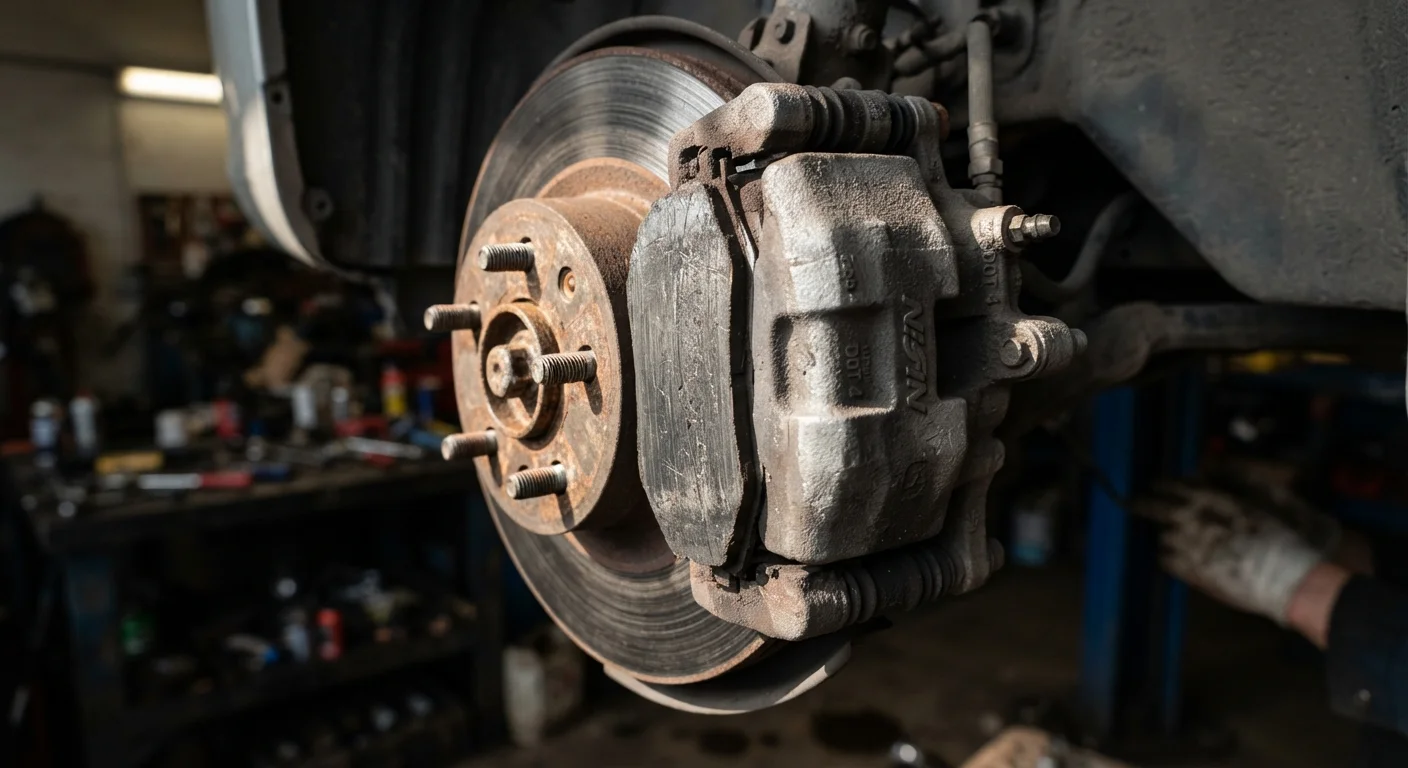
Caliper slide pins allow the caliper to float and apply even pressure across both pad faces. When these pins corrode or dry out - which happens in climates with road salt or high humidity - the caliper can't release fully after braking. One pad drags continuously against the rotor while the other sits at near-zero contact. The result is dramatically uneven wear and a vehicle that pulls to one side under braking.
Brake hoses can deteriorate internally without any visible cracking. A partially blocked hose restricts fluid return, keeping the caliper slightly engaged on that corner. Worn or missing anti-rattle hardware - the small clips and shims that hold pads in place - allows pads to shift and contact the rotor at an angle, causing tapered wear across the pad's length.
Don't Ignore a Brake Pull
A vehicle that consistently pulls to one side under braking should be inspected by a qualified mechanic promptly. This symptom can indicate a seized caliper, collapsed brake hose, or unequal pad contact - all of which affect your ability to stop safely in an emergency. Do not defer this inspection.
Also worth noting: suspension geometry affects braking balance. A worn control arm bushing or a bent strut changes the angle at which the pad meets the rotor, contributing to uneven contact pressure. This is why a pull under braking doesn't always mean a brake problem exclusively - it can mean a suspension problem expressing itself through braking.
How to Spot the Signs Without Being a Mechanic
You don't need to remove wheels to gather useful diagnostic information. Several signs are detectable during normal driving and basic visual checks.
- Vehicle pulling under braking: A consistent pull to one side when you apply the brakes suggests unequal clamping force between the left and right front calipers.
- Pulsing or vibration through the pedal: Often linked to a warped rotor caused by a dragging pad generating excessive heat.
- Squealing only on one side: Most pads have wear indicators on both inner and outer faces; if noise comes from just one corner, that pad may have worn faster.
- Visual inspection through wheel spokes: On many vehicles, you can see the outboard brake pad resting against the rotor. A pad that looks significantly thinner on one wheel compared to the other at the same axle warrants closer inspection.
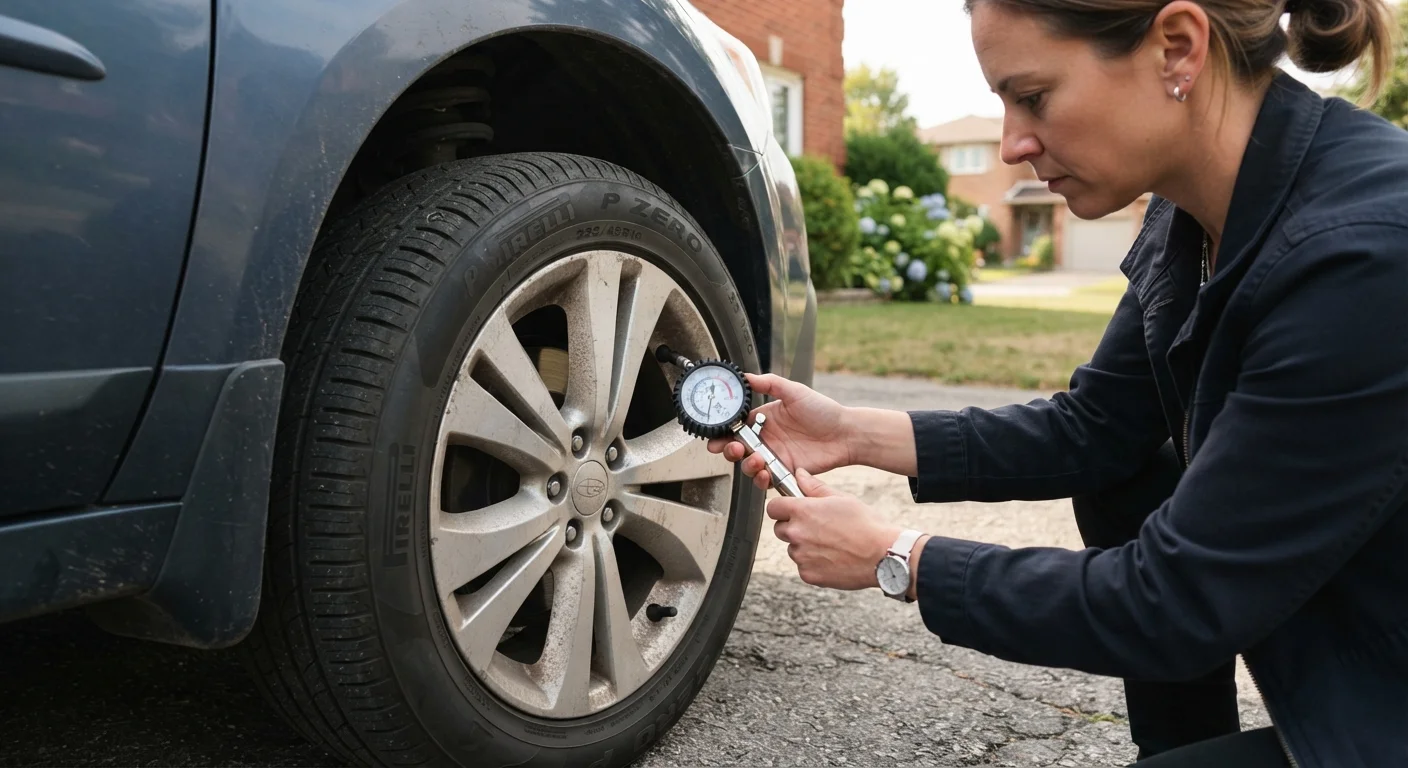
Pairing brake awareness with other routine checks pays dividends. Tyre pressure and tread depth checks are another category where small anomalies visible during inspection often signal bigger alignment or mechanical issues.
Uneven Wear Can Mask Rotor Damage
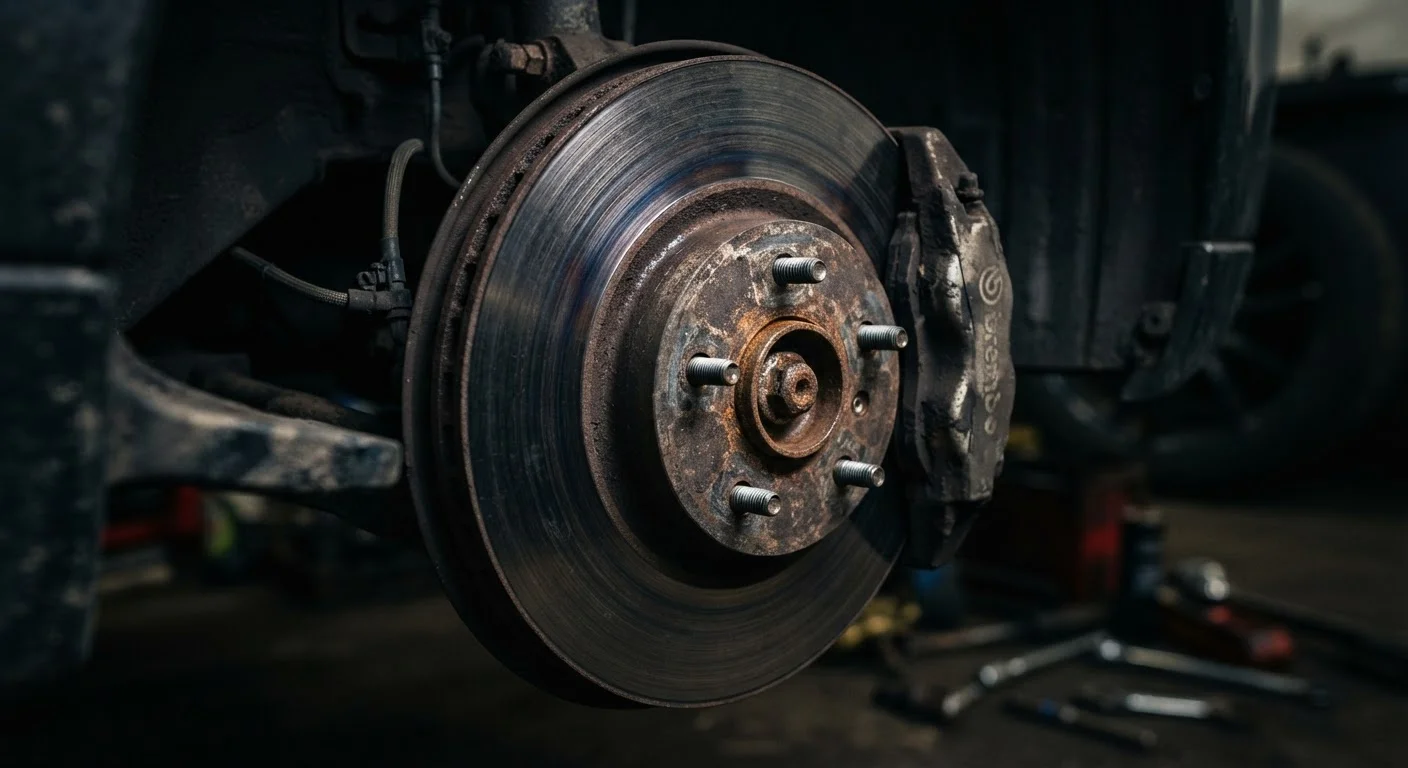
A pad worn unevenly for an extended period will score or groove the rotor surface in a matching pattern. Even after the pad is replaced, a damaged rotor can cause brake pulsation, reduced stopping power, and further uneven wear on the new pads. Always have rotors measured for thickness and inspected for scoring when replacing pads - a rotor below minimum thickness must be replaced, not just resurfaced.