
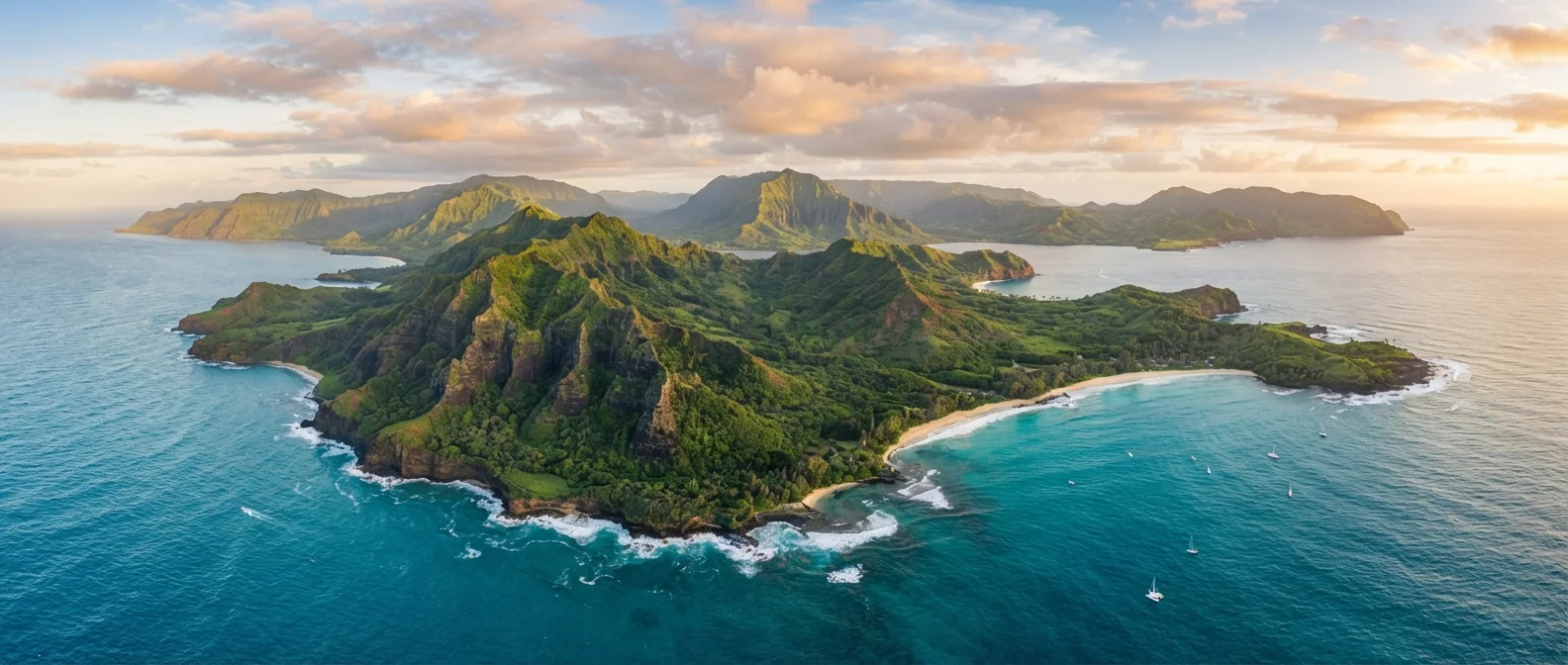
Why the Islands Aren't All the Same
Many first-time visitors imagine Hawaii as a single, uniform destination - palm trees, leis, and luaus repeated across every shore. In reality, the Hawaiian archipelago spans roughly 1,500 miles of the Pacific and includes six main islands open to visitors, each shaped by distinct geology, climate zones, and cultural character. Choosing the right island for your trip isn't about finding the "best" one - it's about matching what you want to experience with what each island naturally delivers.
| Number of main visitor islands | 6 (Oahu, Maui, Big Island, Kauai, Molokai, Lanai) (Hawaii Tourism Authority) |
| Most visited island | Oahu (Hawaii Tourism Authority) |
| Largest island by land area | Hawaii Island (Big Island) |
| Climate zones on Big Island | 11 of Earth's 13 (USDA Forest Service) |
| Longest fringing reef in the US | Located off Molokai's south shore (NOAA) |
| Whale watching season (Maui) | December through April (Pacific Whale Foundation (general guidance)) |
Below is a practical breakdown of what makes each island distinct, so you can plan with confidence rather than guesswork.
Island by Island: A Traveler's Snapshot
Oahu - The Gathering Place
Home to Honolulu and Waikiki, Oahu is Hawaii's most visited island and its urban heartbeat. It suits travelers who want world-class beaches paired with vibrant nightlife, historic sites like Pearl Harbor, and excellent transit infrastructure. The North Shore delivers legendary surf culture, while downtown Honolulu offers museums and a thriving food scene.
Maui - The Valley Isle
Maui balances dramatic natural scenery - the sunrise atop Haleakalā volcano, the twisting Road to Hana - with polished resort areas in Wailea and Kaanapali. It tends to attract honeymooners, snorkeling enthusiasts, and travelers who want high-end amenities alongside genuine wilderness. Whale watching from December through April is a major draw.
The Big Island (Hawaii Island) - The Orchid Isle
The youngest and largest island in the chain is still actively growing thanks to ongoing volcanic activity. Visitors can experience 11 of Earth's 13 climate zones on a single island, from snow-capped Mauna Kea to lush rainforests and black-sand beaches. It appeals most to nature explorers, stargazers, and travelers comfortable with longer drives between attractions.
Kauai - The Garden Isle
Kauai is often described as the most visually striking island, with the towering Na Pali Coast cliffs, Waimea Canyon (nicknamed the "Grand Canyon of the Pacific"), and dense jungle valleys. It lacks major resort sprawl, making it a favorite for hikers, kayakers, and travelers seeking a quieter, more remote experience. Infrastructure is limited - plan accordingly.
Molokai - The Friendly Isle
Molokai remains largely undeveloped and is home to the longest continuous fringing reef in the United States. It offers deep immersion in Native Hawaiian culture and a genuinely slow pace. Visitor facilities are minimal; this island rewards those who value authenticity over convenience.
Lanai - The Pineapple Isle
Tiny Lanai pivots between two extremes: rugged, unpaved backcountry terrain and secluded, upscale seclusion. Accessible via ferry from Maui or a short flight, it suits travelers looking for dramatic off-road adventures or a quiet escape away from crowds.
Leeward coast
The side of an island sheltered from prevailing trade winds. On most Hawaiian islands, leeward coasts face west or southwest and tend to be sunnier and drier - popular locations for beach resorts.
Windward coast
The side of an island directly exposed to prevailing trade winds, typically the eastern or northeastern shore. These coasts receive more rainfall and tend to be lush and green.
Fringing reef
A coral reef that grows directly from a shoreline without a significant lagoon separating it from land. Molokai's south shore hosts the longest continuous fringing reef in the United States.
Na Pali Coast
A dramatic stretch of Kauai's northwest shoreline characterized by towering sea cliffs, narrow valleys, and near-inaccessible terrain. Accessible by boat, helicopter, or strenuous hiking trail.
Matching Your Travel Style to the Right Island
6
Main islands open to visitors
Hawaii's archipelago technically includes over 100 islands, but only six are developed for general tourism.
~1,500 mi
Span of the Hawaiian archipelago
The chain stretches northwest to southeast across the central Pacific Ocean.
11/13
Climate zones found on the Big Island
According to the USDA Forest Service, Hawaii Island contains nearly all of Earth's major climate zones within its borders.
No single island is objectively superior - but some are objectively better suited to specific travelers. If you're visiting Hawaii for the first time and want a full range of experiences without renting a car for long hauls, Oahu's infrastructure makes it accessible and varied. If you're drawn to raw natural power and don't mind planning around limited amenities, the Big Island or Kauai may resonate more deeply.
Consider also the time of year. The Hawaiian Islands share a generally warm, tropical climate, but rainfall and surf conditions vary significantly by season and by which side of each island you're on. The leeward (western) coasts of most islands tend to be drier; the windward (eastern) coasts are greener and wetter.
Travel conditions, entry requirements, and local guidelines can change. Always verify current information with official Hawaiian state tourism resources and your airline or ferry provider before booking.