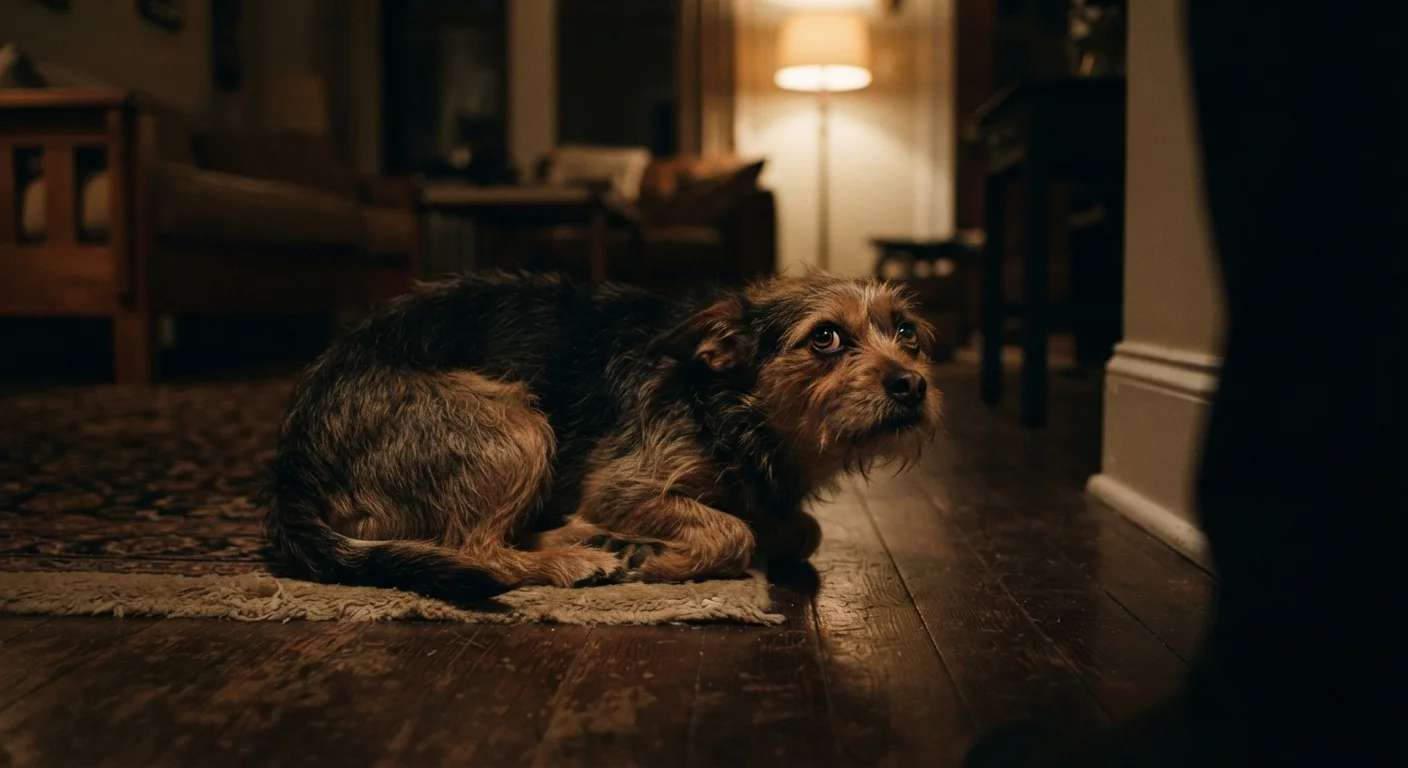

What Dog Aggression Actually Means
Aggression in dogs is one of the most misunderstood aspects of canine behaviour. It is not random, unpredictable, or a sign that a dog is "bad." In almost every case, aggressive behaviour - growling, snapping, lunging, or biting - is a dog's attempt to communicate that it is uncomfortable, threatened, or in pain.
Understanding this shifts the entire conversation. Rather than asking "how do I stop this behaviour?" the more productive question is "what is my dog trying to tell me, and why?" That framing leads to safer, more lasting outcomes for both the dog and the people around it.
If you are new to pet ownership, building a baseline understanding of what normal versus concerning behaviour looks like is a valuable first step. Our guide for first-time owners covers those foundational signals.
Rule Out Medical Causes First
If your dog's aggression appears suddenly or intensifies without a clear behavioural explanation, schedule a veterinary examination before pursuing any training intervention. Pain conditions, thyroid disorders, neurological issues, and other health problems can all manifest as aggression. Treating the behaviour without addressing an underlying medical cause will not produce lasting results.
The Main Types of Canine Aggression
Veterinary behaviourists typically recognize several distinct categories of aggression, each with different causes and management needs:
- Fear-based aggression: The most common type. A dog that cannot escape a perceived threat may bite as a last resort. This dog often shows warning signals - freezing, lip-licking, whale eye - before escalating.
- Territorial aggression: Directed at people or animals approaching the dog's home, yard, or car. It is often predictable and space-specific.
- Resource guarding: The dog protects food, toys, resting spots, or even a person. Growling when approached during a meal is a classic example.
- Pain-induced aggression: A dog in physical discomfort may snap when touched, even by someone it trusts. A veterinary exam should be the first step whenever aggression appears suddenly in a previously calm dog.
- Redirected aggression: When a dog cannot reach its actual trigger - say, another dog behind a fence - it may redirect that arousal onto the nearest person or animal.
- Predatory behaviour: Distinct from other types, this involves stalking and chasing behaviour triggered by fast-moving animals or objects. It does not typically involve the same warning sequence.
~4.5M
Dog bites reported annually in the U.S.
According to the American Veterinary Medical Association (AVMA), approximately 4.5 million dog bites occur in the United States each year.
77%
Bites involving a familiar dog
The AVMA notes that the majority of dog bites involve dogs known to the victim, underscoring that aggression is not primarily a stranger-danger issue.
#1
Fear identified as leading aggression driver
Fear and anxiety are consistently cited by veterinary behaviourists as the primary motivators behind most forms of canine aggression.
Common Triggers and Why They Matter
Identifying a dog's specific triggers is essential to any management or behaviour modification plan. Common triggers include:
- Strangers approaching quickly or making direct eye contact
- Children behaving unpredictably (sudden noise, fast movement)
- Other dogs, particularly on-leash where the dog feels constrained
- Hands reaching over the head or toward the face
- Veterinary handling or grooming procedures
- Loud, confined, or high-traffic environments
Triggers are not always obvious. A dog may appear calm until a very specific combination of circumstances arises - a stranger in a hat, approached from the left, near the food bowl. Keeping a simple log of when and where incidents occur helps owners and professionals identify patterns that are not immediately visible.
Keep a brief written log every time your dog reacts - note the location, who was present, what happened immediately before, and how your dog's body looked. Even three entries can reveal a pattern that would otherwise take months to notice.
Trigger patterns are rarely obvious in the moment but become clear across multiple incidents. A log gives a behaviourist the concrete data needed to build an accurate working hypothesis.
Never punish a growl. A growl is information - it tells you your dog is uncomfortable before the situation escalates to a snap or bite. Suppressing it removes a safety signal without addressing the underlying cause.
Dogs that are repeatedly corrected for growling often stop offering that warning and proceed directly to biting, which is a well-documented outcome in applied animal behaviour literature.
Warning Signs Owners Often Miss
Most bites do not come "out of nowhere." Dogs communicate discomfort through a progression of signals long before they reach a bite. These include yawning, lip-licking, turning the head away, stiffening, showing the whites of the eyes (whale eye), a low growl, and a snap. When owners - or others nearby - miss or suppress these early signals (for example, by scolding a growl), the dog may learn to skip to biting because the subtler cues went unheeded.
Learning to read this communication ladder is one of the most protective skills an owner can develop. Our article on reading stress signals before problems escalate walks through these cues in detail.
It is also worth understanding that responding to aggression with punishment often makes things significantly worse - not better. Aversive methods can increase fear and aggression, according to established behavioural science.
When to Seek Professional Help
Not all growling requires a specialist - context matters enormously. However, certain situations call for prompt professional involvement:
- Any bite that breaks skin, especially directed at a person
- Aggression that is increasing in frequency or intensity
- Aggression that appears suddenly with no clear trigger (rule out pain or illness first with a vet visit)
- Aggression toward children, elderly family members, or vulnerable individuals
- Resource guarding that is escalating or unpredictable
- Owner fear of their own dog affecting the household
The right professional depends on the situation. A veterinarian should always be the first contact to rule out medical causes. From there, a certified veterinary behaviourist (Dip. ACVB) or a certified applied animal behaviourist (CAAB/ACAAB) offers the highest level of clinical expertise. Certified professional dog trainers (CPDT-KA) with a demonstrated background in behaviour modification can also provide valuable support for less severe cases.
Do Not Delay If a Bite Has Occurred
A bite that breaks skin - regardless of the dog's history - is a serious event that warrants immediate professional consultation. Do not wait to see if it happens again. Bite thresholds can lower over time if the triggering situation continues without intervention, increasing risk to household members and others.
How Professionals Assess and Address Aggression
A thorough behavioural assessment typically includes a detailed history of when aggression occurs, a review of the dog's medical background, direct observation of the dog's body language and responses, and an evaluation of the household environment and daily routine.
From there, a management and modification plan is built. Management - such as avoiding known triggers, using a leash, baby gates, or a basket muzzle - keeps everyone safe while the underlying emotional response is addressed. Behaviour modification, usually grounded in desensitisation (gradual, controlled exposure) and counter-conditioning (pairing the trigger with something positive), works to change how the dog feels about what currently frightens or frustrates it.
In some cases, a veterinarian may discuss whether medication could support the behaviour modification process by reducing the dog's baseline anxiety to a level where learning becomes possible. This is a medical decision made in partnership with a qualified veterinary professional.
Aggression that stems from anxiety - including distress when left alone - may also overlap with separation-related behaviour. Our article on separation anxiety in dogs covers that distinct but sometimes related territory.
Progress takes time, consistency, and patience. Most owners who commit to a structured plan and qualified guidance see meaningful improvement - though outcomes vary depending on the dog's history, the severity of the behaviour, and how consistently the plan is implemented.
This article is intended for general educational purposes and does not constitute veterinary or behavioural advice. Always consult a qualified veterinarian or certified animal behaviourist for guidance specific to your dog's situation.
“Aggression is not a diagnosis - it is a symptom. Our job is always to understand what the dog is afraid of, what it is protecting, or what it is trying to avoid, and then address that root cause.”
— Dr. Karen Overall, Board-certified veterinary behaviourist and author of clinical behaviour texts