
The Core Purpose: Turning Intentions Into Direction
Most professionals have career ambitions - a role they'd like to reach, a skill they want to master, an industry they'd prefer to work in. What separates those who make consistent progress from those who stall is rarely talent. It's structure.
A career development plan transforms vague intentions into a sequence of deliberate actions. It forces you to answer three foundational questions: Where am I now? Where do I want to go? And what specifically will I do to close that gap? Without that structure, it's easy to spend years in motion without actually moving forward.
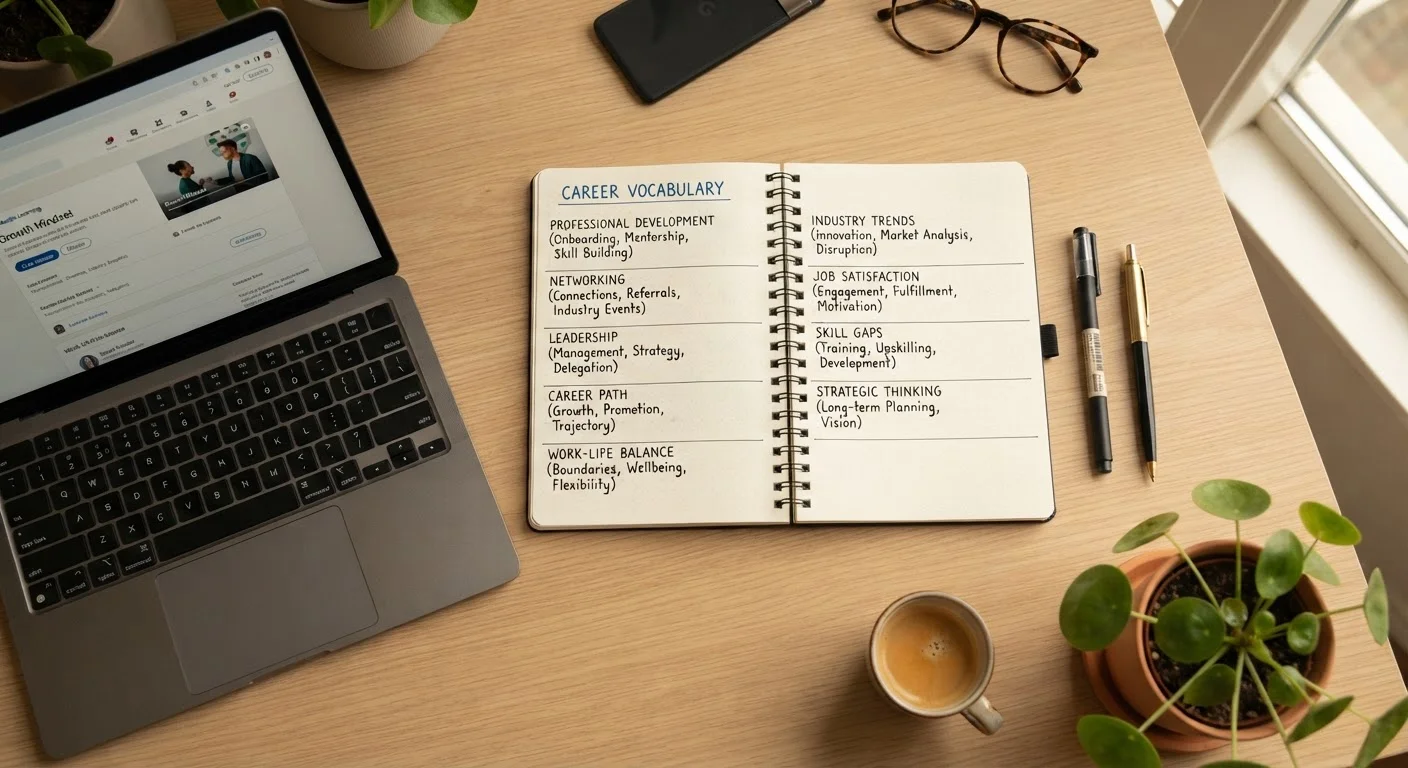
Before diving into how a plan works, it helps to be familiar with the language professionals use to talk about growth. Our professional development vocabulary guide covers terms like stretch assignments, competency frameworks, and succession planning - concepts that frequently appear in development conversations.
Start Simple, Then Add Detail
If the idea of a full career development plan feels overwhelming, start with just one goal and one concrete action you can take in the next 30 days. A single written goal with a deadline is far more powerful than an elaborate plan that never gets finished. Build complexity gradually as the habit of planning takes hold.
What a Career Development Plan Actually Contains
A well-constructed plan has several working parts, each serving a distinct function:
- A current-state assessment - an honest inventory of your existing skills, experiences, and gaps relative to where you want to be.
- Defined goals - both short-term (achievable within 3-12 months) and long-term (1-5 years out), written with enough specificity to be actionable.
- A skill-building roadmap - specific learning activities, certifications, or experiences that will close identified gaps.
- Relationship targets - mentors, sponsors, or professional communities that can support or accelerate your progress.
- A review schedule - set checkpoints to assess what's working and adjust what isn't.
Notice that a plan is not simply a list of aspirations. Each element is tied to action. That distinction - between wishing and planning - is what makes a career development plan a practical tool rather than a feel-good exercise.
~70%
Employees who lack clear development plans
Surveys by Gallup and similar workplace research organizations consistently find that a majority of workers report having no clear plan for their professional development, despite wanting career growth.
2-3x
Goal achievement improvement with written plans
Studies in goal-setting research indicate that people who write down specific goals and track progress are substantially more likely to achieve them compared to those who keep goals informal.
The Hidden Benefits Most People Overlook
The obvious value of a career plan is clarity. But two less-discussed benefits are equally important.
Accountability. Writing down a goal with a deadline changes how seriously you take it. Research in goal-setting theory, associated with work by psychologists Edwin Locke and Gary Latham, consistently shows that specific, written goals outperform vague intentions in producing follow-through. A plan gives you something concrete to measure yourself against.
Self-advocacy. When you can articulate your development goals clearly, you become better at asking for what you need - a new project, a training budget, a conversation with a senior leader. Managers and mentors respond to people who know what they want and why. A plan equips you to have those conversations with confidence.
If you're early in your career and still building foundational habits, our article on starting your career from scratch covers the underlying mindsets and behaviors that make planning more effective.
How to Keep a Plan Working Over Time
A career development plan is not a document you write once and file away. Its value comes from regular engagement. Set a recurring review - quarterly is a practical rhythm for most people - where you assess which milestones you've hit, what has shifted in your circumstances, and whether your longer-term goals still reflect what you actually want.
Some professionals work through this process with the help of a career coach. If you're considering that route, it's worth understanding both what the experience offers and where its limits lie - our piece on working with a career coach gives an honest picture of the process.
Plans Are Allowed to Change
Revising your career development plan isn't a sign of failure - it's a sign that you're paying attention. Careers rarely follow a straight line, and a plan that can't absorb new information quickly becomes irrelevant. The goal is progress in a direction that still makes sense, not rigid adherence to a document you wrote 18 months ago.
The most durable career plans are flexible enough to absorb new information - a role that disappears, a skill that becomes more valuable, a change in personal priorities - without losing their core direction. Treat your plan as a working document: revise it freely, but keep it alive.
“A goal without a plan is just a wish. The act of writing down where you want to go - and what you'll do to get there - is what separates intention from progress.”
— Edwin Locke, Professor Emeritus, University of Maryland; pioneer of goal-setting theory in organizational psychology