Why This Vocabulary Matters
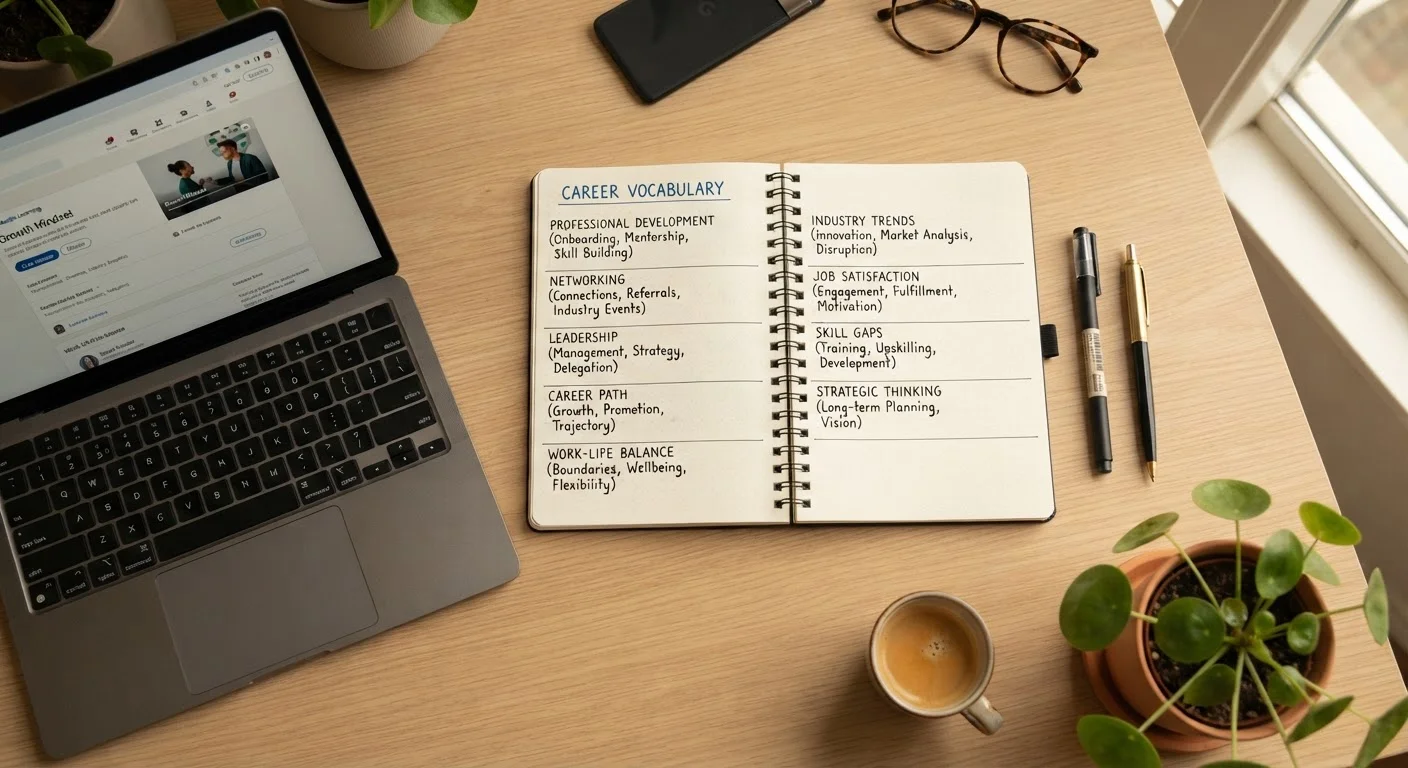
Walk into a performance review, a hiring conversation, or a mentorship meeting without knowing the terminology, and you risk missing what's actually being offered - or asked of you. Professional development has its own working language, and fluency in it helps you advocate for yourself, understand organizational systems, and make smarter decisions about where to invest your energy.
This reference covers the terms most commonly used in modern workplaces across industries. Whether you're building your career from the ground up or navigating a mid-career pivot, these definitions will help you participate in conversations with clarity and confidence. For a deeper look at how to structure your goals over time, see what a career development plan actually does for you.
Stretch Assignment
A task or project deliberately chosen because it lies just beyond an employee's current skill level. The discomfort is intentional - stretch assignments accelerate learning and signal that an organization views someone as having growth potential.
Succession Planning
An organizational process of identifying and developing employees who could step into critical roles if they become vacant. It is a long-term strategy, not just emergency replacement planning.
Skills Gap Analysis
An assessment comparing the skills an employee currently has against those required for a target role or organizational need. The gap identified becomes the roadmap for targeted development.
360-Degree Feedback
A performance feedback method that collects input from multiple sources - a manager, peers, direct reports, and sometimes the employee themselves. It provides a more complete picture than top-down evaluation alone.
Individual Development Plan (IDP)
A written document co-created by an employee and their manager that outlines specific learning goals, timelines, and resources. IDPs formalize intent and create shared accountability.
Competency Framework
A structured set of behaviors, skills, and knowledge areas that an organization defines as necessary for success in a given role or level. It provides a common standard against which performance and potential are measured.
Lateral Move
A job change to a different role at roughly the same level of seniority, often across functions or departments. Lateral moves can broaden experience, build new competencies, and open doors to future vertical advancement.
Mentorship vs. Sponsorship
Mentorship involves guidance, advice, and knowledge-sharing from a more experienced professional. Sponsorship goes further - a sponsor actively advocates for someone's advancement in rooms they don't have access to yet.
High-Potential (HiPo) Employee
A designation some organizations use to identify employees who demonstrate the capability, commitment, and aspiration to advance to senior roles. Being labeled a HiPo often unlocks access to accelerated development programs.
Onboarding
The structured process of integrating a new employee into an organization - covering culture, systems, role expectations, and relationships. Effective onboarding extends well beyond the first week.
Knowledge Transfer
The deliberate process of moving expertise, insights, or institutional knowledge from one person or team to another. It is especially critical during role transitions, retirements, or organizational restructuring.
Professional Learning Community (PLC)
A group of professionals who meet regularly to share knowledge, reflect on practice, and learn from one another. PLCs are common in education but increasingly used in corporate and nonprofit contexts.
Key Terms at a Glance
The quick-reference card below captures the most frequently cited data points about how professional development functions in today's workforce. Use it as a grounding snapshot before diving into the full glossary above.
| Employees who want more learning opportunities | ~94% (LinkedIn Workplace Learning Report) |
| Average time to full productivity for a new hire | 8-12 months (SHRM onboarding research) |
| Workers who say a lack of growth opportunities would cause them to leave | Majority (Gallup workplace engagement studies) |
| Organizations with a formal succession plan | Fewer than 1 in 3 (Deloitte Human Capital Trends reporting) |
| Most cited barrier to professional development | Time constraints (Multiple workforce surveys) |
Understanding these figures helps contextualize why employers and HR professionals use terms like succession planning and skills gap analysis so frequently - they are responding to real, measurable workforce pressures.
These Terms Vary by Workplace
Not every organization uses these terms identically. A 'stretch assignment' at one company might be called a 'development opportunity' or 'growth project' at another. When in doubt, ask a manager or HR partner how a specific term is applied in your workplace context. Understanding the intent behind the language matters as much as the label itself.
These concepts connect across disciplines. Just as learning science has its own vocabulary, professional development terminology reflects the specific systems and incentives of organizational life. Knowing both sets of terms gives you a richer toolkit for growth. You can also explore practical skill-building strategies and personal growth frameworks to put these concepts into action.