
What a Career Pivot Really Means
A career pivot is a deliberate shift in professional direction - typically involving a change in industry, function, or both - rather than a straightforward promotion or lateral move within a familiar field. The term is often used loosely, so it helps to be precise: switching from marketing manager to product manager at the same company is a functional pivot; moving from a decade in finance into UX design is a more substantial one.
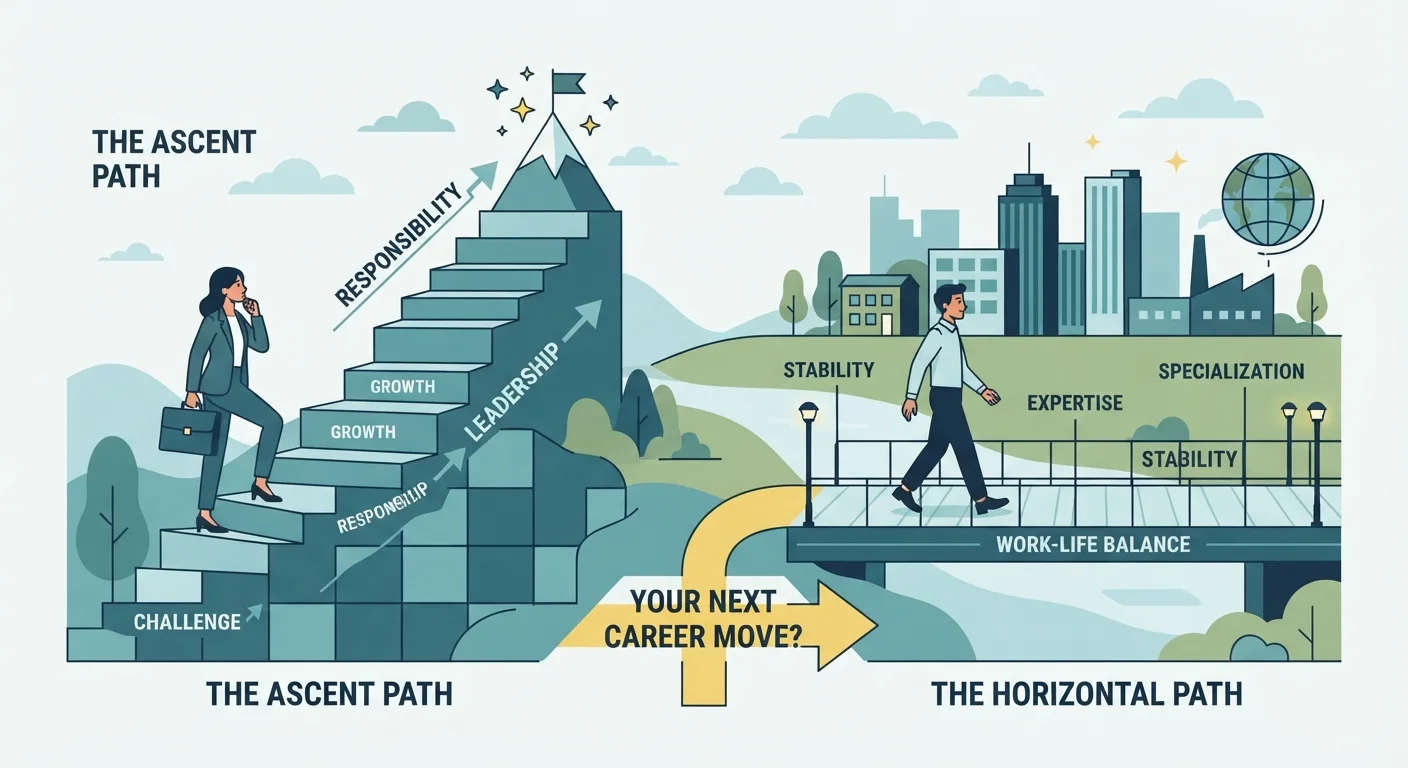
Understanding the scope of the change you're contemplating matters because it shapes how much groundwork you need to lay. A shift in function within a familiar industry typically requires less reskilling than a full industry-and-function change. See how vertical and lateral career moves compare to clarify which category your intended move falls into before you plan further.
Common motivations for pivoting include burnout in a current role, a values realignment, a desire for higher earning potential, or simply discovering a domain that feels more meaningful. None of these motivations is inherently better or worse - what matters is that you're moving toward something specific, not just fleeing from discomfort.
Auditing Your Transferable Skills
One of the most common mistakes people make when considering a pivot is assuming they're starting from zero. In reality, most professionals carry a substantial portfolio of skills that retain value across industries and roles - often more than they recognize.
49%
Workers who have changed careers at least once
According to a SHRM-commissioned survey, roughly half of U.S. workers report having made at least one significant career change in their working lives.
~70%
Skills overlap between adjacent roles
Research from the McKinsey Global Institute suggests that many mid-career professionals possess roughly 70% of the competencies needed for adjacent roles, leaving a smaller gap than commonly assumed.
Start your audit by listing what you actually do in your current role, not just your job title. Break it into categories: technical skills (tools, software, domain expertise), interpersonal skills (client management, facilitation, negotiation), and cognitive skills (systems thinking, data analysis, storytelling). Then research job descriptions in your target field and look for overlap. The gap between what you have and what's required is your development agenda - and it's usually narrower than it first appears.
For a curated look at which abilities hold their value across very different professional contexts, see skills that travel well across industries.
Map your skill inventory against actual job postings in your target field - not generic role descriptions - before concluding you have a major gap. Most people are surprised how much overlaps.
Practitioners in hiring roles read dozens of resumes and tend to value demonstrated application of skills over credential labels; knowing exactly what they're looking for helps you frame what you already have.
When exploring a new field, prioritize paid or structured project work over coursework alone. Real deliverables - even small ones - build your portfolio and test your genuine interest far more effectively than passive learning.
Career development research consistently shows that active, applied learning produces stronger skill retention and more realistic self-assessment than passive content consumption.
Managing the Financial Risk
A career pivot frequently involves a temporary income reduction - especially if you need to take an entry-level role, pursue additional education, or spend time freelancing to build a portfolio. Underestimating this financial exposure is one of the primary reasons pivots stall or fail.
Before making any formal move, assess your current monthly expenses and calculate how many months of living costs you could cover from savings alone. A commonly referenced guideline is three to six months of emergency savings as a baseline; a pivot, however, may require a longer runway depending on how extensive your reskilling needs to be. Review your budgeting fundamentals and identify where expenses can be reduced now to accelerate saving.
Don't Underestimate the Income Gap
Many career pivoters enter their new field at a lower salary than they left - sometimes significantly so. This is not universal, but it is common enough to plan for explicitly. Before you give notice, model your household budget at 70-80% of your current income for at least twelve months. If that scenario is unworkable without major lifestyle changes, address it before you pivot, not after.
Consider whether a staged approach is viable: pursuing certifications or freelance projects in your new field while still employed can significantly reduce financial exposure. Many successful pivoters spend six to eighteen months building their new-field portfolio before formally making the transition.
Also account for less visible costs: professional association memberships, course fees, networking events, and potential relocation all add up. Building these into a realistic budget - rather than discovering them mid-pivot - keeps the process manageable. Smart everyday money habits during a transition period can make a meaningful difference to your financial stability.
Building Credibility in a New Field
Credentials matter, but they are rarely sufficient on their own. In most fields, employers and clients want evidence of applied competence - work they can see and evaluate. Building that evidence base before or alongside your formal job search is one of the highest-leverage activities in a pivot.
Practical ways to build visible credibility include:
- Portfolio projects: Volunteer, freelance, or self-initiated work that produces concrete outputs you can show to prospective employers.
- Writing and speaking: Publishing articles, contributing to professional communities, or presenting at local meetups establishes subject-matter familiarity.
- Certifications and coursework: Targeted credentials signal commitment and fill knowledge gaps - prioritize those recognized within your target field rather than generic qualifications.
- Informational interviews: Conversations with practitioners help you understand field-specific language, norms, and hiring expectations, while simultaneously expanding your network.
If you're effectively rebuilding your professional foundation, the principles covered in starting your career from scratch apply more than you might expect - even for experienced professionals entering unfamiliar territory.
Reframe Your Resume Narrative
When applying in a new field, lead with your transferable accomplishments rather than your former job titles. A results-focused summary that speaks to problems you've solved - rather than roles you've held - tends to resonate more with hiring managers in unfamiliar industries. Tailor each application to reflect the language and priorities of the target role.
Getting the Right Support
A career pivot is rarely a solo endeavor. The right support structures can shorten your timeline, improve your decisions, and reduce the psychological weight of uncertainty.
Mentors who have made similar transitions - or who work in your target field - provide grounded, experience-based perspective that generic career advice cannot replicate. Meaningful mentoring relationships tend to form gradually through shared contexts rather than cold outreach; the reality of how mentorship actually forms is worth understanding before you reach out.
Career coaches offer structured accountability and tools for clarifying direction, strengthening your narrative, and preparing for interviews in an unfamiliar field. That said, coaching is an investment with trade-offs; what you gain and give up when working with a career coach is worth reading before committing.
Peer communities - online forums, professional associations, local meetup groups - provide ongoing connection with others navigating similar territory. These relationships often surface job leads and honest field-specific advice that formal channels do not.
“The biggest career transitions I've seen succeed share one thing in common: the person did the work to understand the new field from the inside before they tried to enter it. Information gathered from practitioners is worth more than any career book.”
— Jenny Blake, Author of 'Pivot: The Only Move That Matters Is Your Next One'
Making the Decision and Moving Forward
The decision to pivot doesn't need to be all-or-nothing, and it rarely should be. Treating your pivot as an iterative process - hypothesis, small experiment, evaluation, adjustment - reduces the stakes of any single move and keeps you responsive to new information.
Before committing fully, ask yourself: Have I spoken with at least three to five practitioners in my target field? Do I understand the realistic entry-level compensation and progression path? Have I tested my interest through actual work in the new domain, not just research about it?
A structured annual self-audit can help you track whether your pivot is progressing as intended. The annual career check-in offers a practical framework for stepping back and honestly reassessing direction, gaps, and goals at any stage of a transition.
Verify Before You Leap
Before formally resigning or making any irreversible commitment, validate your target field through direct experience - shadowing, freelancing, or a structured informational interview process. Assumptions about a new field that haven't been tested against reality are one of the most common sources of pivot regret. The time spent validating is almost always shorter than the time required to recover from a poorly researched decision.
Career pivots are rarely linear. There will be setbacks, slower-than-expected progress, and moments of doubt. The professionals who navigate them most successfully tend to share one trait: they treat each setback as data, not as confirmation that the pivot was a mistake. Build that mindset deliberately, and your odds of a successful transition rise considerably.