Why Insulation Type Matters
Insulation isn't a one-size-fits-all material. The right type depends on where it's going, how accessible that space is, your budget, and whether you're doing the work yourself or hiring a professional. Choosing the wrong type - or installing the right type incorrectly - can leave gaps in your home's thermal envelope, leading to higher energy bills, uneven temperatures, and moisture problems over time.
Every insulation type works by slowing the movement of heat. In winter, it keeps heat inside; in summer, it keeps heat out. The key measure of how well any insulation does this is its R-value - the higher the number, the greater the resistance to heat flow. But R-value alone doesn't tell the whole story. Air sealing, moisture management, and proper coverage all affect real-world performance.
| Fiberglass Batt R-Value (per inch) | ~R-2.9 to R-3.8 (U.S. Department of Energy) |
| Closed-Cell Foam R-Value (per inch) | ~R-6 to R-7 (U.S. Department of Energy) |
| Cellulose Loose-Fill R-Value (per inch) | ~R-3.2 to R-3.8 (U.S. Department of Energy) |
| Recommended Attic R-Value (most US climates) | R-38 to R-60 (U.S. DOE Climate Zone Guidelines) |
| Primary DIY-Friendly Types | Fiberglass batts, rigid foam boards, cellulose loose-fill (attic floors) |
The Main Insulation Types Explained
Here's a plain-language breakdown of the most common insulation materials and where each one is typically used.
Fiberglass Batts and Rolls
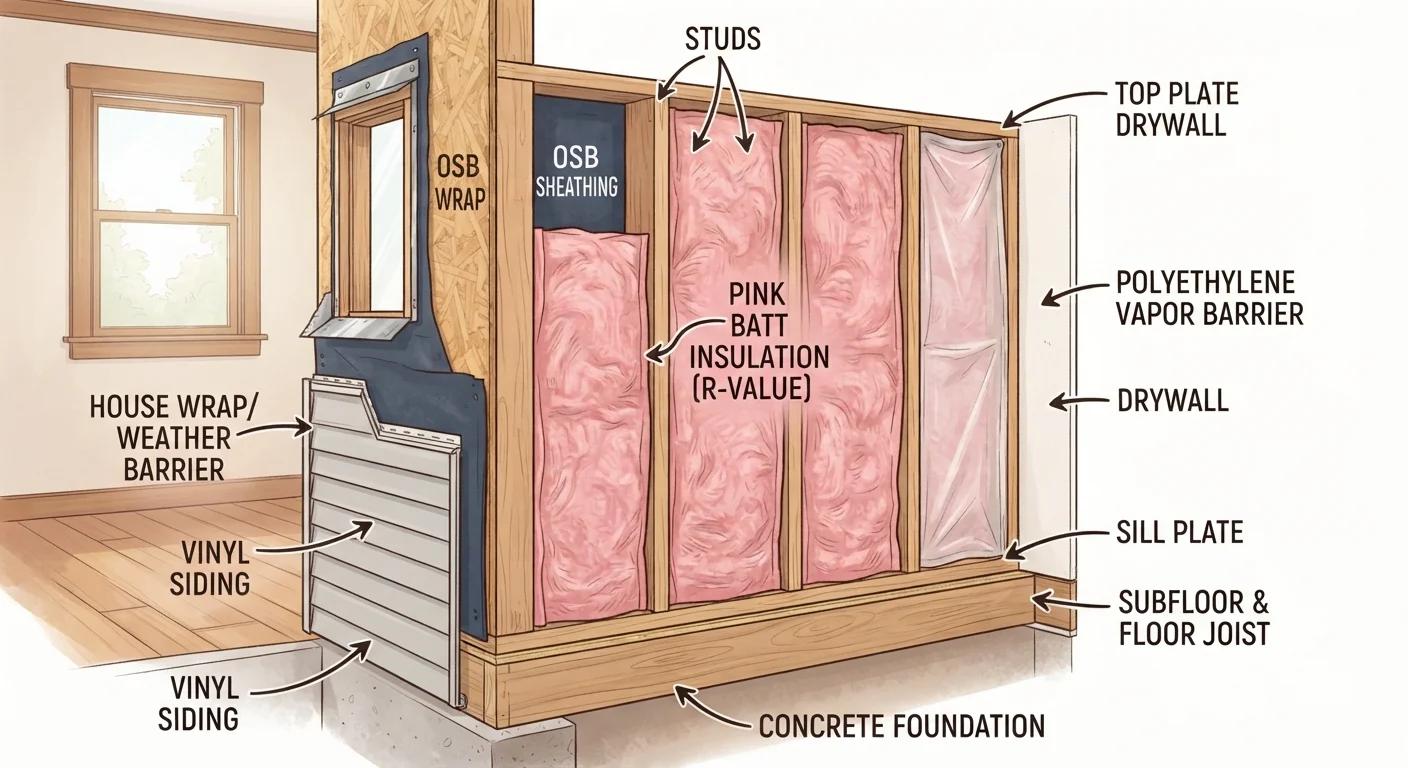
This is the pink or yellow fluffy material most homeowners recognize. Batts come in pre-cut panels sized to fit standard stud and joist spacing; rolls are the same material in a continuous sheet you cut to length. They're widely available and relatively straightforward for DIY installation in open wall cavities, attic floors, and floor joists. One important note: batts must fit snugly without compression - squishing them reduces their R-value.
Mineral Wool (Rock Wool or Slag Wool)
Made from volcanic rock or recycled steel slag, mineral wool batts look similar to fiberglass but are denser, more fire-resistant, and better at blocking sound. They're commonly used in interior partition walls, around mechanical rooms, and in spaces where fire separation is a priority. Mineral wool is also more water-resistant than fiberglass, making it useful in areas with higher humidity exposure.
Loose-Fill (Blown-In) Insulation
Loose-fill insulation - made from cellulose (recycled paper), fiberglass, or mineral wool - is blown into place using a machine. It excels at filling irregular cavities and settled attic floors without disturbing existing structures. Cellulose is a popular choice for attic retrofits because it conforms around obstructions and has good air-resistance properties when dense-packed. Blown-in installation typically requires renting or borrowing equipment, and for wall cavities, professional installation is usually more reliable.
Spray Polyurethane Foam (SPF)
Spray foam comes in two forms: open-cell (softer, lower R-value per inch, vapor-permeable) and closed-cell (rigid, high R-value per inch, acts as a vapor barrier). Closed-cell foam is especially effective in tight or hard-to-reach spaces, under roofs, and in crawl spaces where moisture control is critical. Because spray foam involves chemical mixing and can cause respiratory irritation during application, professional installation is strongly recommended for most situations.
Rigid Foam Boards
Rigid boards made from expanded polystyrene (EPS), extruded polystyrene (XPS), or polyisocyanurate (polyiso) are used on exterior walls, basement walls, under slabs, and as continuous insulation layers. They resist moisture well and provide a thermal break that batts alone cannot. Cutting and fitting rigid boards is manageable for DIYers, but edges and seams must be taped or sealed to prevent air leakage.
R-Value
A measure of insulation's resistance to heat flow. Higher R-values mean better thermal performance. Required R-values vary by location in the home and by U.S. climate zone.
Thermal Envelope
The boundary between conditioned (heated or cooled) and unconditioned space in a home. Effective insulation and air sealing work together to maintain this boundary.
Vapor Barrier
A material that resists the passage of moisture vapor through walls, ceilings, or floors. Placement and type depend on climate - improper installation can trap moisture and cause damage.
Dense-Pack
A technique for blowing loose-fill insulation into closed wall cavities at high density to reduce air movement and prevent settling over time.
Thermal Bridge
A path through which heat bypasses insulation - commonly wood studs or metal framing. Continuous rigid foam boards help reduce thermal bridging on exterior walls.
Choosing and Installing Safely
Before purchasing or installing any insulation, check your local building codes and energy requirements - minimum R-values vary by climate zone and by location within the home (attic, wall, floor). The U.S. Department of Energy publishes recommended R-values by region as a reliable starting point.
Permits and Code Requirements
Many insulation projects - particularly when combined with air sealing, vapor barriers, or work in new construction - may require permits or inspections depending on your municipality. Regulations also govern minimum R-values in new builds and major renovations. Always verify local building code requirements before starting work; your local building department is the authoritative source.
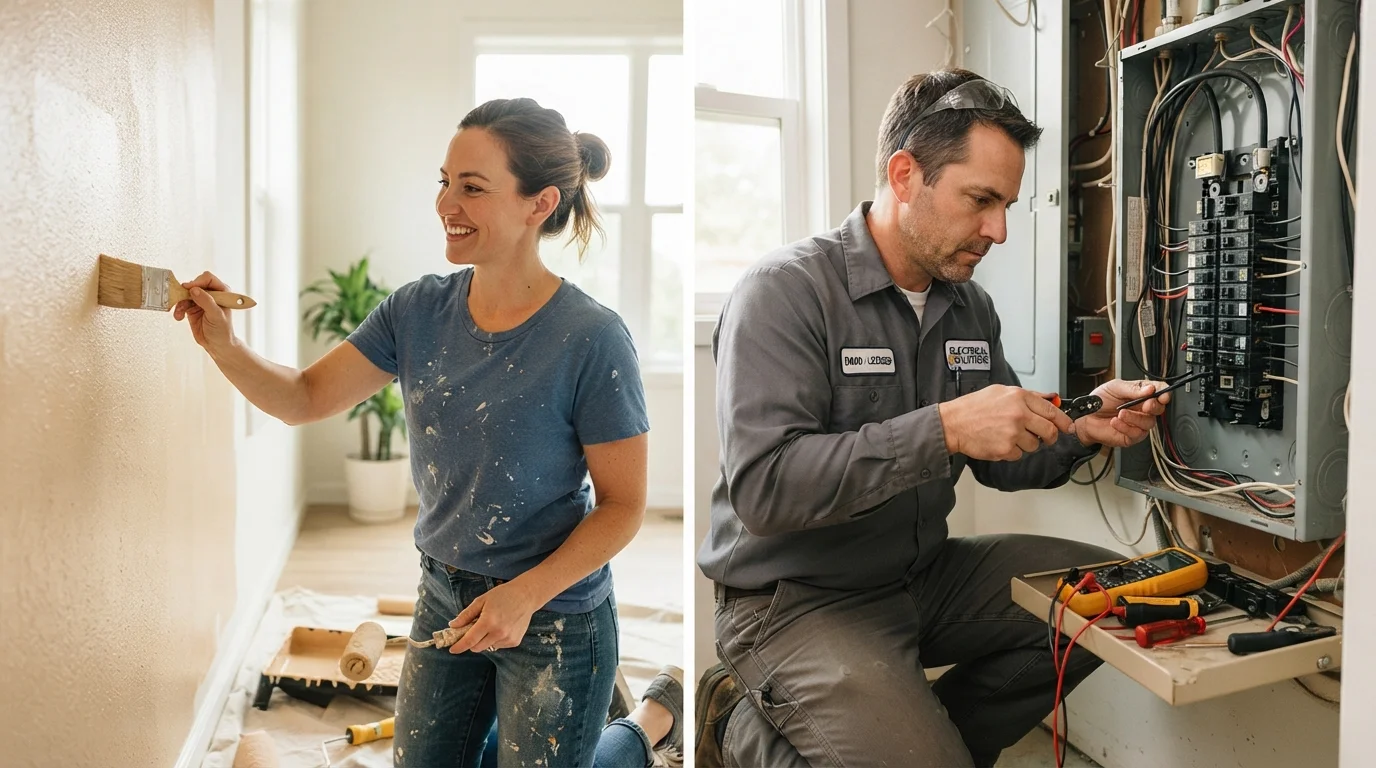
For work involving electrical wiring, gas lines, or structural elements, consult a licensed professional before installing insulation nearby. Some tasks - such as spray foam application or dense-pack wall insulation - are consistently better handled by experienced contractors. When in doubt, get a professional energy audit first; it identifies the highest-priority areas and can prevent costly re-work.