The Declarations Page: Your Policy at a Glance
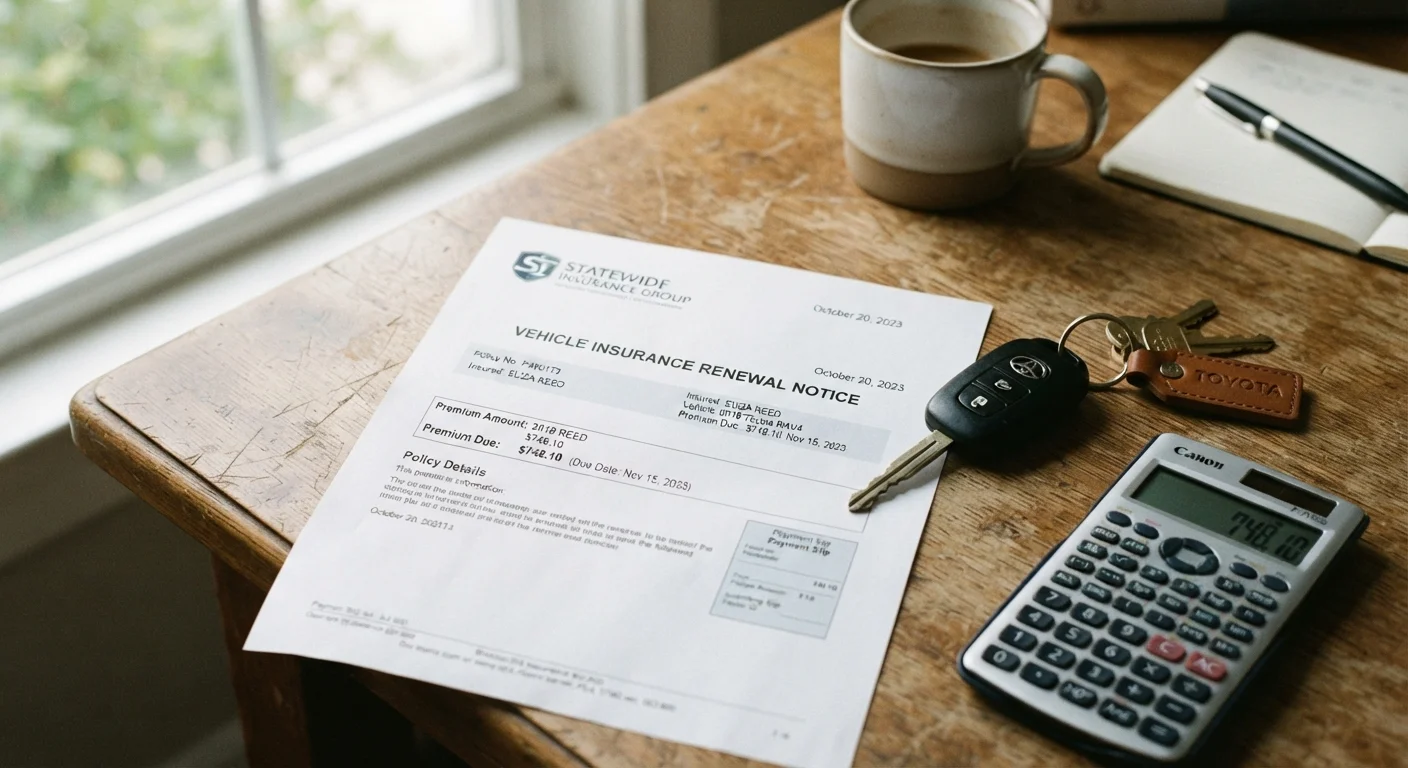
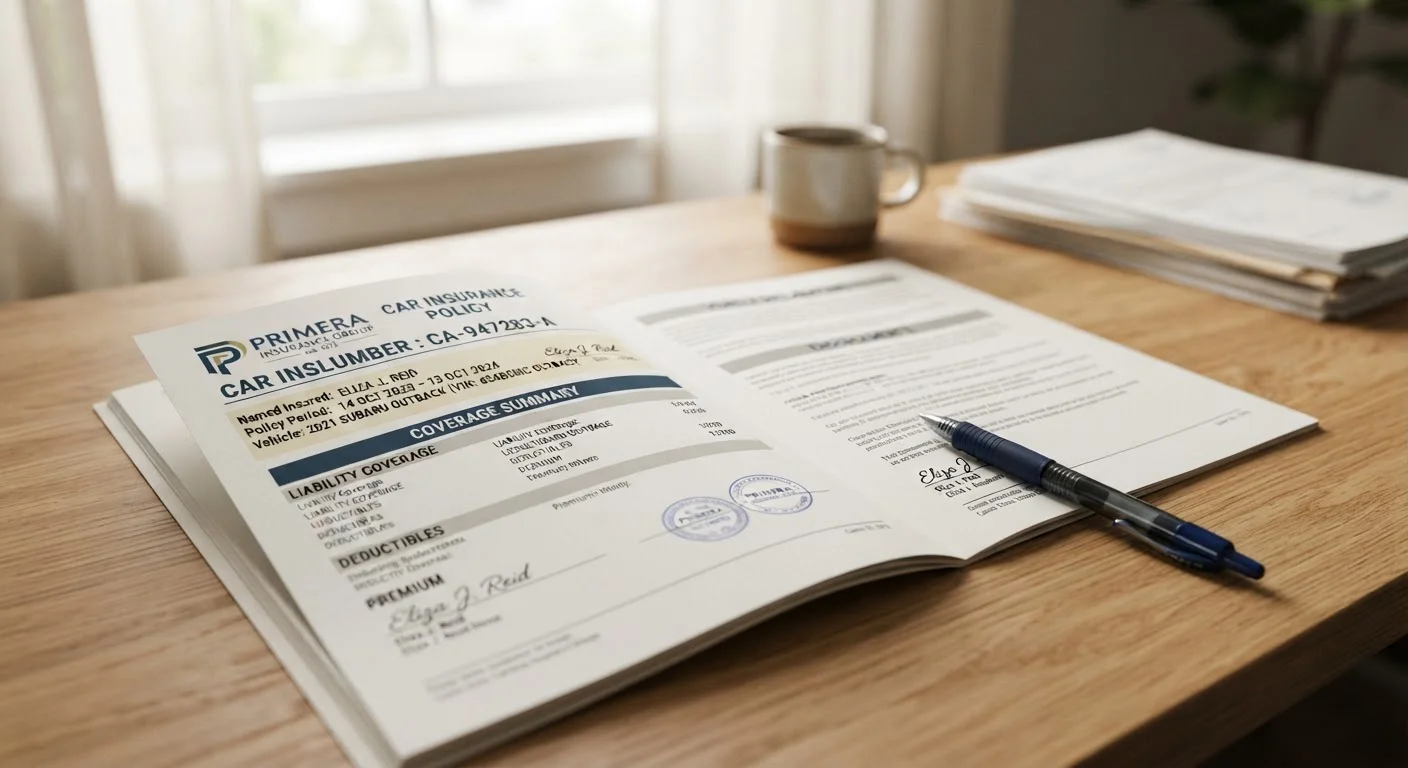
The declarations page (often called the "dec page") is the first document inside any car insurance policy, and it functions like a summary receipt. It lists the policyholder's name, the insured vehicle's details (make, model, VIN), the coverage period, and - critically - a breakdown of every coverage type you're paying for along with its corresponding limit and premium cost.
Read this page before anything else. If there's an error in your vehicle's details or the listed driver names don't match your household, notify your insurer immediately. Errors here can create grounds for a claim to be disputed.
| Minimum liability insurance | Required in 49 US states (New Hampshire allows alternatives) (Insurance Information Institute) |
| No-fault states | 12 states require PIP; drivers claim from their own insurer regardless of fault (Insurance Information Institute) |
| Average deductible for collision | Typically $500-$1,000 in most US policies (General industry range) |
| Standard policy term | 6 or 12 months, renewed at expiry |
Core Coverage Types Explained
Most US auto policies are built from several distinct coverage modules. You pay for each separately, and they protect against different risks.
- Liability coverage pays for bodily injury and property damage you cause to others. It is split into two sub-limits: per-person and per-accident for bodily injury, and a separate limit for property damage. Nearly every state mandates minimum liability limits, but those minimums are often far below the cost of a serious accident.
- Collision coverage pays to repair or replace your own vehicle after it collides with another car or object, regardless of fault. A deductible applies.
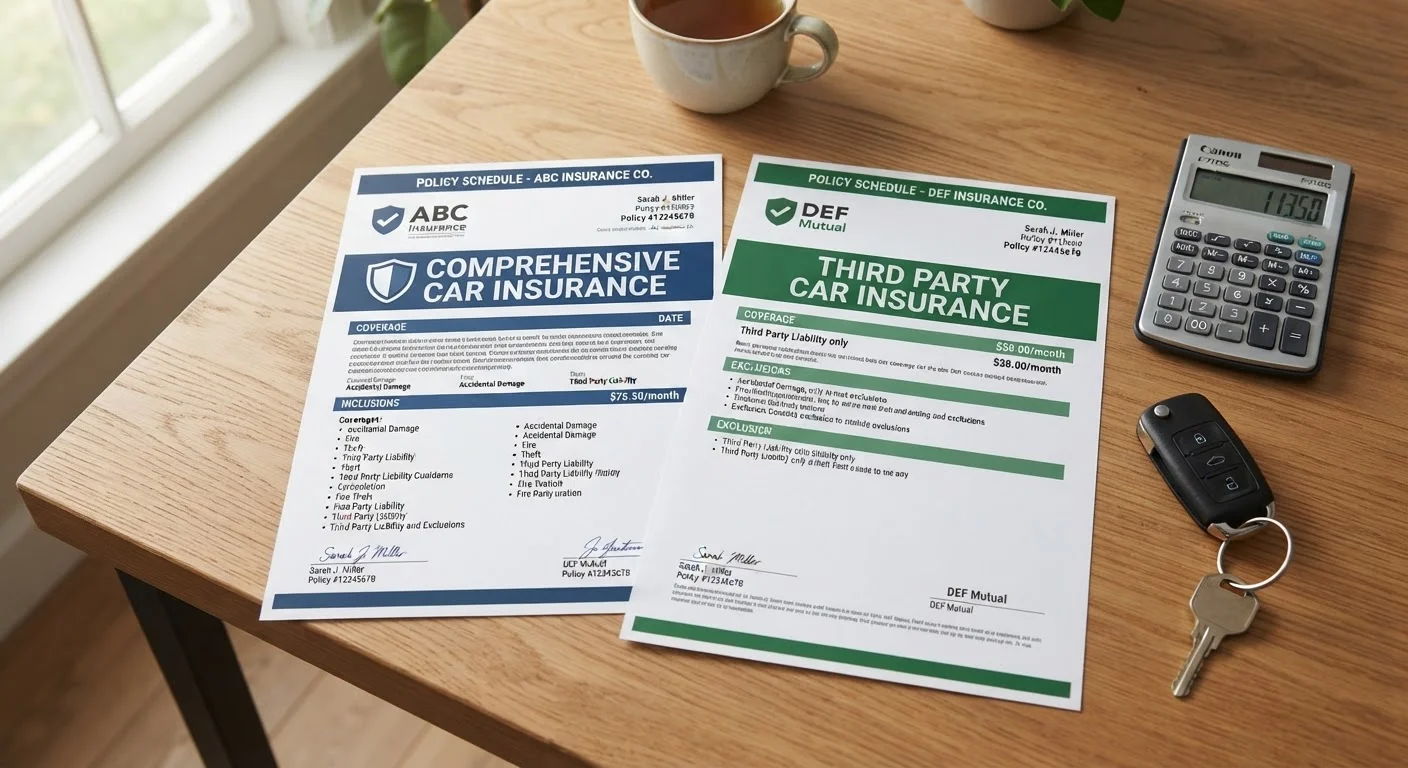
- Comprehensive coverage pays for non-collision losses: theft, fire, flood, hail, falling objects, and animal strikes. It also carries a deductible. For a deeper look at how these two levels compare, see our guide to comprehensive vs. third-party cover.
- Uninsured/underinsured motorist coverage (UM/UIM) protects you if the at-fault driver carries no insurance or not enough to cover your damages.
- Medical payments (MedPay) or personal injury protection (PIP) covers medical expenses for you and passengers after an accident, irrespective of fault. PIP is broader and required in no-fault states.
Declarations Page
The summary page at the front of a policy that lists the insured vehicle, policyholder, coverage types, limits, and premium amounts for the policy period.
Deductible
The fixed amount you pay out of pocket when making a claim before your insurer covers the remaining cost. Higher deductibles generally mean lower premiums.
Liability Coverage
Insurance that pays for injury or property damage you cause to others in an at-fault accident. It does not cover damage to your own vehicle.
Comprehensive Coverage
Coverage for vehicle damage caused by events other than collisions - such as theft, fire, hail, floods, or animal strikes.
Exclusion
A specific situation, person, or type of damage that your policy explicitly does not cover, even if it resembles a covered event.
Uninsured Motorist Coverage
Protection that compensates you for injuries or damages when the at-fault driver carries no insurance or insufficient coverage.
Deductibles, Limits, and the No-Claims Discount
Two numbers define how your policy behaves in a claim: the deductible and the coverage limit.
Your deductible is the amount you pay out of pocket before insurance pays the rest. A higher deductible lowers your premium but increases your exposure on any single claim. The coverage limit is the maximum your insurer will pay. Once a limit is exhausted, the remaining cost falls to you personally.
Many insurers also offer a good driver or no-claims discount - a reduction applied to your premium for maintaining a claim-free record over a defined period. Filing a minor claim can eliminate this discount and raise your renewal premium by more than the claim was worth. Understanding this trade-off is essential before you file. Our article on why your premium keeps changing explains this dynamic in detail.
Filing a Small Claim: Think Before You Report
If repair costs are only modestly above your deductible, it's worth calculating whether the claim savings outweigh the potential loss of your no-claims discount and any resulting premium increase at renewal. Insurers are not obligated to maintain your rate after a claim. Ask your insurer directly how a specific claim would affect your next renewal before submitting it.
Exclusions: What the Policy Doesn't Cover
The exclusions section is the most overlooked part of any policy - and the most consequential. Common exclusions include:
- Intentional damage - losses you cause deliberately are never covered.
- Commercial use - using a personal vehicle for rideshare or delivery without a commercial endorsement typically voids coverage for incidents that occur during those activities.
- Mechanical breakdown - wear and tear, rust, and engine failure are not insurance events.
- Excluded drivers - if you formally exclude a household member from your policy to lower your premium, the vehicle has no coverage when they drive it.
- Lapsed policy - coverage stops the moment a policy lapses for non-payment, even mid-term.
Always read the exclusions before assuming a situation is covered. When in doubt, call your insurer to request written clarification - verbal assurances are not enforceable.
This article provides general educational information about car insurance and is not a substitute for personalised advice from a licensed insurance professional. Coverage terms, limits, and legal requirements vary by state and individual policy. Always review your own policy documents and consult a qualified adviser for decisions specific to your circumstances.