Why the Wet vs. Dry Debate Actually Matters
For most cat owners, choosing between wet and dry food comes down to habit or convenience. But the nutritional differences between these two formats are substantial enough to affect a cat's long-term health - particularly urinary function, kidney load, and body weight. Cats are obligate carnivores with a low natural thirst drive, a trait inherited from desert-dwelling ancestors who obtained most of their water from prey. Understanding how each food format aligns with that biology is the foundation for smarter feeding decisions.
For a broader look at what balanced feeding actually means, see The Foundations of a Healthy Pet Diet.
| Wet Food | Dry Food | |
|---|---|---|
| Moisture content | 70-80% | 8-10% |
| Hydration support | High - significant daily water intake | Low - relies on separate water consumption |
| Caloric density | Lower per gram - easier weight management | Higher per gram - portion control critical |
| Protein source quality | Often higher animal-protein content | Varies widely; some use plant proteins |
| Shelf life / convenience | Refrigerate after opening; use within hours | Long shelf life; easy to store and measure |
| Urinary/kidney health support | Favored for cats with urinary or kidney issues | May concentrate urine; consult vet if at risk |
| Cost | Generally higher per calorie | Generally lower per calorie |
Hydration: The Most Clinically Significant Difference
Wet cat food typically contains 70-80% moisture by weight, closely mimicking the water content of whole prey. Dry kibble, by contrast, contains roughly 8-10% moisture. This gap has real consequences: cats on exclusively dry diets tend to produce more concentrated urine, which can increase the risk of urinary crystals, feline idiopathic cystitis (FIC), and - over time - chronic kidney disease (CKD).
Studies in veterinary nutrition consistently show that cats eating wet food consume significantly more total water daily than those eating dry food, even when fresh water is freely available. While cats can and do drink from water bowls, they are less efficient at self-regulating hydration than dogs. This makes dietary moisture a more reliable delivery mechanism.
Transition Slowly When Switching Formats
If you're moving your cat from dry to wet food (or vice versa), do so gradually over 7-10 days by mixing increasing amounts of the new food with the old. Abrupt changes can cause digestive upset, including vomiting or diarrhea. Some cats, especially those raised exclusively on kibble, may need extra time to accept wet food textures.
If your cat eats primarily dry food and you're concerned about hydration, a water fountain that encourages drinking can help - though it won't fully replicate the moisture delivered by wet food.
Protein, Fat, and Caloric Density Compared
On a dry matter basis (meaning moisture is removed from the equation to allow fair comparison), both wet and dry foods can be formulated to meet AAFCO nutritional standards. However, practical differences remain:
- Protein: Many wet foods derive a higher proportion of calories from animal protein, though this varies by product. Some dry foods use plant-based proteins as fillers, which are less bioavailable to cats.
- Fat: Wet foods often have higher fat content by volume, contributing to palatability and caloric value per serving.
- Calories: Dry kibble is calorie-dense - a small volume contains significantly more calories than an equivalent weight of wet food. This makes portion control more difficult and can contribute to weight gain in indoor cats.
For context on how lifestyle affects a cat's nutritional needs, see Indoor vs Outdoor Cats: How Lifestyle Shapes Long-Term Health.
Dental Health and Practical Considerations
One common claim is that dry food cleans cats' teeth through mechanical abrasion. The evidence for this is limited - most cats swallow kibble without meaningful chewing, and no dry food replaces dedicated dental care such as tooth brushing or veterinary dental cleanings. Some prescription dental diets have demonstrated clinical benefit, but standard kibble provides minimal dental advantage.
Where dry food does have a practical edge: it's easier to store, less expensive per calorie in most cases, and can be left out for free-feeding without spoiling quickly. Wet food must be refrigerated after opening and discarded within a few hours if left at room temperature - a real consideration for owners with demanding schedules.
Common pet nutrition myths - including overstated claims about both wet and dry food - are addressed in The Truth Behind Common Pet Nutrition Myths.
Making the Right Choice for Your Cat
No single format is right for every cat. Key factors to weigh include:
- Health status: Cats with urinary tract conditions, CKD, diabetes, or obesity typically benefit from wet food's higher moisture and lower caloric density.
- Age: Kittens and senior cats often have different hydration and protein needs - consult your veterinarian for age-specific guidance.
- Individual preference: Some cats are texture-selective and may refuse one format entirely.
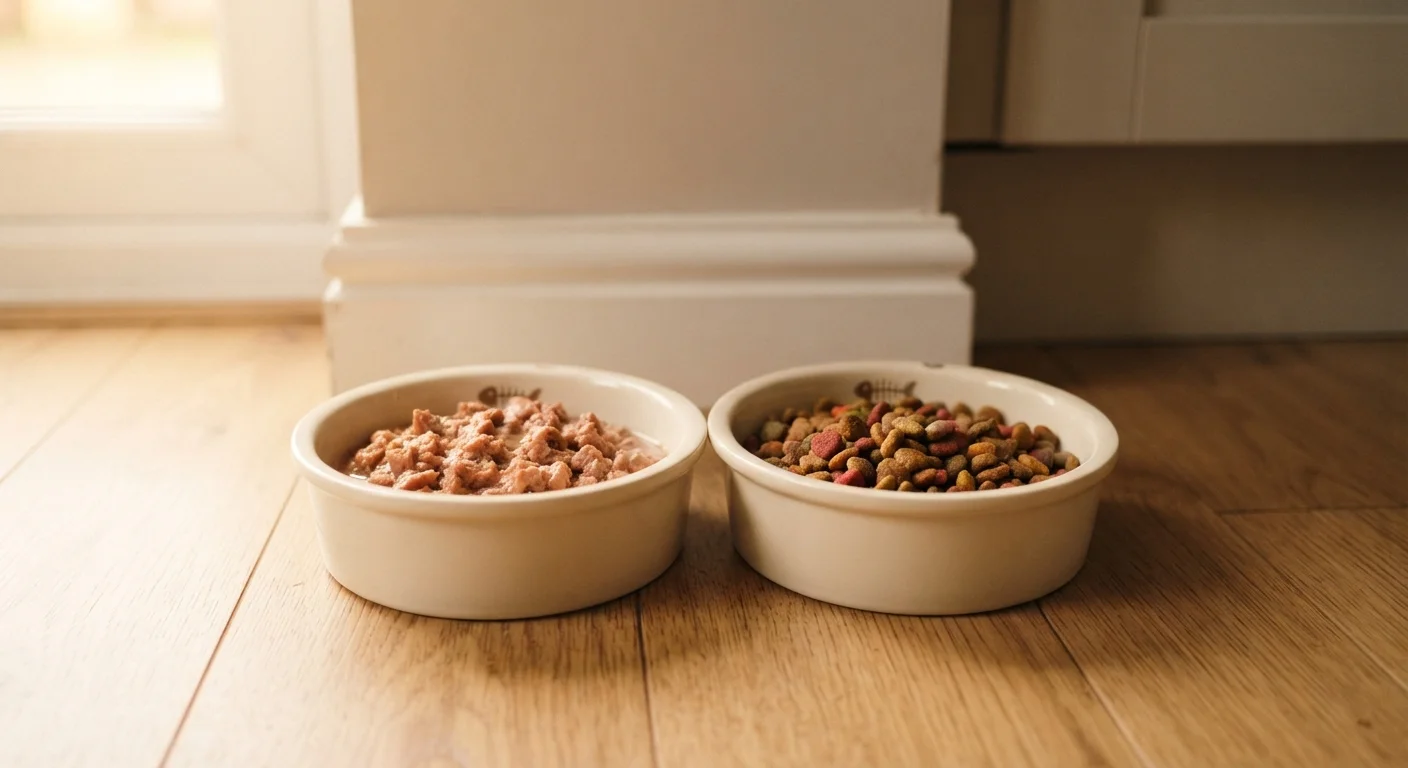
A mixed feeding approach - wet food at one or two meals, dry food available in measured portions - is a practical middle ground that many veterinarians support for healthy adult cats. Whatever you choose, reading the guaranteed analysis panel on the label and selecting a product that meets AAFCO nutritional standards for your cat's life stage is non-negotiable.
Feeding is just one part of daily cat care. For a complete picture, see What Pets Actually Need From You Every Single Day.
This article is for general informational purposes only and is not a substitute for veterinary advice. Always consult a licensed veterinarian regarding your cat's specific dietary and health needs.