How Each Method Actually Works
At their core, both clicker training and verbal cue training are built on the same behavioral principle: mark the desired behavior, then reward it quickly enough that your pet connects the two. The difference lies in what does the marking.
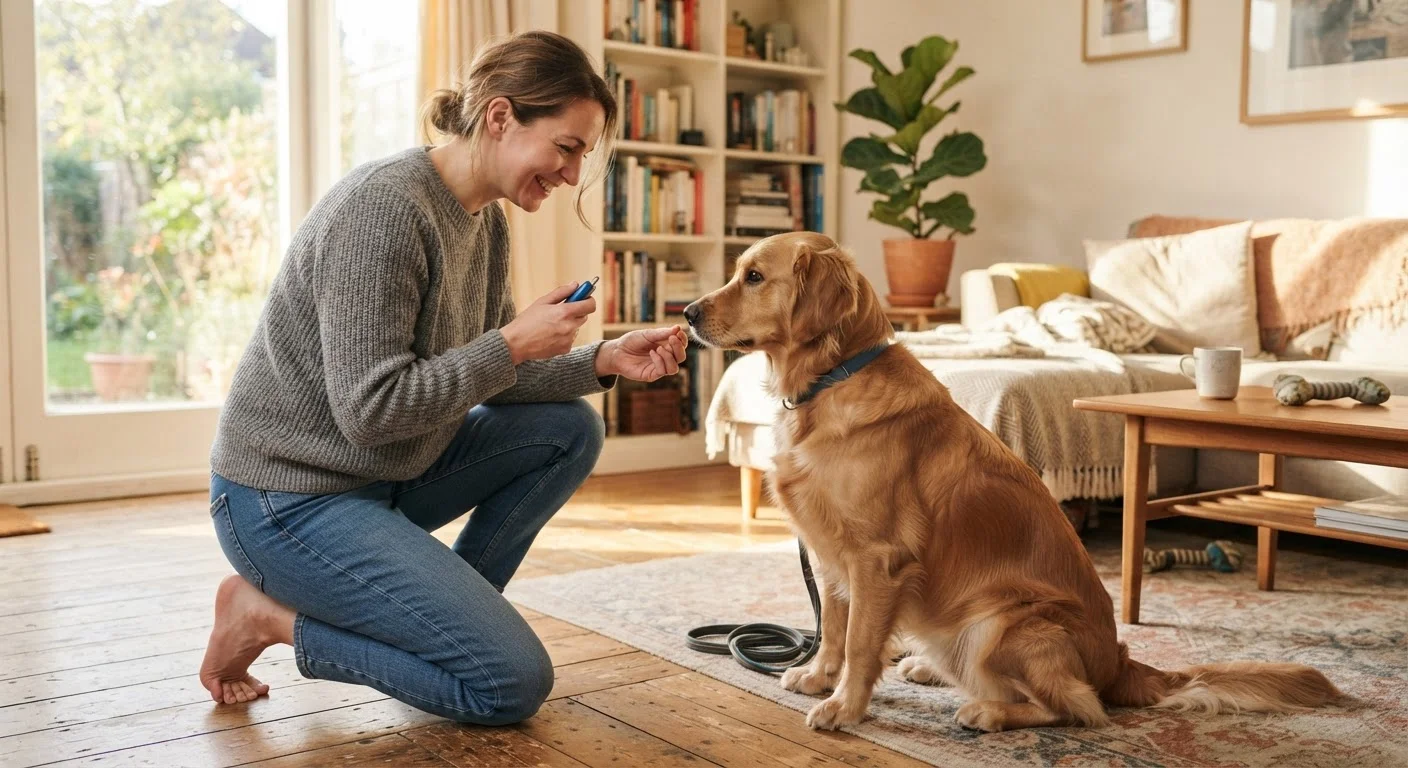
Clicker training uses a small handheld device that produces a short, consistent clicking sound. The click acts as a conditioned reinforcer - your pet learns that the click means a reward is coming, so the sound itself becomes meaningful. Because the click is always identical and can be delivered in a fraction of a second, it gives trainers an unusually precise way to communicate exactly which behavior earned the reward.
Verbal cue training uses spoken words or short phrases - "sit," "stay," "good" - to signal a desired action or mark correct behavior. Words are naturally available in any situation, and most pets readily learn to associate spoken sounds with actions or outcomes. However, human voices vary in tone, volume, and emotion, which can sometimes introduce inconsistency.
For a broader look at how behavior shapes your pet's daily experience, see our guide for first-time pet owners on what's normal and what's not.
Strengths and Limitations of Each Approach
Understanding where each method shines helps you make a practical choice for your specific situation.
| Clicker Training | Verbal Cue Training | |
|---|---|---|
| Timing precision | Very high - consistent, instant click | Moderate - voice varies with mood |
| Equipment needed | Small clicker device required | None - voice always available |
| Convenience | Requires free hand and device nearby | Hands-free, always accessible |
| Consistency across sessions | High - click sound never changes | Variable - tone and phrasing may differ |
| Best for complex behaviors | Yes - ideal for shaping and chaining | Less precise for multi-step tasks |
| Works with non-dog pets | Yes - widely used with cats, birds | Possible but requires extra consistency |
Clicker training's biggest advantage is timing precision. Because the click is instantaneous and emotionally neutral, it removes ambiguity - your pet knows the exact moment it got something right. This is particularly valuable when teaching multi-step behaviors, shaping gradual improvements, or working at a distance. The limitation is that you need a free hand and the device nearby, which isn't always practical.
Verbal cues trade a little precision for a lot of convenience. You always have your voice, whether you're walking, cooking, or greeting guests. The challenge is keeping your tone and phrasing consistent, especially when you're tired or distracted - pets notice those variations more than most owners realize.
Inconsistent Marking Slows Learning
Clicking or saying 'good' at the wrong moment - or skipping the reward after the mark - can confuse your pet and undermine the training process. Avoid clicking during unintended behaviors, even accidentally. If you miss the timing window, simply skip the mark and try again rather than rewarding a behavior you didn't intend to reinforce.
Which Pets and Situations Favor Each Method
Temperament matters. Dogs that are noise-sensitive or easily startled may find the click sound jarring at first, though most adapt quickly with patient introduction. For a pet that remains reluctant, a soft mouth click or a marker word like "yes" can serve the same function as a clicker.
Cats, birds, and small animals often respond well to clicker training because the neutral, consistent sound cuts through ambient noise and is clearly distinct from everyday speech. Verbal cues can work with these species too, but require extra consistency since they don't share the same social-language bond with humans that dogs do.
Consider your environment as well. In noisy locations - a busy dog park, a city sidewalk - a sharp click may carry better than a spoken word. At home during quiet training sessions, either approach works well.
Introducing a Clicker for the First Time
Before using a clicker in a real training session, spend a few minutes 'charging' it - click and immediately give a treat several times in a row without asking for any behavior. This teaches your pet that the click reliably predicts something good, creating the foundation for effective marker training. Start in a quiet, low-distraction space to help your pet focus.
Both methods sit firmly within the positive reinforcement framework. For a deeper look at why reward-based training holds up under scientific scrutiny, our article on positive reinforcement vs. punishment-based training covers the research in detail.
Combining Both Methods for Long-Term Success
Many experienced trainers use clickers and verbal cues together rather than choosing one exclusively. A common workflow: introduce a new behavior with the clicker to build a clear, fast association, then layer in a verbal cue once the pet performs the behavior reliably. Over time, the verbal cue takes over as the primary signal and the clicker is used less frequently or phased out.
The key principle in either approach is consistency. Whichever marker you use, it must reliably predict a reward, and you must deliver that reward promptly - within a few seconds of the mark. Drifting on timing or skipping rewards erodes the association and slows progress regardless of method.
Your own lifestyle is a legitimate factor. If you frequently train on the go or have children who might grab a clicker, verbal cues may simply be more practical. If you're working toward competitive obedience, agility, or trick training where precision matters, investing in clicker skills early pays dividends. The best training method is the one you'll actually use consistently every session.
This article is for general informational purposes only. For concerns about your pet's health or behavior, consult a qualified veterinarian or certified animal behaviorist.