Why Cat Communication Is Mostly Silent
Cats evolved as largely solitary hunters, so their communication system differs fundamentally from dogs or humans. Most of what a cat expresses is conveyed through body posture, tail movement, ear position, and eye behavior - not vocalization. Meowing, in fact, is a behavior cats developed primarily for interacting with humans, not with other cats.
Learning to read these physical signals helps you respond appropriately to your cat's needs, reduce unintentional stress, and build a stronger bond. It can also help you spot early behavioral changes that might signal something is off - see our guide on signs your pet may be unwell for cues worth knowing.
| Primary communication mode | Body language and scent (not vocalization) |
| Meowing developed for | Human interaction, not cat-to-cat communication |
| Slow blink meaning | Trust and relaxed affection |
| Rapid tail flicking indicates | Irritation or overstimulation |
| Flattened ears signal | Fear, anxiety, or defensive aggression |
| Tail held high means | Confidence and friendly intent |
Decoding the Tail: Your Cat's Mood Indicator
The tail is one of the most expressive parts of a cat's body. Here's what common positions typically signal:
- Tail held high, tip slightly curved: Confident, content, and friendly. A cat approaching you this way is likely in a positive mood.
- Tail tucked low or between the legs: Anxiety, submission, or fear. This cat is feeling threatened or insecure.
- Puffed-up tail (piloerection): Fear or aggression. The cat is trying to appear larger in response to a perceived threat.
- Slow, wide sweeping: Focused attention - often seen during hunting behavior. Not necessarily a sign of contentment.
- Rapid, low flicking: Irritation or overstimulation. If you're petting a cat and the tail starts twitching quickly, it's time to give them space.
Context always matters. A tail signal alone won't tell the full story - read it alongside ear and body posture for a complete picture.
Eyes and Ears: The Emotional Core
A cat's eyes and ears shift position constantly and reveal a great deal about their emotional state.
Eyes
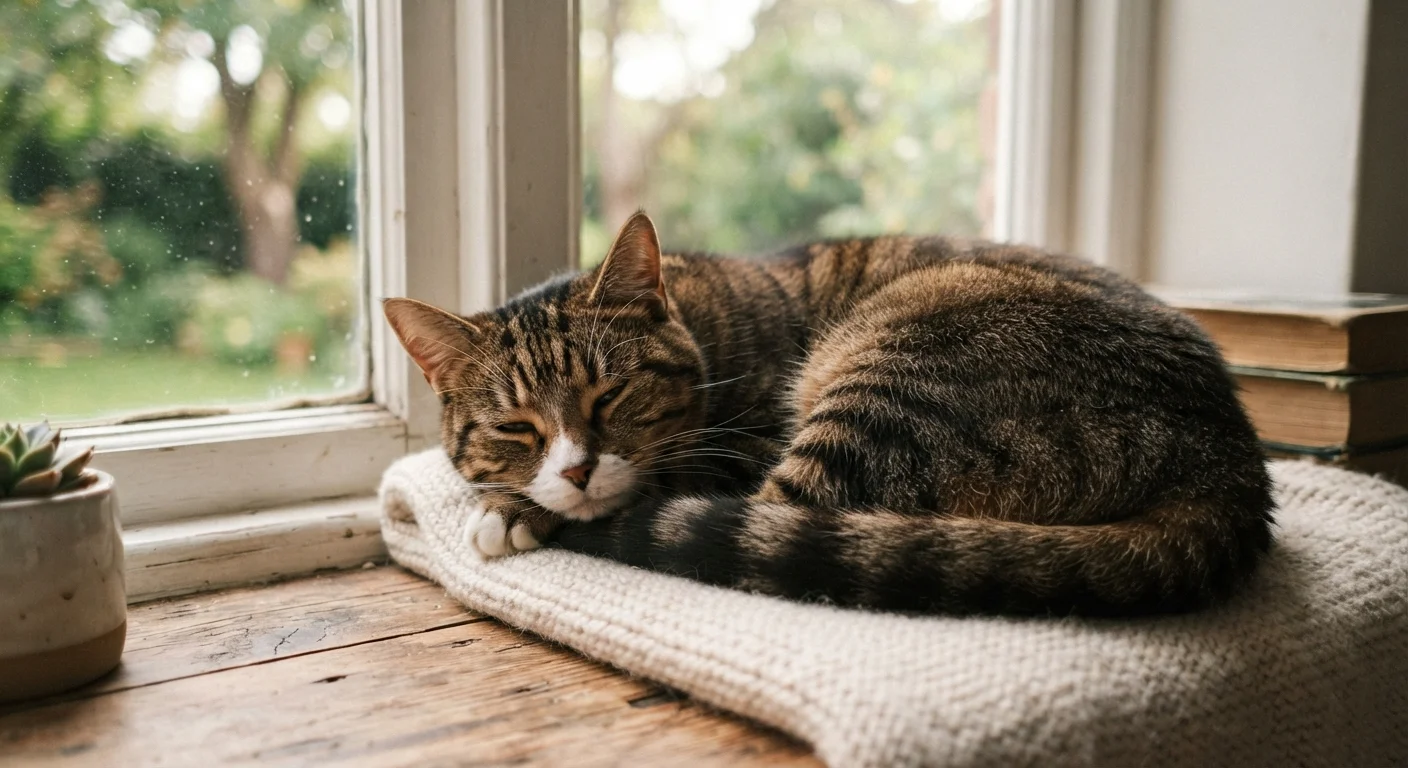
- Slow blink: Often called a "cat kiss," a slow deliberate blink directed at you signals trust and relaxed affection. You can try returning a slow blink to reinforce this connection.
- Dilated pupils: Can indicate fear, excitement, or high arousal - not always a negative sign, but worth noting in context.
- Constricted pupils: In bright light, this is normal. In dim conditions, narrowed pupils may signal tension or aggression.
- Direct, unblinking stare: A challenge or sign of threat, especially between cats. Prolonged staring without blinking is not friendly body language.
Ears
- Upright and forward: Alert and curious.
- Slightly rotated outward: Relaxed.
- Flattened sideways ("airplane ears"): Fear or anxiety.
- Pinned flat against the skull: Defensive aggression - this cat may bite or scratch if pushed.
Piloerection
The involuntary raising of fur along a cat's back and tail, making the cat appear larger. It's a reflex triggered by fear or aggression.
Bunting
When a cat presses or rubs its head against a person or object to deposit scent. It's a social bonding and territory-marking behavior.
Slow blink
A deliberate, relaxed closing and opening of the eyes directed at another individual. In cats, this signals trust, comfort, and non-threatening intent.
Overstimulation
A state where a cat receives more physical or sensory input than it can comfortably tolerate, often during petting. It can trigger sudden redirected aggression.
Displacement behavior
An out-of-context action - like grooming or yawning during tension - that signals a cat is stressed or conflicted about a situation.
Full-Body Signals and What They Mean
Reading your cat's whole posture rounds out the picture beyond individual signals.
- Belly exposed, lying on back: Vulnerability and relaxation - not always an invitation to pet. Many cats will grab and bite a hand that reaches for their belly.
- Arched back, fur raised: Classic fear or defensive posture. Give the cat space and remove whatever triggered the response if you can.
- Head bunting (rubbing their head on you): Scent-marking and affection. This is a high-trust behavior.
- Slow kneading: A comforting, self-soothing behavior carried over from kittenhood. It signals your cat feels safe.
- Crouching low, frozen: Stress or fear. A cat that regularly adopts this posture in everyday situations may need environmental assessment.
Repeated stress signals - especially hiding, crouching, or over-grooming - can escalate into behavioral problems. Our article on reading stress signals in pets before they escalate explains early warning signs worth watching for. If you're new to cat ownership, understanding what's normal and what's not can help set a reliable baseline. For deeper guidance on responding to stress signals, see our article on how pets communicate stress.