
What Fast Learners Actually Do Differently
Fast learners across different fields - languages, coding, music, finance, sport - tend to share a handful of specific, observable habits. These aren't personality traits or gifts; they're behaviors that can be identified, studied, and adopted. Understanding how adults actually acquire new skills makes clear why these habits work at a neurological level, not just an intuitive one.
The habits below are grounded in cognitive and educational research. They don't guarantee overnight mastery - no approach does - but they make the time you invest in learning meaningfully more effective.
Learning Speed Varies by Context
"Learning quickly" doesn't mean the same thing across all subjects. Some domains require deep foundational knowledge before progress accelerates. These habits improve the efficiency of your learning process - they don't remove the time and effort that genuine skill development requires.
The Core Habits in Practice
Each of the following practices addresses a specific mechanism of learning. Adopting even two or three of them consistently will change how efficiently you absorb and retain new information across domains.
Test yourself constantly instead of re-reading your notes
Active recall - the act of retrieving information from memory - strengthens neural pathways more effectively than passive review. Research in cognitive psychology consistently shows that testing yourself, even before you feel ready, leads to significantly better long-term retention than reviewing the same material repeatedly.
Space your practice sessions rather than cramming them together
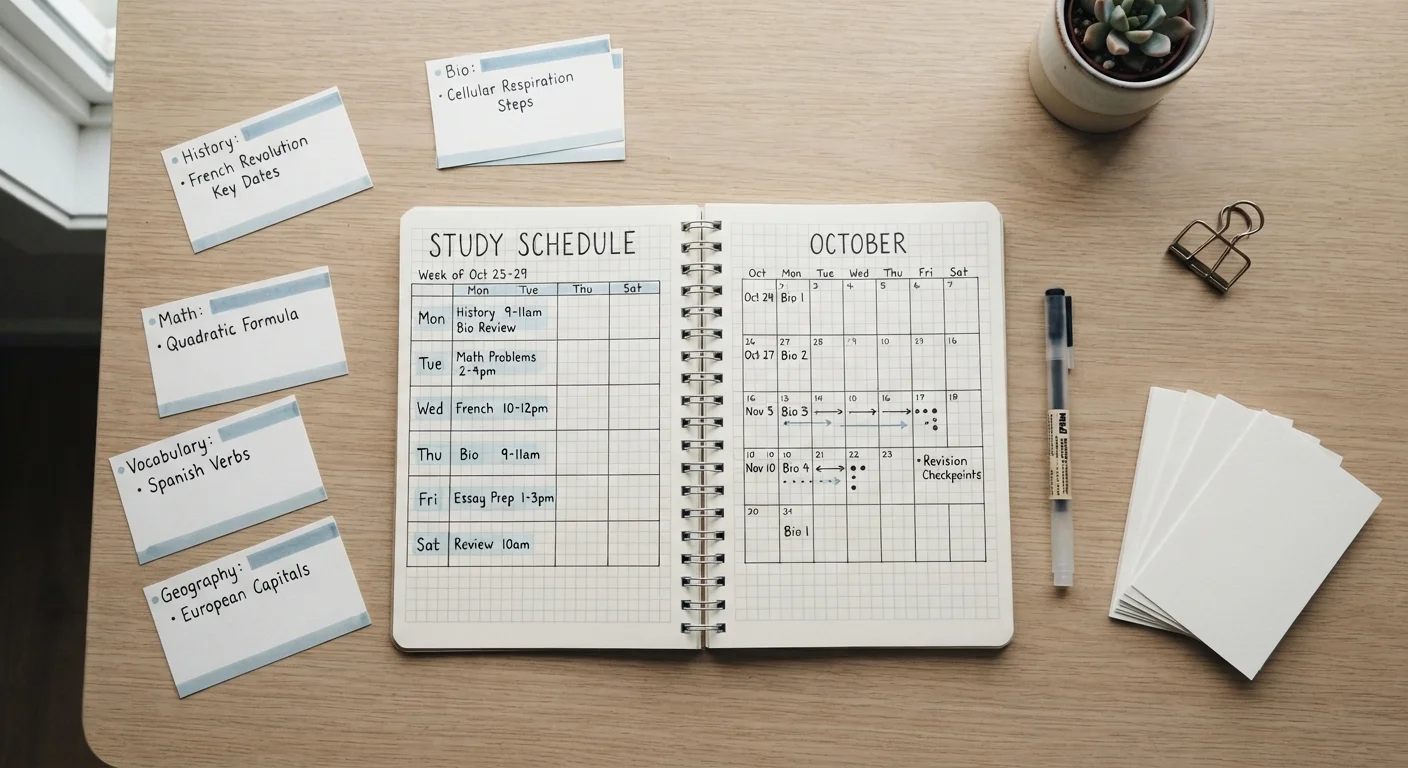
Massed practice (covering one topic intensively for hours) produces the illusion of mastery that fades quickly. Distributing practice across multiple shorter sessions over days or weeks - known as spaced practice - forces the brain to reconstruct knowledge each time, making it stick.
Explain what you've learned as if teaching a beginner
Articulating a concept in plain language forces you to identify exactly where your understanding breaks down. Vague knowledge sounds convincing internally but collapses when you try to explain it clearly to someone unfamiliar with the subject.
Mix up the skills or topics you practice in a single session
Interleaving - alternating between different but related topics or problem types in a single study session - feels harder than blocking (practicing one thing at a time), but that difficulty is actually productive. It trains your brain to discriminate between concepts and apply the right approach in context, which is exactly what real-world performance demands.
Reflect deliberately after every meaningful learning session
Quick learners don't just accumulate experience - they extract lessons from it. Brief structured reflection (asking what worked, what didn't, and what to adjust) converts raw experience into transferable insight, accelerating progress in future domains.
Seek out and stay with productive struggle rather than avoiding difficulty
The instinct to move on from a hard problem or look up the answer immediately short-circuits the learning process. Cognitive science research suggests that working through confusion - even unsuccessfully - primes the brain to retain the eventual solution more deeply than skipping the struggle altogether.
If you're noticing patterns in your own approach that work against you, common thinking patterns that slow down learning is worth reviewing alongside this guide.
Start Applying These Habits Today
Understanding effective learning habits is only valuable if you act on them. The following quick wins are designed to be completed before your next study session ends - no setup required.
For a deeper look at how to make these practices automatic over time, see our guide on building a learning habit that survives the first two weeks. These habits also translate directly into skills that travel well across industries - the ability to learn efficiently is itself one of the most transferable capabilities you can develop.
“The illusion of knowing is perhaps the most powerful obstacle to real learning. Testing yourself breaks that illusion more reliably than any amount of re-reading.”
— Henry L. Roediger III, Cognitive psychologist and memory researcher, Washington University in St. Louis