
Why the Conversation Itself Is Part of the Qualification
Many professionals operate under the assumption that strong performance will naturally lead to a promotion - that the work speaks for itself. Research in organizational psychology and management practice consistently challenges this. Decision-makers rely on a combination of documented performance and demonstrated readiness, and the promotion conversation is often the first place a candidate signals the latter. How you ask - the framing, timing, and composure you bring - is itself evidence of whether you're prepared for the next level.
This doesn't mean performance is irrelevant. It's the foundation. But soft skills like communication and strategic thinking increasingly differentiate candidates who have similar technical records. Asking well is a professional skill worth preparing for as deliberately as any project deliverable.
What you will need
What You'll Need Before You Start
Preparation separates a convincing promotion case from a vague expression of ambition. Gather the tools below before scheduling your meeting.
Accomplishment Portfolio
A written record of your key contributions, metrics, and outcomes used to substantiate your promotion case during the meeting.
Role Competency Framework
Your organization's defined criteria for the target role - used to map your evidence directly to what decision-makers are evaluating.
Calendar or Scheduling Tool
Used to identify and book a dedicated meeting slot at a strategically sound time rather than raising the topic ad hoc.
Peer or Mentor Feedback
Third-party perspectives that corroborate your readiness and provide talking points beyond self-assessment.
Keep a Running Accomplishment Log
Don't wait until you're ready to ask for a promotion to gather evidence. Maintain a simple document - updated monthly - that captures project outcomes, metrics, recognition received, and new responsibilities taken on. When the right moment arrives, your preparation time drops dramatically and your case is far stronger.
How to Ask: Step-by-Step
Follow these steps to move from preparation through the actual conversation and its immediate aftermath. The goal isn't a scripted performance - it's structured confidence.
Audit your readiness before the conversation
Before scheduling anything, honestly assess whether your performance record supports a promotion case. Review your role's competency framework - most organizations publish leveling criteria internally - and compare your documented contributions against expectations for the next level, not your current one. Identify three to five concrete outcomes you've delivered: cost savings, revenue impact, process improvements, team leadership, or client wins. If your evidence feels thin, set a 60-90 day milestone target and revisit after you've strengthened it.
Choose your timing deliberately
Timing is strategic, not arbitrary. The highest-leverage windows are: immediately after a visible project success, during annual or mid-year review cycles when budget is already being allocated, and after your manager has publicly praised your work. Avoid approaching the conversation during organizational upheaval, immediately after your team misses a goal, or when your manager is under acute pressure. A well-timed request signals situational awareness - itself a leadership quality.
Build your evidence portfolio
Compile a concise, one-to-two page document summarizing your case. For each accomplishment, note the context, your specific action, and the measurable outcome - a simplified version of the Situation-Action-Result (SAR) format. Include any expanded scope you've taken on without a title change, informal leadership you've demonstrated, and feedback or recognition from stakeholders outside your immediate team. This document isn't necessarily shared in the meeting; it's your preparation anchor.
Frame the meeting request correctly
When scheduling the meeting, be transparent about the purpose without making it feel like a confrontation. A simple, professional framing works well: 'I'd like to set aside time to talk about my career trajectory and where I might grow into a senior role - would you have 30 minutes in the next couple of weeks?' This gives your manager time to prepare, signals maturity, and avoids the ambush dynamic that can put people on the defensive before the conversation begins.
Open with organizational value, not personal need
Begin the meeting by connecting your ask to what the organization needs. Lead with the work, not the title or the salary. For example: 'Over the past year, I've taken on X and delivered Y - and I'd like to talk about what a path to [target role] looks like from here.' This positions you as someone thinking about contribution and growth, not compensation or status. Managers are more receptive when the conversation feels collaborative rather than transactional.
See our article on why strong performers get overlooked for insight into the visibility and framing gaps that often derail capable people.
Prepare for pushback and close with a next step
Objections are normal - anticipate the most common ones. 'It's not the right time' - ask what a realistic timeline looks like and what milestones would make the case stronger. 'Budget is tight' - ask whether a title change or expanded scope can happen independently of a salary adjustment. 'You're not quite ready' - ask specifically what readiness looks like and whether you can establish a 90-day development plan together. Whatever the outcome, close by agreeing on a concrete next step: a follow-up date, a defined goal, or a check-in meeting. Ambiguity after the conversation is your biggest enemy.
Frame Around Value, Not Entitlement
The most common reason promotion conversations stall is framing - specifically, leading with how long you've been in the role or what you feel you deserve. Managers advance people whose contributions solve organizational problems. Ground every point you make in documented impact, not elapsed time or personal financial need.
After the Meeting: Staying the Course
A single conversation rarely produces an immediate decision. What happens in the days and weeks after matters as much as the meeting itself. If your manager commits to reviewing your case, stay visible on high-priority work and avoid any drop in performance that could undercut your narrative. If the answer was 'not yet,' treat the feedback as a development map - not a rejection. Use any criteria shared to structure your next 90 days with intention.
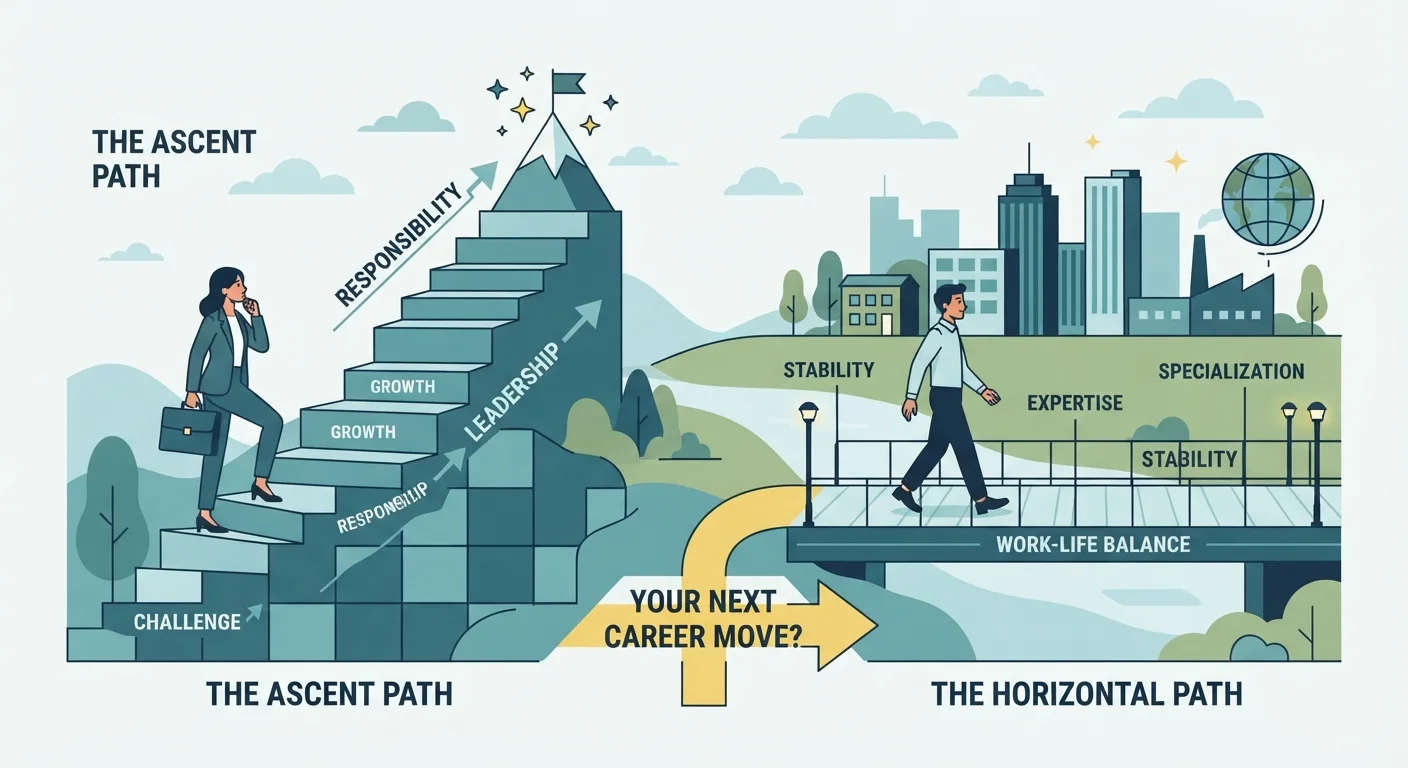
It's also worth remembering that a vertical promotion isn't the only definition of career growth. If your organization's structure makes upward movement genuinely constrained, a lateral move into a different function or team can build the skill breadth that accelerates future advancement. See our guide to vertical vs. lateral career moves for a fuller look at how to evaluate both options.
Avoid Ultimatums Without a Backup Plan
Issuing a 'promote me or I leave' ultimatum is high-risk unless you have a genuine offer elsewhere and are prepared to act on it. Using it as a bluff can permanently damage your relationship with your manager and close doors within the organization. If you're genuinely considering leaving, explore that honestly through separate channels rather than as a pressure tactic in a promotion conversation.