
Your Brain Treats Worry Like a Physical Threat
When you receive stressful news - a difficult email, a looming deadline, an unexpected bill - your brain doesn't distinguish well between a psychological threat and a physical one. The amygdala, a small brain region involved in processing threat, sends an alarm signal that activates the same survival system your ancestors used to escape predators.
This triggers the sympathetic nervous system, which rapidly prepares your body to act. Adrenaline (epinephrine) floods the bloodstream within seconds. Your heart rate climbs, breathing quickens, muscles tighten, and blood is redirected away from digestion toward your limbs. Pupils dilate. Sweat glands activate. All of this happens before you've consciously decided how to react.
That pounding heart during a stressful phone call, the tight shoulders during a difficult conversation, the sudden urge to use the bathroom before a presentation - these are not imagined. They are measurable physiological events initiated by your own nervous system.
“Stress is not just a psychological state - it is a whole-body event. The brain and body are in constant dialogue, and when the mind perceives a threat, every major system in the body receives the message.”
— Robert Sapolsky, Neuroendocrinologist and author of 'Why Zebras Don't Get Ulcers'
The Hormone Cascade: Cortisol's Role
Alongside the immediate adrenaline surge, a slightly slower hormonal pathway kicks in. The hypothalamic-pituitary-adrenal (HPA) axis - a communication loop between the brain and adrenal glands - releases cortisol, often called the primary stress hormone.
Cortisol sustains the stress response by keeping blood sugar elevated (providing energy), suppressing functions not immediately needed during a threat (like digestion and certain immune processes), and heightening alertness. This is genuinely useful in short bursts.
The challenge comes with duration. For what chronic stress does to cortisol levels, the picture is more nuanced than headlines suggest - but sustained HPA activation over weeks and months does affect sleep quality, metabolism, and cardiovascular function in ways that are well-documented in the research literature.
75-90%
Doctor visits linked to stress-related complaints
The American Psychological Association has cited estimates suggesting a large proportion of primary care visits involve stress-related or stress-exacerbated concerns.
~30 min
Time for cortisol to peak after acute stressor
Research on the cortisol awakening response and acute stress protocols consistently shows cortisol levels peaking roughly 20-30 minutes after stressor onset before gradually declining.
Why Physical Symptoms Linger After the Stressor Passes
Once a threat is resolved, the parasympathetic nervous system - sometimes called the "rest and digest" system - works to restore baseline. Heart rate slows, muscles relax, digestion resumes. But this recovery takes time, and in modern life, new stressors often arrive before the last one fully resolves.
This is part of why people under sustained pressure report ongoing headaches, chronic muscle tension in the neck and shoulders, disrupted digestion, and poor sleep. The body hasn't had adequate time to complete its return to equilibrium. How chronic tension disrupts everyday self-care is a practical look at what this sustained state means for daily habits.
Slow Breathing Can Interrupt the Stress Response
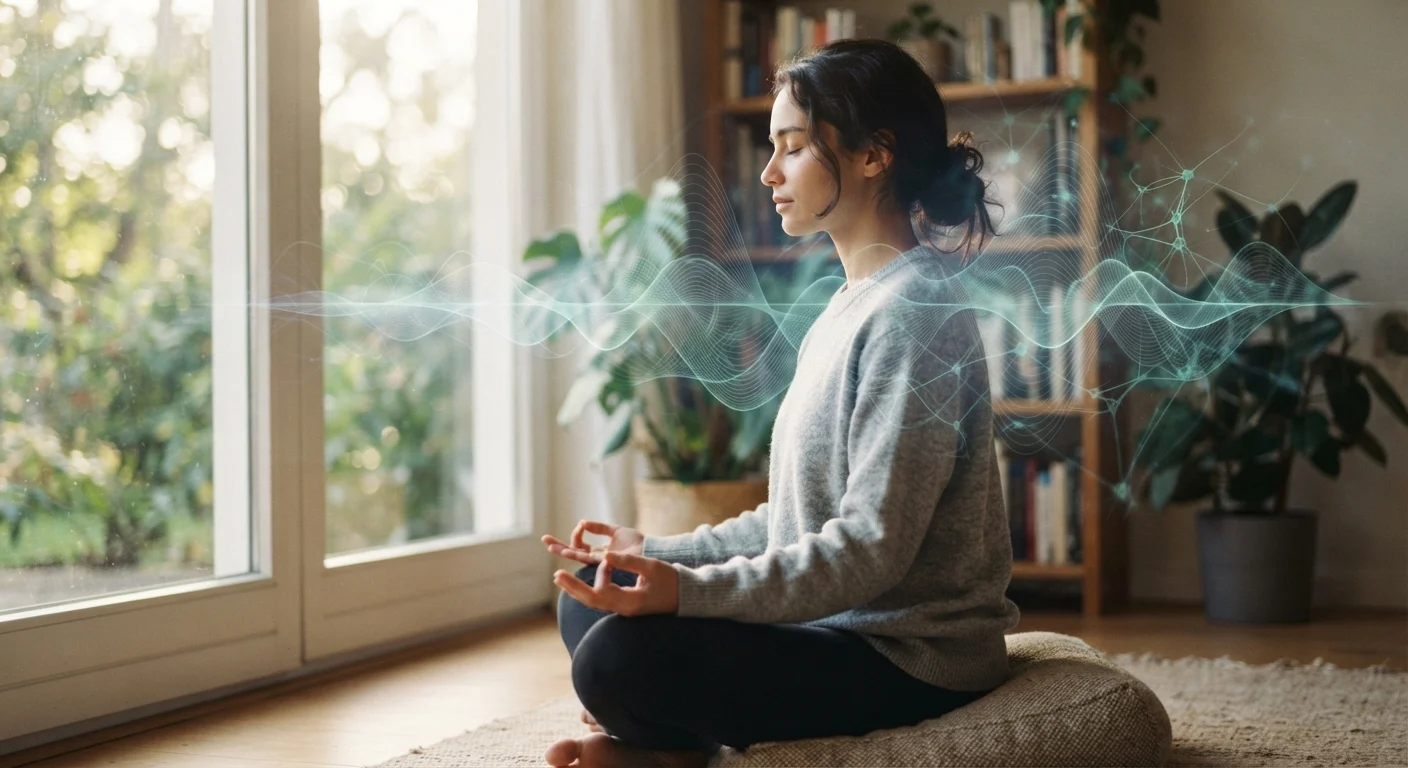
Deliberately slowing your exhale activates the parasympathetic nervous system and can measurably reduce heart rate within minutes. Breathing techniques like extended exhale (breathing out for longer than you breathe in) are among the most accessible and evidence-supported ways to engage this calming pathway. Practice during low-stress moments so the technique is available when you need it.
Recognizing the Pattern - and What It Means for You
Understanding that your physical stress symptoms are real - rooted in biology, not weakness - matters for several reasons. It validates the experience, helps you recognize early warning signs, and motivates taking the response seriously rather than pushing through it indefinitely.
It also points toward why approaches that work at the physiological level - slow breathing, movement, rest - can genuinely shift the stress response rather than just masking it. The trade-offs of different stress-relief approaches examines the evidence behind several of these methods honestly.
Building emotional resilience isn't about suppressing the stress response - it's about developing the capacity to recover from it more effectively. Even environmental factors play a role: nature exposure and physical well-being explores one such area where evidence is emerging.
This article is for general informational and educational purposes only and is not a substitute for professional medical advice, diagnosis, or treatment. Always consult a qualified healthcare provider with questions about your health or symptoms.