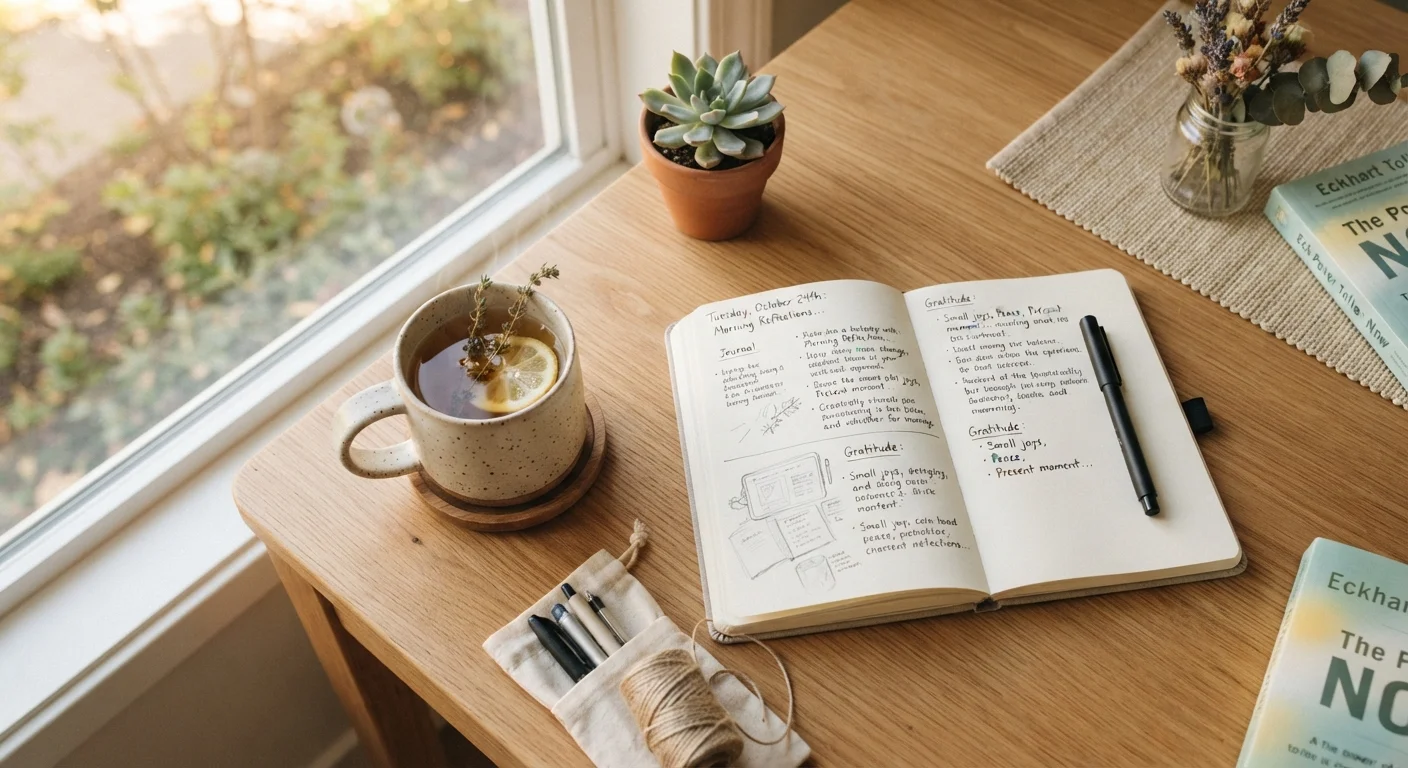

Why Gratitude Can Start to Feel Like a Chore
If you've ever written "my health, my family, my home" in a gratitude journal for the fifth day in a row and felt absolutely nothing, you're not doing it wrong - you've just hit a well-documented psychological wall. Research in positive psychology suggests that gratitude practices can meaningfully support well-being, but repetitive, automatic exercises lose their effect quickly. The brain habituates to sameness. What once felt meaningful becomes background noise.
The good news is that hollowness isn't a sign that gratitude doesn't work for you. It's a signal that your current approach needs recalibrating. Understanding why practices stagnate makes it much easier to course-correct without abandoning the habit altogether.
About the Research on Gratitude
Studies - including foundational work by psychologists Robert Emmons and Michael McCullough - suggest that regular gratitude practices are associated with improved mood, greater life satisfaction, and reduced stress. However, most research relies on self-report and short-term measurement. The science is promising but still developing, and effects vary between individuals. Gratitude practices are not a treatment for clinical conditions.
Best Practices for a Gratitude Habit That Actually Resonates
The following approaches are grounded in everyday psychology and designed for real life - not idealized routines. Incorporate one or two at a time rather than overhauling everything at once.
Be specific rather than general in what you name.
Listing broad categories - health, family, food - provides little for your brain to engage with. Specificity forces genuine recall, which is where the psychological benefit actually lives. The more concrete the detail, the more emotionally real the moment becomes.
Limit your list to one or two items and go deeper on each.
Long lists encourage speed and superficiality. Fewer items force you to slow down and actually reflect on why something matters. Depth of engagement, not volume, is what makes a practice meaningful.
Introduce novelty by rotating your focus area deliberately.
Habitual thinking tends to return to the same handful of people and circumstances. Deliberately widening your lens - to strangers, small moments, or things you usually take for granted - counteracts habituation and surfaces appreciation you might otherwise overlook.
Acknowledge what was hard alongside what was good.
Forced positivity can feel dishonest and is often counterproductive. Holding both difficulty and appreciation simultaneously - sometimes called "tragic optimism" in psychological literature - makes the practice feel more grounded and less like performance.
Express gratitude outward when you feel it, not just inward.
Research suggests that expressing appreciation to others - not just recording it privately - amplifies the emotional benefit for both parties. It also strengthens relationships and creates a feedback loop that makes noticing positive things feel more natural.
Practice at varied times rather than always at the same moment.
Anchoring gratitude to a rigid schedule - always before bed, always in the morning - can make it feel like a box to tick. Varying the timing keeps the brain more alert to what you're doing and why.
Making It Fit Your Life
Gratitude doesn't require a dedicated journal, a fixed time slot, or any particular ritual. What it does require is intentionality - a brief pause where you genuinely engage with something positive rather than mechanically logging it. This makes gratitude a natural companion to other reflective habits. If you already keep a journal, consider pairing these approaches with the deeper self-reflection techniques covered in our guide to journaling for mental clarity.
For those building mental wellness habits from the ground up, gratitude fits naturally into a broader framework - see building a daily mental wellness routine from scratch for a structured starting point. And if time is your barrier, gratitude pairs well with the low-effort strategies in self-care on a tight schedule.
Keeping the Practice Honest Over Time
Sustainable gratitude isn't relentlessly positive. It coexists with frustration, grief, and uncertainty. Acknowledging that something is hard while also finding one genuine thread of appreciation within it is more psychologically honest - and more durable - than pretending difficulty doesn't exist.
“Gratitude is not only the greatest of virtues, but the parent of all others.”
— Marcus Tullius Cicero, Roman statesman and philosopher
Over weeks and months, your practice will naturally evolve. What moved you in January may feel stale by summer. Treat that as useful information rather than failure. Rotate your approach, revisit older entries, or simply take a short break and return with fresh attention. Consistency matters more than perfection, and honesty matters more than positivity.
This article is for general informational and educational purposes only and is not a substitute for professional mental health advice. If you're experiencing persistent low mood or difficulty with well-being, please speak with a qualified healthcare professional.