
Why a Mental Wellness Routine Matters
Mental wellness is not a state you achieve once - it is something you actively maintain through daily choices. A routine provides the structure that makes those choices easier, reducing the mental load of deciding how to care for yourself when you are already stressed or tired.
Psychological research consistently links routine to lower anxiety and greater perceived control. When your nervous system knows what to expect, it spends less energy scanning for threats and more on higher-order tasks like focus, connection, and creativity. Think of a routine not as rigidity, but as a scaffold for a more stable inner life.
If you are also building physical habits alongside this, the foundations of physical self-care - sleep, hydration, and nutrition - directly influence mood and cognitive resilience, making them natural partners to any mental wellness effort.
Habit stacking
Linking a new behavior to an existing one so that the first act automatically cues the second, making new habits easier to remember and maintain.
Emotional regulation
The ability to recognize, understand, and manage your emotional responses in ways that allow you to function and make thoughtful decisions.
Circadian rhythm
Your body's internal 24-hour clock that regulates sleep, wakefulness, and many biological processes, including mood and stress response.
Minimum viable routine
The shortest possible version of a daily habit that still preserves the core behavior, designed to keep the routine alive on difficult days.
Rumination
A pattern of repetitive, often negative thinking about problems or past events that can intensify stress and low mood rather than resolving it.
The Core Building Blocks
An effective mental wellness routine does not require a long list of practices. Research points to a small set of evidence-informed habits that reliably support emotional regulation and resilience:
- Sleep consistency: Going to bed and waking at similar times anchors your circadian rhythm, which governs mood, attention, and stress reactivity.
- Movement: Even brief daily physical activity is associated with reduced symptoms of anxiety and depression. You do not need to be athletic. See daily movement for non-athletes for a grounded starting point.
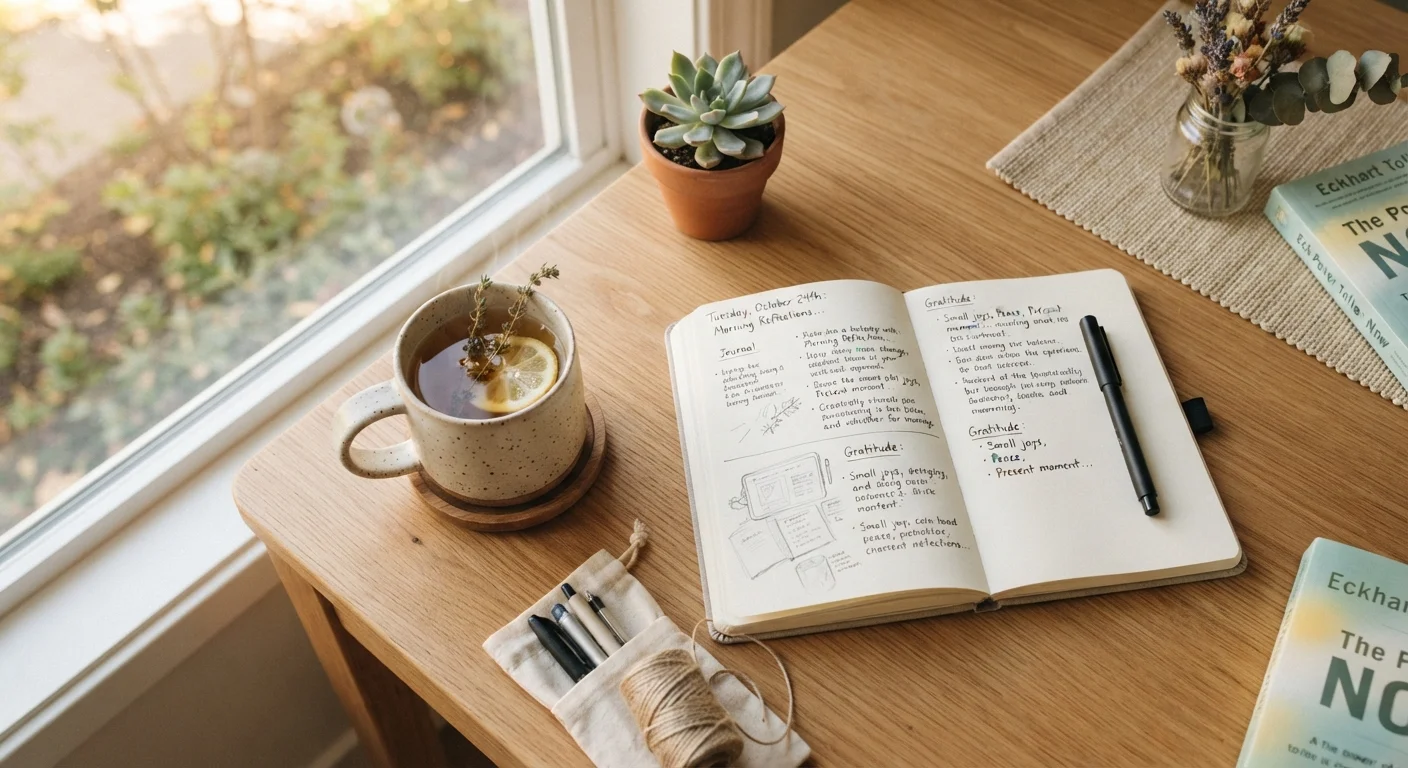
- Intentional reflection: Journaling, mindfulness practices, or a brief daily check-in help you notice emotional patterns before they escalate.
- Social connection: Even low-intensity interactions - a text, a short call - provide regulatory support that solitary habits cannot replicate.
- Limits on stress inputs: Intentionally reducing unnecessary exposure to distressing content or draining interactions is itself a wellness practice. Setting boundaries is a learnable skill, not a personality trait.
Start With Just One Practice
If five habits feel overwhelming, pick one and do it daily for two weeks before adding anything else. Mastering one practice builds the self-trust that makes the next one easier. Most people who try to overhaul everything at once revert to nothing within a month.
Designing Your Daily Structure
Begin with your existing schedule, not an idealized version of it. Identify two anchor points - typically morning and evening - where short, repeatable habits can live. Attaching new behaviors to existing ones (known as habit stacking) increases follow-through significantly.
A simple starting framework might look like this:
- Morning (5-10 minutes): A brief moment of intention - a few minutes of slow breathing, a journal prompt, or quiet time before checking your phone.
- Midday (2-3 minutes): A body and mood check-in. How are you feeling physically and emotionally? Adjust the afternoon accordingly.
- Evening (5-10 minutes): A wind-down signal - dim lights, no screens, a brief reflection on one thing that went well.
This is a skeleton, not a prescription. Adapt it to your life. If mornings are chaotic, a realistic morning routine strategy can help you find pockets of calm even in a packed schedule.
Timing Is Personal, Not Universal
Morning routines get a lot of attention, but your ideal anchor points depend on your chronotype, work schedule, and family demands. A night-shift worker or parent of young children may find midday or evening more sustainable than pre-dawn rituals. The best time for your routine is the time you can actually keep it.
Making It Stick: Consistency Over Perfection
The most common reason wellness routines collapse is that they are designed for ideal conditions. Real life is not ideal. Build your routine to survive disruption by creating a minimum viable version - the shortest form of your routine you can complete on the hardest days.
If your full routine takes fifteen minutes, your minimum version might be ninety seconds: one slow breath, one sentence of reflection, one glass of water. This preserves the identity and habit loop even when circumstances do not allow the full version.
Tracking your routine loosely - a simple checkbox or brief note - provides feedback without becoming another obligation. The goal is noticing patterns, not scoring yourself. For more on applying the underlying habit science, the guide on building habits that survive early weeks applies directly here.
Avoid Turning Wellness Into Another Stressor
If tracking your routine starts to feel like a source of guilt or pressure, scale back immediately. Wellness practices should reduce distress, not add to it. A routine that makes you feel like you are constantly failing is not serving its purpose - adjust the expectations, not just the effort.
When to Seek Professional Support
A self-directed mental wellness routine is a valuable tool for general well-being - but it has limits. If you are experiencing persistent low mood, significant anxiety, intrusive thoughts, or difficulty functioning at work or in relationships, please reach out to a licensed mental health professional. A routine is not a treatment.
Signs that professional support may be appropriate include: feeling unable to find relief despite consistent effort, using substances to manage emotions, or experiencing thoughts of self-harm. In these situations, contact a qualified provider or call a crisis line. In the US, the 988 Suicide and Crisis Lifeline is available by calling or texting 988.
For a broader framework connecting daily practices to long-term personal growth, the purposeful self-improvement framework offers evidence-grounded guidance on building change that lasts.
This article is for general informational and educational purposes only and is not a substitute for professional medical or mental health advice, diagnosis, or treatment. Always consult a qualified healthcare professional for concerns about your mental health.
988 Suicide and Crisis Lifeline
A US-based crisis support service available 24/7 by call or text at 988. Provides confidential support for anyone experiencing emotional distress or a mental health crisis.
Mindfulness-Based Stress Reduction (MBSR) Programs
A structured, evidence-based program widely offered through hospitals, community centers, and online platforms that teaches mindfulness skills for managing stress and anxiety.
SAMHSA National Helpline
The Substance Abuse and Mental Health Services Administration (SAMHSA) offers a free, confidential helpline at 1-800-662-4357 for mental health and substance use support and referrals.