
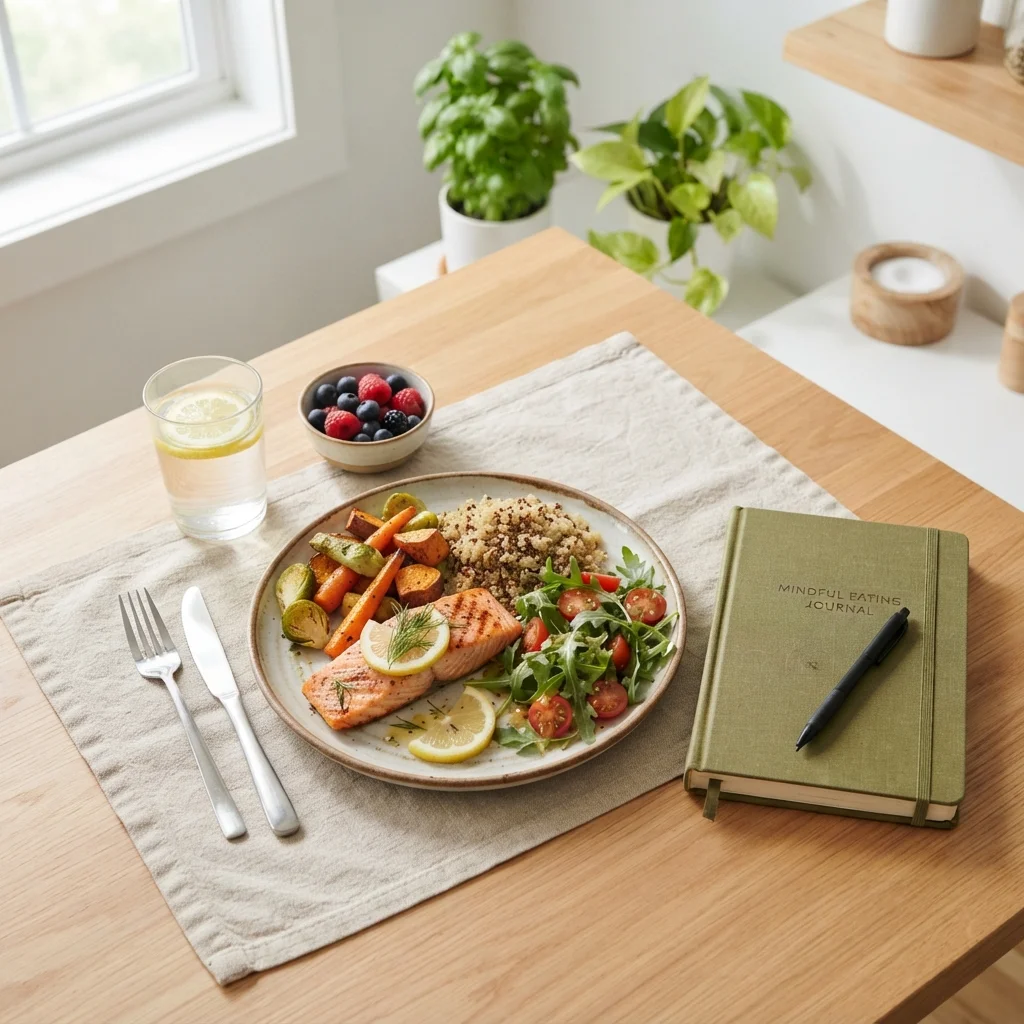
What Is Structured Meal Planning?
Structured meal planning involves deciding in advance what, when, and roughly how much to eat - typically across regular intervals throughout the day. This approach draws on the principle that consistent eating patterns can stabilize blood sugar, reduce impulsive food choices, and simplify nutritional decision-making.
Common features include scheduled mealtimes (often three meals and one or two snacks), pre-planned grocery lists, and attention to macronutrient balance. Research published in nutritional epidemiology journals has linked regular meal timing with improved metabolic outcomes and better overall diet quality, though results vary by individual.
Structured eating is particularly well-studied in clinical contexts - for managing blood glucose in people with diabetes, supporting athletic performance, or navigating postpartum nutrition. It is also frequently recommended as a tool for reducing chaotic or emotionally driven eating patterns.
If you're building everyday health habits from the ground up, starting with foundational routines can help you integrate meal planning more gradually and realistically.
Make Your Meal Plan Flexible, Not Fixed
A structured plan doesn't need to be rigid. Building in two or three 'flex meals' per week - where you eat what's available or what sounds appealing - reduces the all-or-nothing thinking that derails many eating routines. Consistency across the week matters far more than perfection on any single day.
What Is Intuitive Eating?
Intuitive eating is a framework developed by registered dietitians Evelyn Tribole and Elyse Resch, built around ten core principles that encourage people to reconnect with internal hunger and fullness signals rather than follow external food rules. It explicitly rejects diet culture, food moralizing, and restriction-based thinking.
Key principles include eating when genuinely hungry, stopping when comfortably satisfied, making peace with all foods (avoiding the forbidden-food dynamic), and honoring the body's movement and nourishment needs without judgment. Studies - including a review in the journal Appetite - have associated intuitive eating with improved psychological well-being, reduced disordered eating behaviors, and more sustainable food relationships over time.
It's worth noting that intuitive eating is not a weight-loss protocol, and framing it as one misrepresents its purpose. Its primary focus is on the quality of the relationship with food, not specific physical outcomes.
Pairing this approach with a broader mental wellness routine can reinforce its benefits - see building a daily mental wellness routine for practical guidance.
How the Two Approaches Compare
Understanding the practical differences between these frameworks helps clarify which might align better with your daily life, personality, and health context. Neither is universally superior - both have meaningful evidence behind them and distinct trade-offs.
| Structured Meals | Intuitive Eating | |
|---|---|---|
| Core principle | Pre-planned timing and food choices | Internal hunger and fullness cues |
| Level of structure | High - defined schedules and portions | Low - flexible, responsive to the body |
| Learning curve | Practical planning skills required | Requires tuning into body signals |
| Research support | Strong in clinical and metabolic contexts | Strong for psychological well-being and food relationship |
| Best suited for | Those who thrive on routine and predictability | Those rebuilding trust with food and appetite |
| Common challenge | Can feel rigid or inflexible socially | Can be misapplied as permission to ignore nutrition |
One important nuance: these approaches are not mutually exclusive. Many people benefit from a hybrid - using structured mealtimes as a consistent anchor while applying intuitive principles around food choices and portion awareness within those windows.
Consistency over perfection is a shared theme across both frameworks - what matters most is finding a pattern you can sustain across real life, not just ideal conditions.
Building Either Approach Into Daily Life
Whichever framework resonates, a few practical principles apply across both:
- Start small: Overhauling your entire eating pattern at once rarely sticks. Introduce one change - a consistent breakfast time or a weekly meal plan - and build from there.
- Use habit anchoring: Linking new eating behaviors to existing routines (like preparing tomorrow's lunch after dinner) makes them easier to sustain. Anchoring new habits to existing ones explores this technique in depth.
- Expect variability: Life interrupts even the best-planned routines. Flexibility - not rigidity - is what allows either approach to work long-term.
- Seek professional support when needed: A registered dietitian can personalize either framework to your health history, food preferences, and any medical considerations.
10+
Peer-reviewed studies on intuitive eating
A 2017 review in Health Psychology Review identified over 10 studies linking intuitive eating with positive psychological outcomes including improved body image and reduced disordered eating.
~30%
Adults who regularly skip meals
National health surveys suggest a substantial share of U.S. adults eat inconsistently, which research associates with poorer overall diet quality and energy regulation.
This article is for general informational and educational purposes only and does not constitute medical or dietary advice. Always consult a qualified healthcare professional or registered dietitian before making significant changes to your eating habits, particularly if you have a medical condition.