
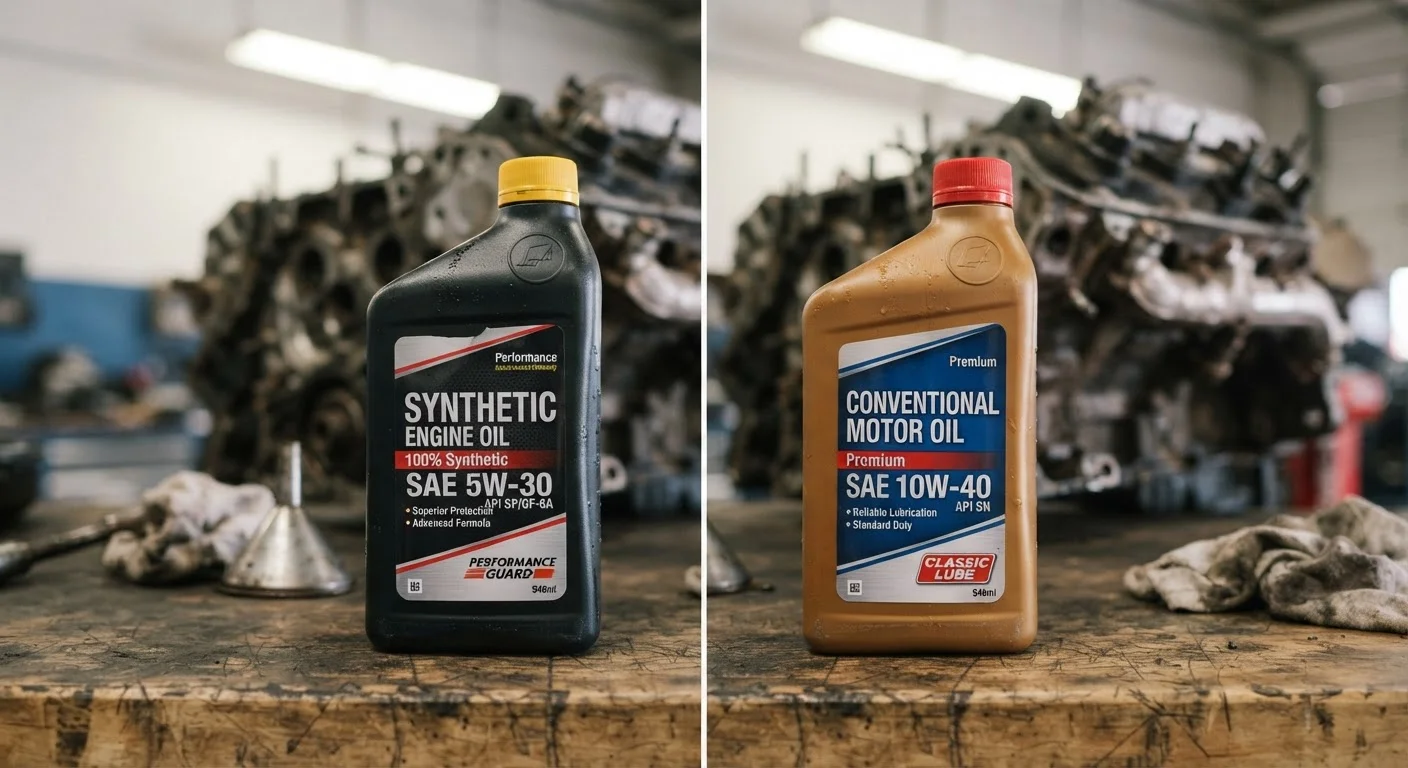
What's Actually in Each Type of Oil
Both synthetic and conventional engine oils share the same fundamental job: lubricating moving metal parts, reducing friction, managing heat, and carrying contaminants to the oil filter. Where they diverge is at the molecular level.
Conventional oil is refined directly from crude petroleum. The refining process removes many impurities, but the resulting base oil still contains a range of hydrocarbon molecule sizes and shapes - an inherent inconsistency that affects how the oil behaves under stress.
Synthetic oil is either fully synthesized from chemical compounds or built from a more thoroughly processed base stock (sometimes called a synthetic blend). The result is a far more uniform molecular structure. That uniformity translates into more predictable, stable performance across a wider range of temperatures and operating conditions.
Synthetic blends sit in between: they mix a synthetic base with conventional oil, offering some performance advantages at a more moderate price point than full synthetic.
A Note on Synthetic Blends
Synthetic blend oils combine a synthetic base with conventional oil, offering improved performance over pure conventional oil at a lower price than full synthetic. They can be a reasonable middle ground for some vehicles, but always verify the specific blend meets your manufacturer's stated specification - not all blends are equivalent. Check your owner's manual for the API service category and viscosity grade required before selecting any oil type.
Performance Differences That Matter on the Road
The molecular consistency of synthetic oil delivers several measurable advantages:
- Cold-weather starts: Synthetic oil flows more readily at low temperatures, reaching critical engine parts faster after a cold start - when a disproportionate share of engine wear occurs.
- Heat resistance: In high-load situations - towing, highway driving in summer heat, turbocharged engines - synthetic oil resists thermal breakdown more effectively than conventional oil.
- Oxidation resistance: Synthetic formulations degrade more slowly when exposed to oxygen and heat, which is a primary reason they can support longer drain intervals.
- Volatility: Synthetic oil evaporates less readily at high temperatures, meaning less oil is consumed between changes in demanding conditions.
Conventional oil, while less advanced, is not inadequate for the conditions it was designed to handle. In a well-maintained older engine operating in moderate temperatures with regular change intervals, conventional oil can provide perfectly adequate protection. The key phrase is regular change intervals - conventional oil degrades faster and must be replaced more frequently.
For a deeper look at how viscosity grades and change schedules interact with oil type, see our guide to oil grades and intervals.
~40%
Engine wear occurring at cold start
Industry engineering estimates suggest a significant portion of total engine wear happens in the first moments after a cold start, before oil fully circulates - a condition where synthetic oil's faster flow offers a meaningful advantage.
2x-3x
Longer typical drain interval vs conventional
Full synthetic oils commonly support drain intervals roughly two to three times longer than conventional oil, though actual intervals depend on vehicle specifications, driving conditions, and manufacturer guidance.
How to Choose - and What Your Owner's Manual Actually Says
The most important factor in choosing between synthetic and conventional oil is not marketing language - it's your vehicle manufacturer's specification. Your owner's manual will list the required or recommended oil type and viscosity grade for your engine. Ignoring that specification, in either direction, can affect warranty coverage and engine longevity.
| Criterion | Synthetic Oil | Conventional Oil |
|---|---|---|
| Base composition | Engineered chemical compounds | Refined crude petroleum |
| Cold-start performance | Flows faster in low temps | Slower to circulate when cold |
| Heat resistance | High stability under load | Degrades faster at high heat |
| Typical change interval | Often 7,500-10,000+ miles* | Often 3,000-5,000 miles* |
| Cost per quart | Higher | Lower |
| Suitable for turbocharged engines | Yes - generally required | Not recommended |
| Suitable for older, simpler engines | Yes, where permitted | Yes, with regular changes |
Common scenarios where synthetic is typically specified or strongly advisable include: turbocharged or supercharged engines, direct-injection gasoline engines, diesel engines in modern light trucks, vehicles with extended oil-change monitoring systems, and any vehicle whose manufacturer explicitly requires it.
Conventional oil remains a legitimate choice for vehicles whose manufacturers permit it, particularly older models with naturally aspirated engines not subjected to severe driving conditions. If your driving profile involves frequent short trips in moderate weather and you change oil on schedule, conventional oil can serve you well - provided you respect the shorter drain interval it requires.
One persistent concern drivers raise is whether switching from conventional to synthetic will cause leaks in an older engine. In modern, well-maintained engines, this is generally not a well-founded concern. However, if an older engine has existing seal deterioration, it is worth consulting a qualified mechanic before changing oil type. For more on common oil-change misconceptions, visit our article on oil myths and intervals.