
Why the Terms Get Confused
Walk into any wellness space and you'll hear mindfulness and meditation used as though they mean the same thing. They don't - and the difference matters, especially when you're trying to figure out which approach fits your life.
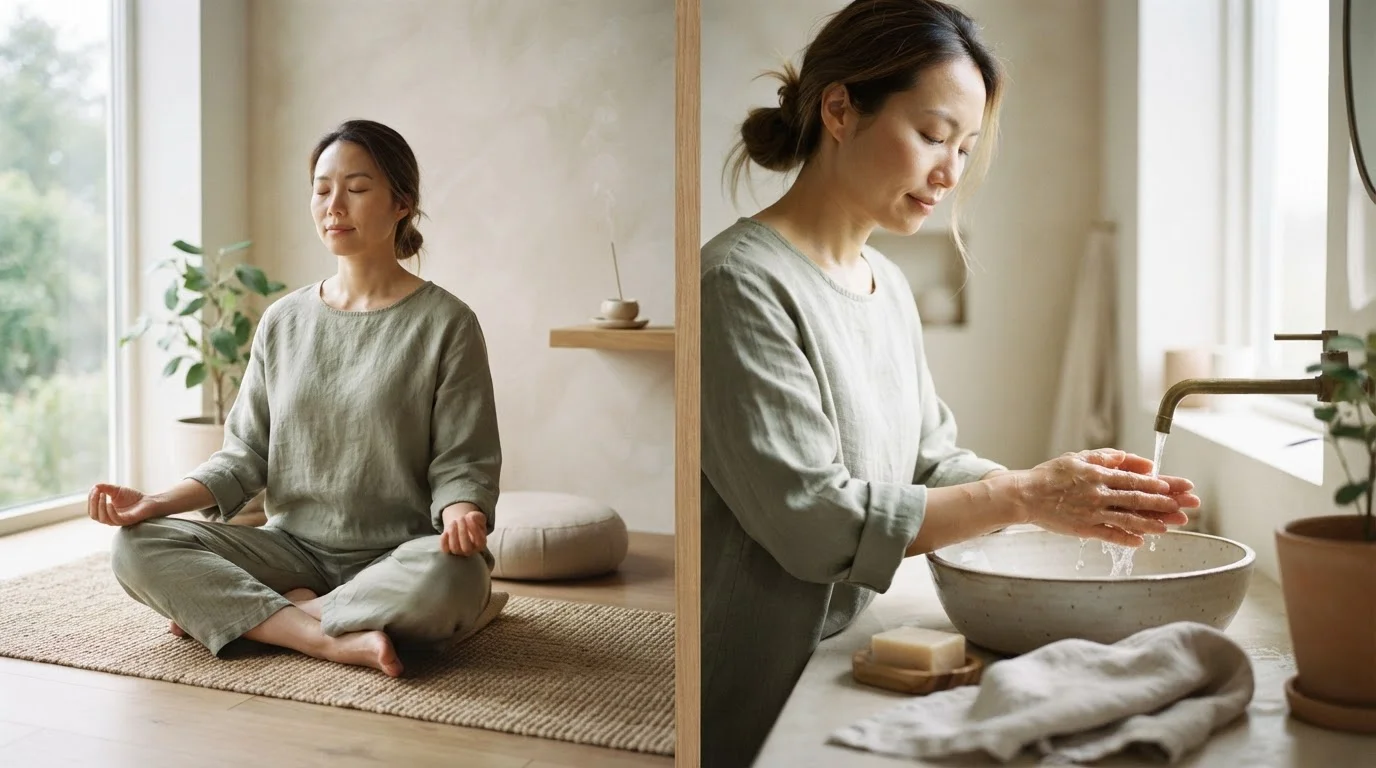
The short version: mindfulness is a mental quality - the capacity to pay deliberate, non-judgmental attention to the present moment. Meditation is a practice - a structured activity you do for a defined period to train the mind. Think of mindfulness as the skill and meditation as one of the most effective gyms for building it.
This distinction isn't just academic. Someone who spends ten minutes each morning in focused breathing practice (meditation) may still spend the rest of the day on autopilot. Conversely, someone who never sits on a cushion can cultivate genuine mindful awareness by consciously engaging with ordinary tasks. Understanding this frees you from the idea that wellness requires a rigid routine you don't have time for.
What Mindfulness Actually Means
Mindfulness has roots in Buddhist contemplative traditions and entered mainstream Western psychology largely through the work of researchers like Jon Kabat-Zinn, who developed Mindfulness-Based Stress Reduction (MBSR) in the late 1970s at the University of Massachusetts Medical School. In clinical and research contexts, mindfulness typically refers to two interlocking qualities: attention (noticing what's happening right now) and attitude (approaching that experience with curiosity rather than judgment).
In practical terms, mindfulness can appear anywhere - while washing dishes, having a conversation, or noticing tension in your shoulders during a commute. The goal isn't to empty your mind but to observe thoughts, sensations, and emotions without immediately reacting to them. This observational stance is what makes mindfulness useful for emotional regulation.
Research, including systematic reviews of MBSR programs, suggests mindfulness-based approaches are associated with reductions in self-reported stress and anxiety. However, it's worth noting that effect sizes vary and more rigorous long-term studies are still needed. Mindfulness is a supportive tool - not a cure - and is best used alongside, not instead of, professional care when symptoms are significant. For broader self-care strategies, see our guide on talking therapy versus self-help.
| Criterion | Mindfulness | Meditation |
|---|---|---|
| What it is | A quality of present-moment attention | A structured mental training practice |
| When it happens | Any time, integrated into daily life | During a dedicated, time-set session |
| Time requirement | No additional time needed | Typically 10-45 minutes per session |
| Learning curve | Accessible from day one | Easier with guidance or instruction |
| Primary benefit | Present-moment awareness and regulation | Systematic attention and resilience training |
| Research evidence | Supported by clinical program research | Supported by neurological and clinical research |
| Can be done alone | Yes - no tools required | Yes, though apps or classes help beginners |
What Meditation Actually Is
Meditation is an umbrella term for a range of formal mental training exercises. Common types include:
- Focused attention meditation: Directing and sustaining attention on a single object, such as the breath, a sound, or a visual point.
- Open monitoring meditation: Observing the flow of thoughts and sensations without attachment - the style most closely linked to mindfulness development.
- Loving-kindness (metta) meditation: Generating feelings of warmth and goodwill toward oneself and others.
- Body scan: Systematically directing attention through different areas of the body to notice sensation without judgment.
Each type trains slightly different cognitive capacities. Focused attention practices tend to strengthen sustained concentration; open monitoring practices build the meta-awareness central to mindfulness. Most structured programs, like MBSR or Mindfulness-Based Cognitive Therapy (MBCT), combine multiple styles.
The key characteristic of meditation is that it is intentional and time-bounded - you set aside a period specifically for the practice. This structure is both its strength (consistency builds skill) and its barrier (life gets busy). For those exploring whether formal or informal approaches suit them better, reflective journaling is another informal complement worth considering.
~14%
US adults who meditate regularly
According to a 2017 National Health Interview Survey (NHIS) report from the CDC, about 14.2% of US adults had practiced meditation in the past year - a significant increase from prior years.
8 weeks
Standard MBSR program length
The Mindfulness-Based Stress Reduction program developed at UMass Medical School runs over eight weeks, the duration used in most foundational clinical research on mindfulness.
Moderate
Evidence quality for anxiety reduction
A frequently cited JAMA Internal Medicine meta-analysis found moderate evidence that mindfulness meditation programs improve anxiety, depression, and pain outcomes compared to control conditions.
How They Work Together - and When to Use Each
Mindfulness and meditation are not competitors. For many people, meditation is the engine that builds mindfulness capacity, while daily mindful moments reinforce what formal practice develops. Research on attention training suggests that deliberate practice transfers to everyday awareness over time - though individual results vary considerably.
A practical way to think about it:
- Use mindfulness
- When you want to respond rather than react in a stressful conversation, notice unhelpful thought patterns mid-day, or simply be more present with people you care about.
- Use meditation
- When you want to systematically build attentional stamina, work through a structured stress-reduction program, or establish a consistent mental health routine.
Neither requires perfection. A wandering mind during meditation isn't failure - noticing that the mind has wandered and gently returning attention is itself the practice. Similarly, mindfulness doesn't demand a serene environment; it can happen in a noisy office or a crowded subway car.
If you're curious about how this kind of flexible awareness applies to how we grow and learn, our article on the fixed vs. growth mindset explores related themes in everyday psychology.
A Note on Special Populations
While mindfulness and meditation are generally considered low-risk for healthy adults, some individuals - including those with PTSD, psychosis, or certain trauma histories - may find intensive practice destabilizing. If you have a diagnosed mental health condition or a significant trauma history, consult a qualified mental health professional before beginning a formal meditation program. Trauma-sensitive mindfulness approaches exist and may be more appropriate in those circumstances.
This article is for general informational purposes only and is not a substitute for professional medical or mental health advice. If you are experiencing significant psychological distress, please consult a qualified healthcare provider.