
What Is CBT and Why Can Some of It Be Self-Directed?
Cognitive Behavioural Therapy (CBT) is one of the most extensively researched psychological approaches available. Its core premise - that changing how we think and behave can change how we feel - has been validated across hundreds of clinical trials for conditions ranging from mild anxiety to depression. Crucially, many of its foundational tools are skills, not just procedures administered by a clinician. Researchers have found that bibliotherapy (self-guided use of CBT workbooks) produces meaningful improvements for mild-to-moderate symptoms, and digital CBT programmes have shown similar promise.
That said, self-directed practice is most appropriate for everyday stress, mild worry, low mood, or building general psychological resilience. It is not a substitute for professional care when symptoms are severe or persistent. For a balanced look at when self-help is sufficient and when professional therapy is the right call, see our article on talking therapy vs. self-help strategies.
What you will need
Core Techniques: From Theory to Daily Practice
The steps below translate four established CBT and related techniques into formats you can use with minimal equipment. Each exercise targets the thought-feeling-behaviour loop at a different entry point, allowing you to choose the approach that best fits a given situation.
Understand the CBT Triangle
Before practising any technique, grasp the core model: thoughts, feelings, and behaviours each influence the others in a continuous loop. A negative automatic thought ("I always mess things up") triggers an emotional response (shame, anxiety), which then drives behaviour (avoidance, withdrawal). Recognising this cycle is the foundation of every technique that follows.
Catch Automatic Negative Thoughts
Automatic thoughts arise quickly and feel like facts. Begin noticing them by pausing whenever your mood shifts noticeably and asking: "What was just going through my mind?" Common patterns include all-or-nothing thinking ("If it isn't perfect, it's a failure"), catastrophising ("This will definitely go wrong"), and mind reading ("They must think I'm incompetent"). Simply naming the pattern reduces its grip.
Complete a Thought Record
A thought record is a structured written exercise. Use five columns:
- Situation - What happened? When and where?
- Emotion - What did you feel, and how intense was it (0-100)?
- Automatic thought - What exact thought arose?
- Evidence for and against - What facts support this thought? What contradicts it?
- Balanced thought - What is a more accurate, evidence-based perspective?
Re-rate your emotional intensity after completing the record. Even a modest reduction signals the technique is working.
Schedule Behavioural Activation
Low mood often leads to withdrawing from activities, which deepens the low mood - a well-documented cycle. Behavioural activation interrupts it by deliberately scheduling activities that provide either pleasure (enjoyment) or mastery (a sense of accomplishment), even when motivation is absent. List five to ten such activities, rate each for anticipated pleasure and difficulty, then schedule at least one small activity per day. Track how you actually feel afterward - rarely is the outcome as flat as the anticipation suggested.
Practise Cognitive Defusion
Borrowed from Acceptance and Commitment Therapy (ACT), a close cousin of CBT, cognitive defusion creates psychological distance from thoughts. Instead of "I am a failure," try mentally rephrasing it as "I am having the thought that I am a failure." This small linguistic shift reminds the brain that thoughts are mental events, not objective truths. Another technique: imagine your thought as a leaf floating down a stream - observe it, let it drift, and return your attention to the present moment.
Review and Adjust Your Practice Weekly
CBT is iterative. At the end of each week, review your thought records and activity logs. Ask: Which situations recur? Which thinking patterns appear most often? Where did behavioural activation lift my mood? This brief audit helps you personalise your approach over time. For a structured self-check that also covers sleep, social connection, and stress, consider our weekly mental well-being audit.
Self-Help Has Limits - Know When to Seek Help
The techniques described here are general educational tools, not a substitute for professional mental health treatment. If you are experiencing persistent depression, anxiety that disrupts daily functioning, thoughts of self-harm, or any mental health crisis, please reach out to a qualified mental health professional or a crisis line immediately. Self-guided strategies work best as a complement to - not a replacement for - appropriate clinical care.
Pair CBT Exercises With a Consistent Routine
CBT skills build through repetition, not occasional use. Try anchoring a thought record or a brief mindfulness check-in to an existing daily habit - morning coffee, a lunch break, or winding down at night. For ideas on making new practices stick, see our guide to the science of behaviour change.
Pairing these exercises with broader self-care habits amplifies their effect. If your schedule is tight, even brief consistent practice outperforms occasional marathon sessions - our guide to self-care on a tight schedule offers complementary strategies that fit into even the busiest days.
Avoid Using These Tools During Active Crisis
Structured CBT exercises require a baseline level of calm to be effective. If you are in acute distress or emotional overwhelm, prioritise grounding and safety first. Contact a crisis support line or a trusted person before attempting to work through a thought record or exposure exercise on your own.
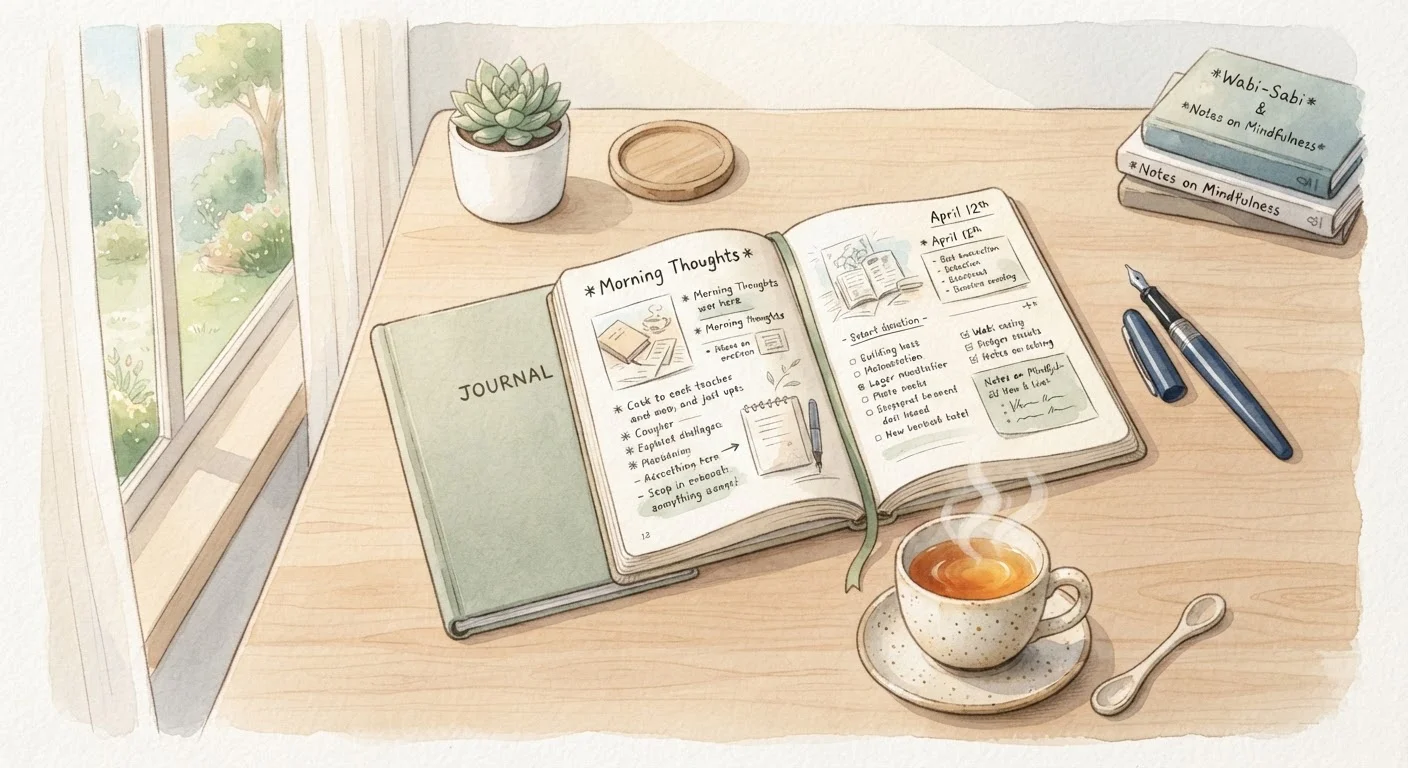
Ruled notebook or journal
Used for completing thought records and tracking mood and activity patterns over time.
Smartphone notes app
Enables quick capture of automatic thoughts in real time before they are forgotten.
Weekly planner or calendar
Used to schedule behavioural activation activities and ensure they are treated as commitments.
Reputable CBT workbook
Provides additional structured exercises and psychoeducation to deepen self-guided practice.
This article is for general informational and educational purposes only and does not constitute medical or psychological advice. If you are experiencing significant mental health difficulties, please consult a qualified mental health professional.