Why Sleep Hygiene Is Worth Taking Seriously
Sleep hygiene refers to the collection of behavioral and environmental habits that support consistent, restorative sleep. The term can sound clinical, but the practices themselves are grounded in how human biology actually works. Poor sleep is associated with reduced concentration, weakened immune function, and lower emotional resilience - and as explored in our companion piece Sleep and Mental Health, chronic sleep disruption has meaningful links to anxiety and mood regulation.
The encouraging news is that most sleep hygiene improvements don't require major lifestyle overhauls. They're adjustments - some surprisingly small - that align your daily habits with your body's natural rhythms. This article focuses on the practices with genuine support in sleep research, and offers practical ways to build them into a real, busy life.
“Sleep is the single most effective thing we can do to reset our brain and body health each day. Neglecting it will cost you, in every way you can imagine.”
— Matthew Walker, Sleep researcher and professor of neuroscience and psychology
The Practices That Make the Most Difference
Not all sleep advice is created equal. The habits below are drawn from well-established principles in sleep medicine and behavioral health. They're ordered by the breadth of their impact, not difficulty.
Anchor your sleep schedule with a consistent wake time - even on weekends.
Your circadian rhythm is a roughly 24-hour internal clock that regulates when you feel alert and when you feel sleepy. Waking at the same time every day anchors this rhythm far more effectively than varying your schedule based on how tired you feel. Irregular wake times cause social jet lag, a state where your biology is misaligned with your actual schedule.
Get natural light exposure within an hour of waking.
Morning light is the primary environmental cue that resets your circadian clock each day. It suppresses lingering melatonin and helps set the timer for when your body will produce melatonin again in the evening. Even overcast outdoor light outperforms most indoor lighting for this purpose.
Dim screens and overhead lighting in the hour before bed.
Blue-wavelength light emitted by phones, tablets, and LED bulbs can delay melatonin onset, pushing back the biological signal that it's time to sleep. Reducing light intensity in the evening doesn't require eliminating screens entirely - lowering brightness and switching to warmer display settings makes a measurable difference.
Cut off caffeine consumption by early-to-mid afternoon.
Caffeine blocks adenosine receptors - adenosine is the chemical that builds sleep pressure throughout the day. With a half-life of roughly 5-7 hours in most adults, a coffee consumed at 3 p.m. may still have half its active effect present at 9 p.m. Individual metabolism varies, but erring toward an earlier cutoff is a low-risk adjustment with meaningful payoff.
Create a brief, consistent wind-down ritual before bed.
Sleep doesn't switch on like a light - the nervous system needs time to transition from alertness to rest. A predictable pre-sleep routine signals the brain that sleep is approaching, which can lower physiological arousal. The specific activity matters less than the consistency and calm of the ritual. Breathwork is one option; Breath-Work as a Daily Habit summarizes what research supports.
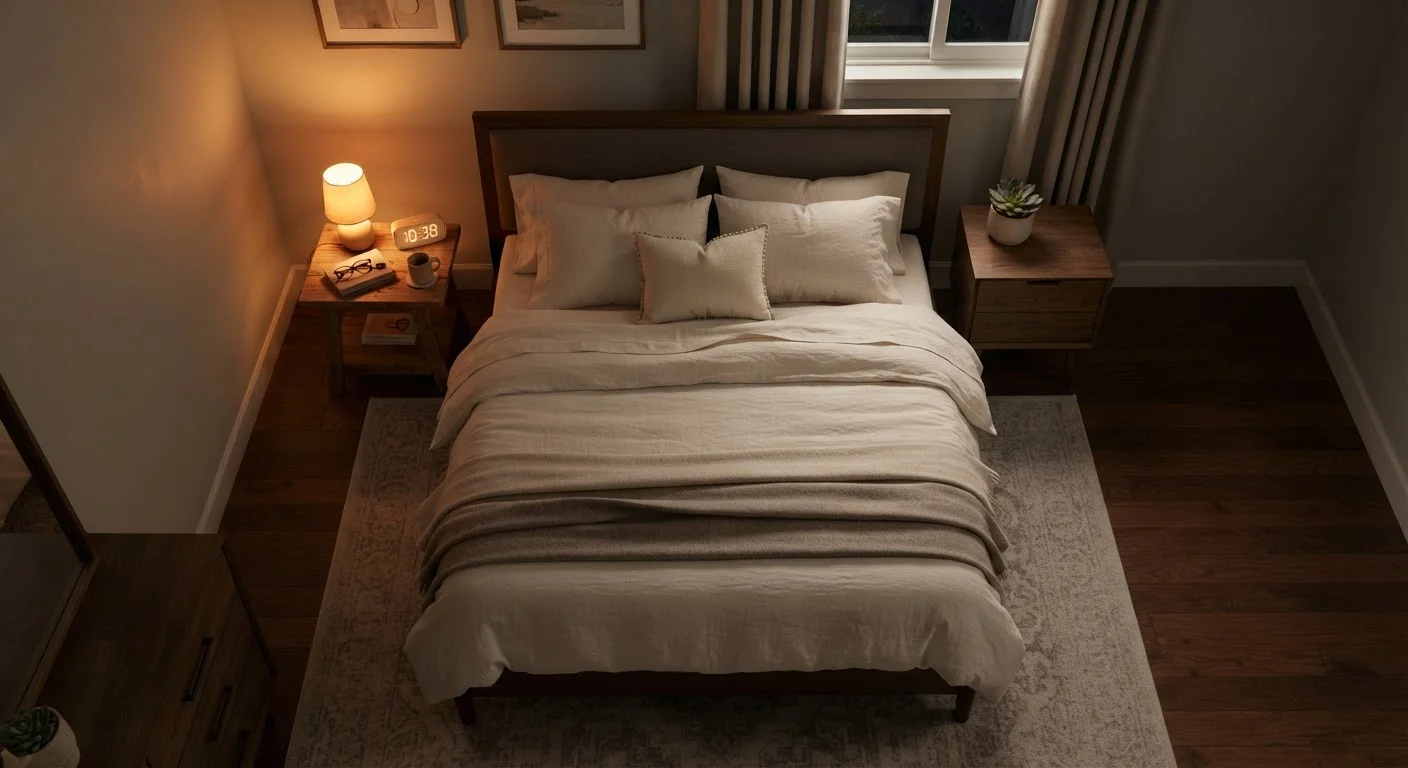
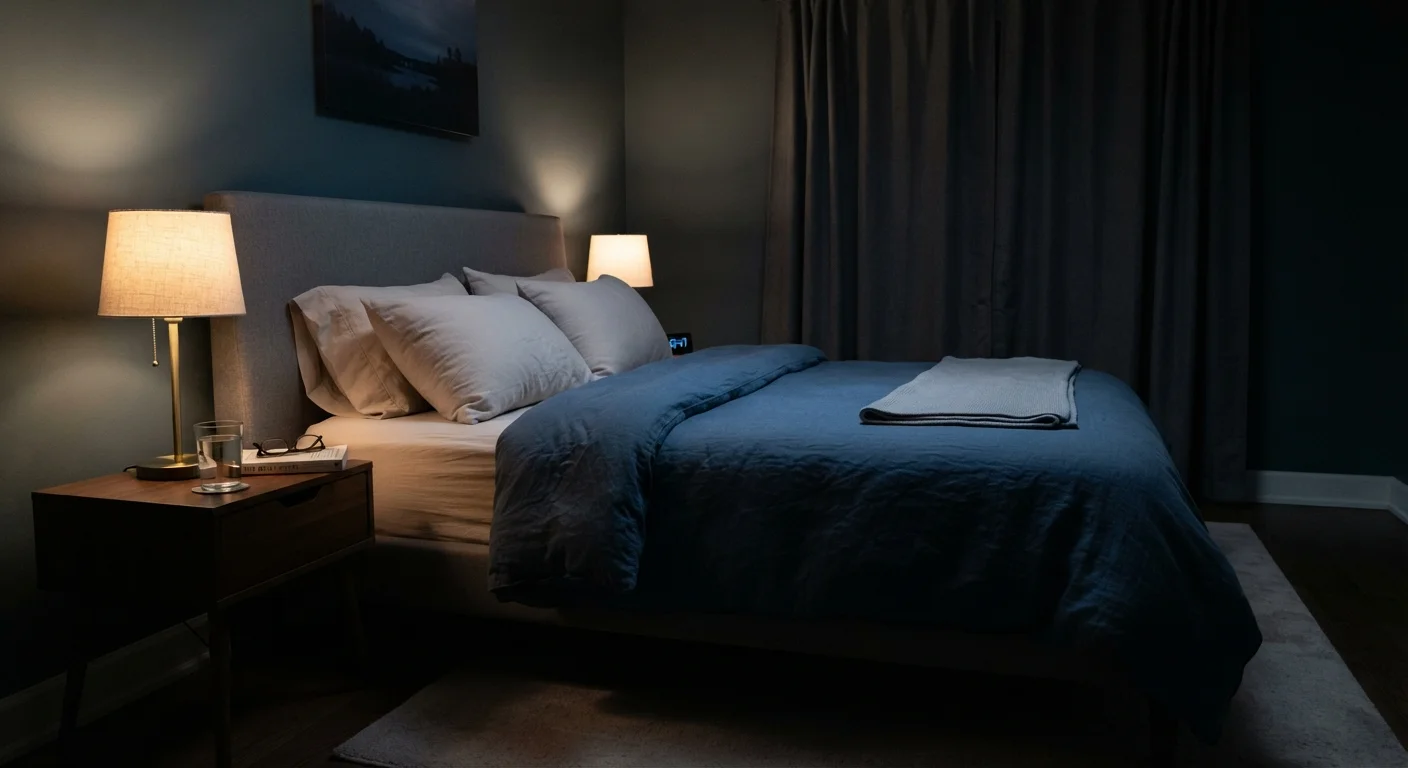
Keep your bedroom cool, dark, and reserved for sleep.
Core body temperature naturally drops as part of the sleep-onset process. A cooler room (most sleep researchers suggest somewhere in the mid-to-upper 60s Fahrenheit as a general range for many adults) supports this process, though individual preference varies. Darkness reinforces melatonin production, and reserving the bed for sleep - rather than work or screens - strengthens the mental association between your bedroom and rest.
For a deeper look at how sleep timing interacts with total sleep hours, see Sleep Consistency vs. Sleep Duration.
Quick Habits You Can Start Tonight
Overhauling your entire evening isn't realistic for most people. These actions are low-effort, low-cost, and can begin immediately - even on a demanding schedule. Sleep hygiene is part of a broader self-care foundation; Hydration, Nutrition, and Rest outlines the three fundamentals that underpin physical well-being.
This article is for general informational purposes only and does not constitute medical advice. If you are experiencing persistent sleep difficulties, speak with a qualified healthcare professional.